EU Defence Panel Shelved After German and Italian Pushback
Kaja Kallas cancelled a planned high-level defence group that would have included Britain and Ukraine, exposing EU divisions over security policy.
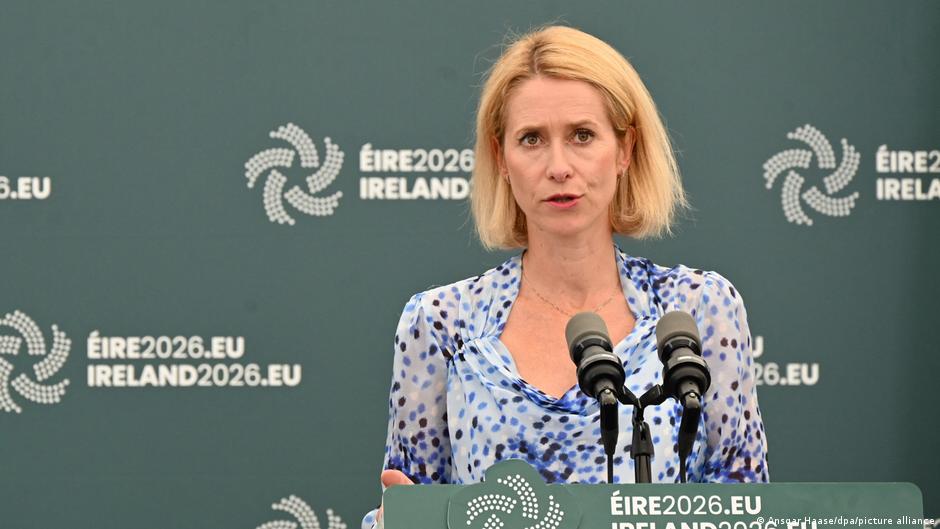
European Union foreign policy chief Kaja Kallas has cancelled the planned launch of a high-level expert group on defence after opposition from several member-state governments, including Germany and Italy, according to dpa. The decision, taken at the last minute, interrupts an initiative that was meant to accelerate work on closing Europe’s military capability gaps and would have brought Britain and Ukraine into a new forum alongside EU political and military figures.
The presentation of the group had been scheduled for Monday, 7 September, with a launch event expected in the morning. Instead, EU officials in Brussels said late on 6 September that the plan would not proceed in its proposed form after consultations with defence ministers from EU countries.
“Some member states considered that this was not the right step at the moment,” one EU official told dpa.
For British and European business audiences, the cancellation matters beyond Brussels process. Defence cooperation has become a central market theme since Russia’s full-scale war against Ukraine, shaping government procurement plans, aerospace and defence valuations, infrastructure spending and expectations for public borrowing. Any sign that EU capitals are struggling to agree on how to move faster can affect investor confidence in Europe’s ability to convert political urgency into contracts, orders and industrial capacity.
The proposed group was to be chaired by Kallas and tasked with drawing up recommendations on how Europe could address defence shortfalls more quickly and effectively. It was expected to include senior political and military representatives from several EU countries, as well as the United Kingdom and Ukraine. That British participation would have been closely watched in London, where defence cooperation with the EU has become one of the practical areas of post-Brexit alignment.
London Watches Defence Coordination and Sterling Risk
The immediate cancellation does not change existing defence spending commitments, but it highlights the political friction behind Europe’s rearmament push. London-listed defence and aerospace companies have benefited from expectations that European governments will increase budgets, speed procurement and deepen cooperation with Ukraine. A blocked EU initiative may prompt investors to look more carefully at whether procurement timelines can keep pace with policy statements.
Sterling’s reaction to European defence news is usually indirect, driven more by risk sentiment, gilt yields and expectations for UK public finances than by any single Brussels initiative. Still, the planned inclusion of Britain gave the group added significance for UK markets. A functioning EU-UK-Ukraine channel could have supported confidence that British industry would remain connected to continental capability planning, including air defence, ammunition, drones, battlefield technology and command systems.
The cancellation also comes as Europe’s security debate intersects with fiscal pressure. EU governments are being asked to spend more on defence while supporting Ukraine and managing domestic budget constraints. In that context, disagreements over whether to create another high-level mechanism can carry a broader message for markets: Europe recognises the threat but remains divided over institutional control, NATO coordination and the role of Brussels.
According to dpa, Germany’s resistance may be linked partly to Berlin’s critical view of Kallas personally as head of the EU’s foreign policy service. German authorities are said to prefer relying on NATO planning processes in defence policy. Berlin is also currently advocating that a significant part of the European External Action Service, which Kallas oversees, be merged with the European Commission.
Italy was also reported to have opposed the creation of the expert group. The source article did not specify Rome’s reasoning, but the combined resistance from Germany and Italy was enough to derail the initiative in its planned form.
Ukraine’s Role Remains Central
The episode follows Kallas’s announcement on 1 September after an informal meeting of EU defence ministers in Wicklow, Ireland, that Ukraine would be involved in efforts to strengthen Europe’s defence capabilities. Kyiv was expected to join the “new high-level group” together with senior politicians and military officials from EU countries and Britain.
At that meeting, a DW correspondent asked Kallas who would represent Ukraine in the new group, noting that former Ukrainian defence minister Mykhailo Fedorov had been brought in by Italy as a defence adviser. Kallas did not name the Ukrainian representative or representatives, saying instead that the full composition of the group would be presented on 7 September.
Kallas also noted that most EU member states are simultaneously members of NATO, while the alliance’s defence capabilities still contain gaps that European countries need to fill. She argued that Europe had acted too slowly despite a rising threat level. Ukraine’s inclusion, she said, was justified by its extensive experience, calling Kyiv a world leader in battlefield innovation.
Although the specific group has been shelved, the EU foreign policy service intends to examine new possibilities for cooperation with EU countries on defence policy. The diagnosis, according to the EU official cited by dpa, has not changed: Europe must move faster on defence.
“We do not want to look back in a few years and conclude that Europe was so focused on where it should be in 2035 that it missed the opportunity to do what was necessary in 2027,” the official said.
That warning is likely to resonate in both Brussels and London. For the UK, any European slowdown in defence coordination has implications for industrial partnerships, Ukraine support and the strategic case for closer security ties with the bloc. For EU capitals, the cancellation underlines the challenge of balancing NATO’s primacy, national control and the European Commission’s growing role in defence funding and industrial policy.
Markets will now watch whether the abandoned group is replaced by another mechanism or whether defence planning remains concentrated in existing NATO and EU structures. The answer will matter for companies and investors exposed to Europe’s defence build-up, and for policymakers trying to ensure that rising budgets translate into deployable capability before the next deadline is missed.