EU’s Top Diplomat Warns Russia, China, and US Aim to Weaken the European Union
EU High Representative Kaja Kallas highlights the divide-and-rule tactics by major powers and urges unity to protect European interests and markets.
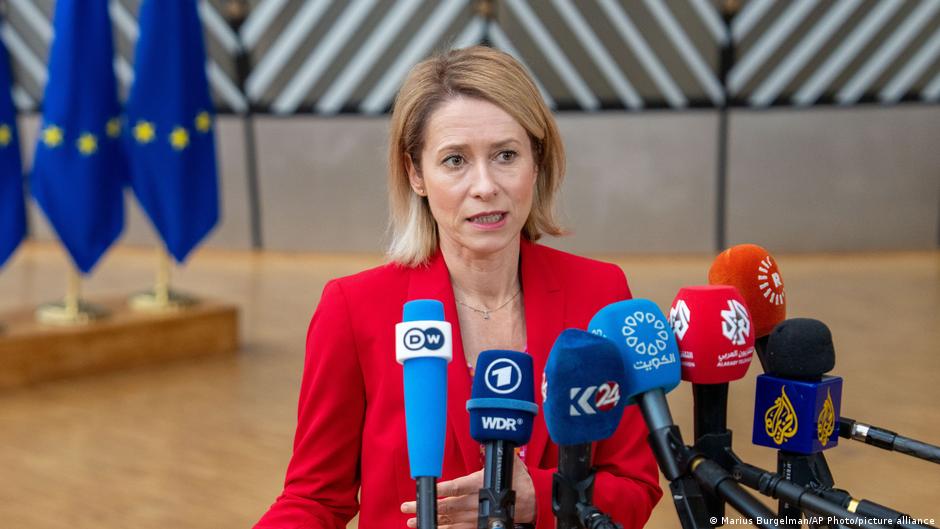
The European Union's highest diplomat, Kaja Kallas, has issued a stern warning about external powers seeking to undermine the EU's unity and influence. Speaking at the Lennart Meri conference in Tallinn, Kallas identified Russia, China, and the United States as actors pursuing a "divide and conquer" strategy designed to weaken the 27-member bloc.
"If we stand together, if we act collectively, then... we are strong," Kallas affirmed, emphasizing the strategic importance of EU cohesion in the face of these pressures. "Why do these powers want to destroy the European Union? Because together we are much stronger," she added.
Challenges to European Unity and Implications for UK and EU Markets
Kallas pointed out that these global powers prefer dealing with individual European countries rather than a united EU block capable of acting as a single, equal force on the world stage. This geopolitical reality has direct implications for the UK and European markets, particularly in London where foreign policy tensions influence sterling’s performance and investor confidence.
She further criticized certain EU member states for pursuing bilateral agreements with Washington, warning that such actions contribute to fragmentation. "I am very concerned because sometimes I see some countries going down this path. Division truly works," Kallas said, highlighting the risk of undermining the EU's collective bargaining power.
Since the beginning of Donald Trump’s second term, several EU countries have sought to maintain independent communication channels with the US. Italy’s Prime Minister Giorgia Meloni, for instance, sought to position herself as a mediator between Europe and the US, a strategy that ultimately faltered amid sharp criticism from Trump towards Pope Leo XIV, according to political observers.
"If we give Russia the right to appoint a negotiator on our behalf, that would not be very wise," Kallas warned ahead of a Brussels meeting of EU foreign ministers, rejecting Russian President Vladimir Putin’s proposal to appoint former German Chancellor Gerhard Schröder as EU envoy for peace talks with Russia.
This stance reinforces the EU’s commitment to maintaining a unified diplomatic front, which has significant ramifications for British and European business interests. London's status as a global financial hub depends on political stability and clear, cohesive policies from the EU, especially as the UK navigates its post-Brexit relationship with the bloc and external powers.
Analysts in London note that Kallas’s remarks underscore the need for continued EU solidarity to ensure market confidence and protect sterling’s value against geopolitical uncertainties. The divide-and-rule tactics by Russia, China, and the US not only threaten political cohesion but also risk disrupting trade, investment, and financial flows critical to both UK and EU economies.
In summary, Kallas’s call for unity serves as a reminder that Europe’s strength lies in its collective resolve. For British and European business communities, maintaining a united front in foreign policy is essential to safeguarding economic interests amid a rapidly shifting global landscape.