Founder of Gulagu.net Suspends Project Amid Rising Risks and Global Legal Crisis
British and European stakeholders watch closely as Moscow’s crackdown affects human rights activism and London market sentiments.
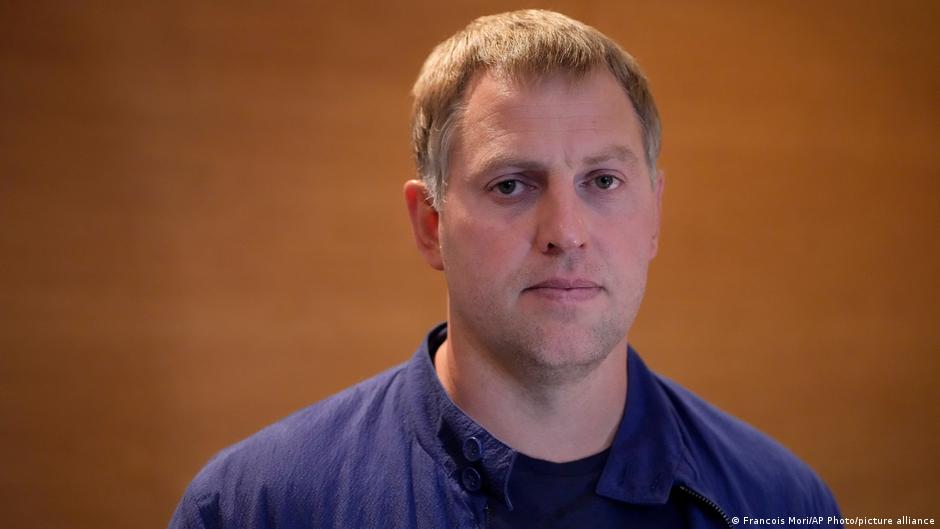
Vladimir Osechkin, the founder of the human rights project Gulagu.net, has announced a suspension of the initiative citing a "global crisis" impacting advocates against torture, violence, and war. The decision signals deeper challenges for human rights defenders linked to Russia and highlights concerns for UK and European interests given the geopolitical and market implications.
Gulagu.net’s Suspension Highlights Broader Risks for Human Rights Advocacy
Gulagu.net was created to assist prisoners held in Russian penal colonies and prisons, exposing systemic abuses including torture. On 20 July, Osechkin revealed the project’s temporary halt during an interview with German broadcaster n-tv. He emphasized a pervasive crisis in international law and human rights enforcement, stating:
"We—and with us everyone who opposes torture, violence, and war—are in a state of global crisis. Many of my colleagues remain silent, and I am tired of this silence because it harms not only our mission but the entire world."
Osechkin lamented the shift of international focus towards high-profile billionaires and entertainers, while daily human rights violations and deaths go unaddressed. This erosion of moral and legal foundations has left activists without a stable footing.
The project has yet to receive any human rights awards, which Osechkin attributed to preference for engaging with public figures who project polished narratives, rather than grassroots activists who witness real suffering. He cited how some opposition figures were temporarily placed in better conditions before prisoner exchanges, contrasting this with ongoing torture of war prisoners.
Osechkin’s own experience underscores the risks involved: he was imprisoned from 2007 to 2010, recalling emerging from detention bald and missing teeth. Since 2015, he has lived in exile in France after refusing to hand over Gulagu.net data to Russia’s Federal Security Service (FSB).
He revealed that in October 2025, four Russian agents were arrested in France for plotting his assassination, with one additional operative detained near his home in May 2026. His family and team are under police protection, and intelligence analysts consider him the top target for Russian special services after Alexei Navalny, owing to his documentation of military crimes and extraction of key witnesses abroad.
Implications for the UK, EU, and London Markets
From a UK and European business perspective, the situation involving Gulagu.net and its founder reflects broader geopolitical tensions impacting regional stability and economic confidence. London, as a key financial hub, is sensitive to shifts in Russian-related risks which can affect sterling volatility and investment sentiment.
Osechkin warned of a likely renewed military mobilisation in Russia this autumn, accompanied by harsher state controls including immediate passport cancellations, driver's license blocks, and asset confiscations. These measures contribute to increased uncertainty for businesses with Russian exposure or supply chain links.
Furthermore, Osechkin noted tightened European border controls and restricted visa issuance, underscoring a more cautious stance on migration and security that influences labour markets and international cooperation.
For British policymakers and investors, the suspension of Gulagu.net serves as a reminder of the persistent unpredictability linked to Russia's internal repression and its ripple effects across Europe. London’s markets, particularly sectors involved in energy and commodities with Russian ties, may face renewed scrutiny and risk pricing adjustments.
As London maintains its role as a global centre for legal and human rights advocacy, Osechkin’s warning about the erosion of international legal norms resonates strongly. The challenges faced by Gulagu.net highlight the need for sustained support and vigilance by European governments and civil society to uphold fundamental rights despite geopolitical pressures.
In sum, the cessation of Gulagu.net’s operations is not only a loss for human rights monitoring but also a signal of the complex intersection between security risks, humanitarian concerns, and economic interests that define UK and EU relations with Russia today.