German Foreign Minister Meets US Secretary of State in Washington Amid Global Economic Uncertainties
The German-US partnership remains vital as they discuss NATO contributions, Ukraine support, and global stability ahead of key summits.
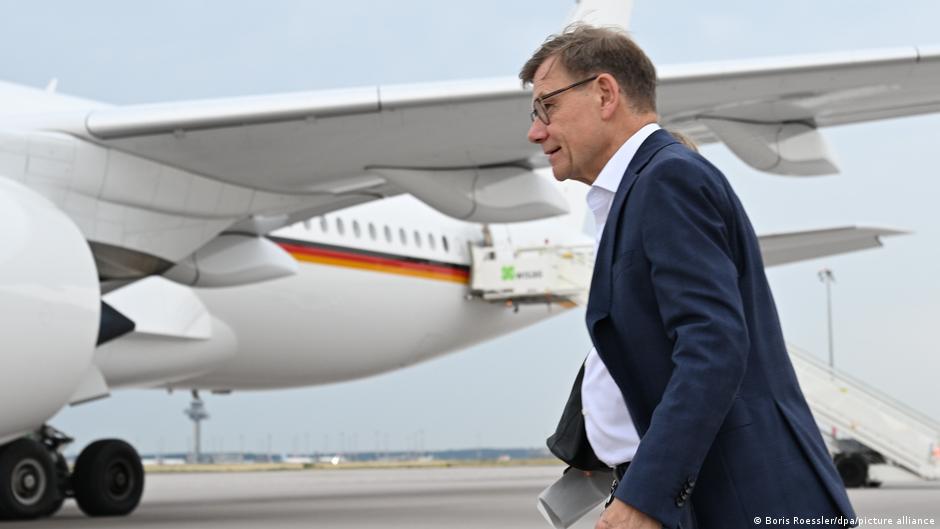
On Monday, June 29, German Foreign Minister Johann Wadephul met with US Secretary of State Marco Rubio in Washington to discuss pressing international matters amid a backdrop of global economic instability. Wadephul emphasized the indispensable nature of the German-American partnership, particularly during times of far-reaching geopolitical shifts.
Strengthening Transatlantic Ties in a Time of Crisis
Addressing the challenges undermining global economic stability, Wadephul stated, "Numerous crises are shaking the stability of the world economy and threaten to drive a wedge even between close partners. But we are resolutely countering this. Our partnership with the United States is indispensable—especially during periods of profound change." His comments underscore the continued importance of transatlantic cooperation, which holds significant implications for the UK and European markets.
“Our partnership with the United States is indispensable—especially during periods of profound change.” — Johann Wadephul, German Foreign Minister
For business stakeholders in London and broader EU markets, the reaffirmed German-US alliance signals a commitment to stability in trade relations and security policies, factors that influence investor confidence and sterling valuations. The UK, while no longer in the EU, remains deeply interconnected with European economic dynamics and global geopolitical developments.
Preparing for NATO Summit and Ukraine Support
Ahead of the NATO summit scheduled for July 7-8 in Ankara, Wadephul indicated a focus on discussing the distribution of military and financial contributions among alliance members, including the United States. This dialogue is set to influence the alliance’s long-term support for Ukraine, which remains a central concern for European security and economic stability.
The discussions are particularly relevant for London’s financial markets, where government policies and defense spending commitments often impact public finances and currency markets. The strengthened NATO framework could affect sterling through shifts in defense contracts, export controls, and transatlantic trade relations.
Diplomatic Engagements Beyond Europe
Following the Washington meeting, Wadephul was scheduled to travel to Asunción, Paraguay, to attend a Mercosur summit on June 30, highlighting Germany’s interest in expanding economic ties with the South American bloc. Subsequent visits to Argentina and Brazil further demonstrate Germany’s strategic outreach beyond Europe, which could open new avenues for European exporters and investors, including those based in the UK.
Of note, prior to his departure, Wadephul also expressed support for the German national football team ahead of their World Cup Round of 16 match against Paraguay, predicting a 3-1 victory. While light-hearted, such cultural exchanges complement diplomatic efforts by fostering goodwill.
Implications for UK and European Business
The German Foreign Minister’s statements and diplomatic itinerary reflect a broader European approach of maintaining strong transatlantic ties while diversifying global partnerships. For UK business interests, the outcomes of these discussions will be closely monitored, particularly with regard to NATO’s evolving role and the potential economic opportunities arising from Mercosur engagement.
Sterling markets could respond positively to signals of stability and coordinated Western support for Ukraine, as well as to the promise of expanded trade relations. London remains a key financial hub for facilitating international transactions, and any shifts in US-EU dynamics have direct and indirect impacts on currency flows and investor sentiment.