Italy's Meloni Condemns Russian Propaganda After Solovyov Insults, Impacting EU-UK Relations
Italian PM Giorgia Meloni rejects Russian media attacks amidst diplomatic tensions, with implications for British and European business interests.
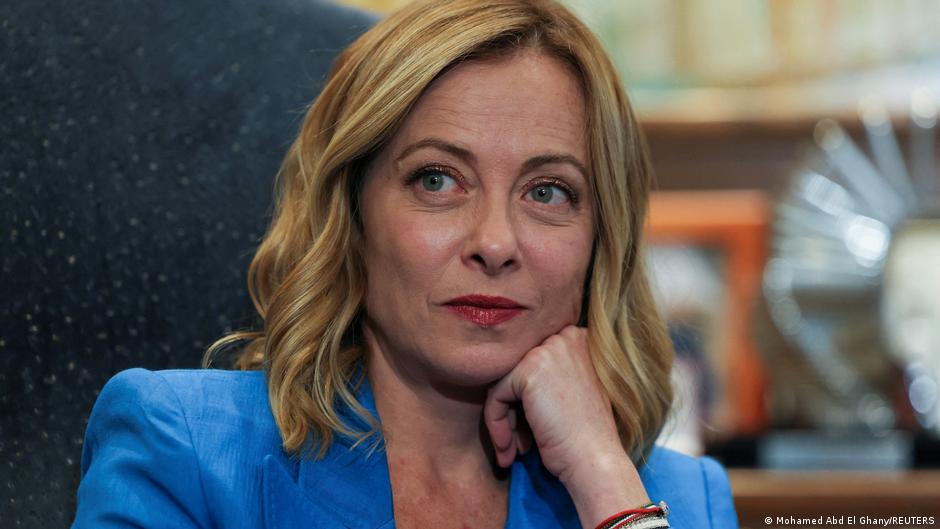
Italian Prime Minister Giorgia Meloni publicly rebuked Russian propaganda following derogatory remarks made by Russian TV host Vladimir Solovyov. The incident has sparked diplomatic tensions and drawn attention in British and European business circles, highlighting the geopolitical risks that could affect sterling and London's financial markets.
Meloni's Firm Stand Against Russian Propaganda
Late on Tuesday, April 21, Giorgia Meloni took to social media to denounce what she described as the "diligent propagandists of the regime," responding indirectly to widespread coverage in Italian media of Solovyov’s offensive comments directed at her. Her statement emphasized Italy’s sovereign course and independence from foreign influence.
"Unlike others, we are beholden to no one, accept no orders, and have only one guide: the interests of Italy. We will proudly follow this path despite protests from propagandists worldwide," Meloni wrote.
Notably, Meloni did not specify the exact provocation prompting her post, though the timing clearly followed the backlash against Solovyov’s remarks on Italian and Russian language broadcasts.
Diplomatic Fallout and Support from Italian Leadership
Earlier on the same day, Italian Foreign Minister Antonio Tajani summoned Russian Ambassador Alexey Paramonov to the Ministry of Foreign Affairs to formally protest Solovyov’s statements. Solovyov had called Meloni a "fascist creature who betrayed her voters" and "a disgrace to humanity," also accusing her of betraying former US President Trump after swearing loyalty.
These insults were widely reported by major Italian news outlets including La Repubblica, Domani, Sky Italia, and the ANSA news agency, amplifying their impact across Europe.
Italian political figures across the spectrum rallied in support of Meloni. President Sergio Mattarella described Solovyov’s words as "vulgar," while former Prime Minister Giuseppe Conte called the insults "indescribable." Parliamentary oversight commission head Barbara Floridia and Noi Moderati party representative Mariastella Gelmini condemned the remarks as unacceptable. Even the Democratic Party leader Elly Schlein voiced solidarity with Meloni.
Implications for UK and European Business Interests
This episode underscores ongoing tensions between European leaders and Russian state media narratives, impacting broader geopolitical dynamics. For British and European businesses, such diplomatic strains can influence market confidence, particularly in London’s financial district, which remains sensitive to geopolitical risk factors.
Sterling currency markets have shown volatility amid growing East-West tensions, with investors monitoring Italy’s political stance closely. Italy’s clear commitment to pursuing its national interests independent of Russian influence aligns with the broader EU and UK posture advocating strategic autonomy and resilience against propaganda efforts.
As Italy holds a crucial role within the European Union, Meloni’s response reinforces the continent’s collective stance against hostile media interference, which could affect trade policies, investment flows, and regulatory cooperation at a time when UK-EU relations are navigating a complex post-Brexit landscape.
In summary, this diplomatic episode highlights the interplay between media rhetoric and international relations, with tangible consequences for European and British economic interests. London's markets and sterling currency dynamics remain attuned to such developments as they signal shifts in political alliances and economic risk profiles across the continent.