Kosovo Premier’s Party Wins Early Elections Amid Coalition Challenges and EU Aspirations
Albin Kurti’s Self-Determination party secures 43% in Kosovo elections, seeking coalition partners to form government with EU integration prospects.
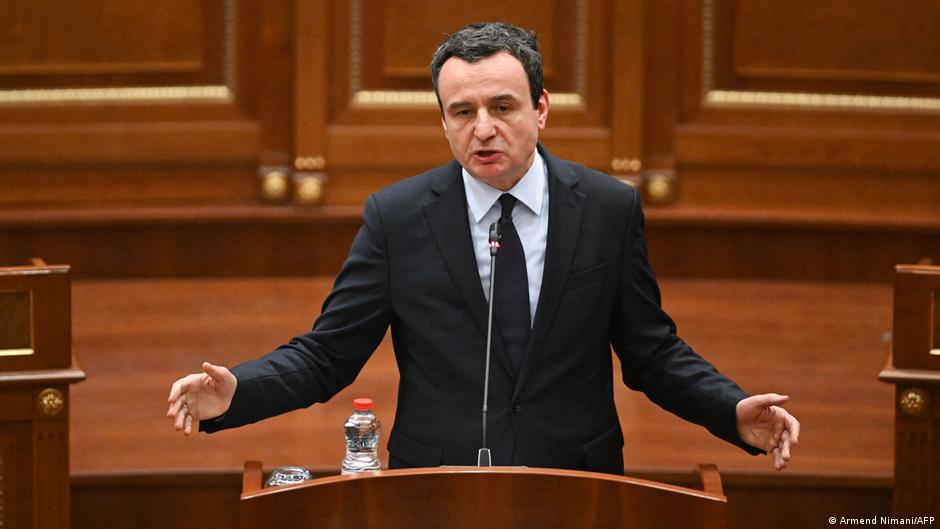
The ruling Self-Determination party of Kosovo, led by Prime Minister Albin Kurti, has won the early parliamentary elections with 43% of the vote, according to nearly complete official results released on the evening of June 7. However, the party will need coalition partners to form a stable government amid ongoing political challenges.
Self-Determination’s nearest rival, the Democratic Party of Kosovo, captured 21% of the vote, while the Democratic League of Kosovo came third with 18%. The Alliance for the Future of Kosovo received around 7%. Voter turnout was just under 37%, reflecting continued political fatigue in the Balkan state.
Political Context and Implications for UK and European Interests
This election represents Kosovo’s third parliamentary vote in the past 18 months, underscoring persistent political instability. After Self-Determination secured 51.1% in December 2025, the parliament was dissolved in April due to disagreement among parties on the presidential candidate, whose role is largely ceremonial but symbolically important.
"Kosovo’s political stability and EU integration remain pivotal for regional security and economic prospects, directly influencing the London financial markets and sterling exchange rates."
Kurti’s party espouses a pro-Western orientation, with Kosovo actively seeking European Union membership. Brussels has emphasized the importance of forming robust governmental institutions as a prerequisite for the reforms required in the EU accession process. This is of particular interest to British and EU stakeholders, who view stability in Kosovo as integral to broader Balkan security and market confidence.
The UK’s post-Brexit trade and diplomatic relations with the Western Balkans have positioned London as a key interlocutor in supporting Kosovo’s reform agenda. Financial markets in the City of London have been closely monitoring these developments, as political uncertainties in Kosovo can influence regional investment climates and, indirectly, sterling performance against other currencies.
Prime Minister Kurti, 51, has taken a firm stance towards Kosovo’s Serb minority concentrated in the north, aiming to extend government control over the region. This approach has raised concerns about potential tensions with Serbia, which, along with Russia and several EU member states—Spain, Cyprus, Greece, Slovakia, and Romania—does not recognize Kosovo’s independence declared in 2008. The unresolved status impacts diplomatic relations and regional economic integration, relevant to EU and UK business interests.
For investors and policymakers in the UK and Europe, Kosovo's political trajectory will be a critical barometer of stability in the Western Balkans. A stable pro-EU government could foster stronger trade links and create new opportunities for British businesses expanding in Southeastern Europe, while unrest may heighten risks.
As Kosovo navigates coalition negotiations, London financial markets remain attentive to how the outcome might affect sterling’s relative strength and investor confidence in the region. Given the UK’s strategic interest in supporting EU enlargement initiatives and the Western Balkans’ integration, the election results mark an important moment for British foreign and economic policy.