Latvian Government Coalition Collapses Following Defense Minister’s Resignation Amid Security Concerns
Political instability in Latvia raises concerns for UK and EU interests just months before parliamentary elections.
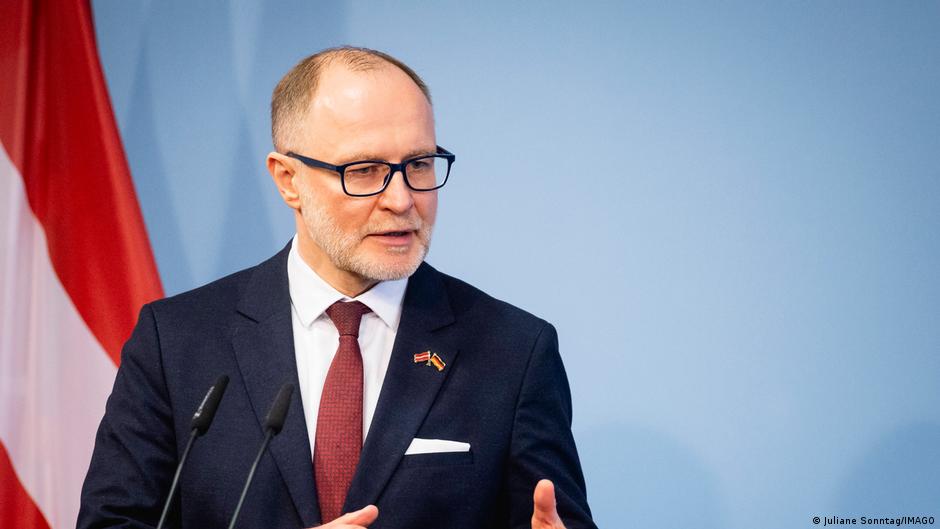
Latvia's ruling coalition government has fractured after the resignation of Defense Minister Andris Spruds, sparking political instability that reverberates across European and British strategic interests. The coalition, comprising the New Unity, Progressives, and Union of Greens and Farmers parties, dissolved amid growing doubts about government effectiveness in managing national security.
Impact on Latvian Governance and Regional Security
On May 13, the coalition unraveled following the resignation of Minister Spruds, a member of the Progressives party, who stepped down after drones entered Latvian airspace, raising alarms over the country's defense preparedness. Prime Minister Evika Silina of New Unity publicly expressed a loss of confidence in the defense leadership, citing a failure to maintain "safe skies." This incident, allegedly involving drones transiting from Ukraine to Russia, has intensified scrutiny of Latvia’s readiness amid escalating regional tensions.
"Latvia cannot afford instability just five months before the next parliamentary elections," President Edgars Rinkevics emphasized, calling for a "decisive government" with strong parliamentary support.
Following Spruds' resignation, Silina proposed appointing Colonel Raivis Melnis, a professional military officer, as the new defense minister. Although the Prime Minister invited the Progressives to continue coalition cooperation under this new arrangement, the party withheld an immediate response, signaling further negotiations ahead.
Political Fallout and Parliamentary Dynamics
Progressives faction leader Andris Šuvajev described the government as non-functional after talks with Silina failed to resolve critical issues. The opposition parties have expressed readiness to initiate a vote of no confidence against Silina’s administration. Without the Progressives' nine parliamentary votes, the government holds only 41 out of 100 seats, while the opposition controls 47, indicating the likelihood of a parliamentary reshuffle.
President Rinkevics has urged all parliamentary factions to present constructive proposals to overcome the crisis ahead of his scheduled meeting with faction leaders on May 15. Stability in Latvia’s government is viewed as essential not only for domestic governance but also for the broader security architecture of the Baltic region amid ongoing tensions with Russia.
Implications for UK and EU Interests
Latvia’s political uncertainty arrives at a critical juncture for UK and European Union security and economic interests. As a NATO member and EU partner, Latvia plays a vital role in the Baltic region’s defense infrastructure, which underpins the UK’s strategic commitments to European security post-Brexit.
The instability coincides with heightened concerns over Russian aggression and underscores the importance of coherent defense policies. London’s financial markets and sterling have responded cautiously to the news, reflecting apprehensions about potential disruptions to regional stability that could affect investor confidence and trade flows.
Moreover, the political crisis may delay vital defense spending and cooperation projects financed or supported by British and EU funds aimed at bolstering Baltic security capabilities. Swift formation of a stable government in Latvia is imperative to reassure investors and partners of the country’s commitment to shared security goals.
In summary, the collapse of Latvia’s ruling coalition and the ensuing political uncertainty present significant challenges for UK and EU strategic interests. The British government and European institutions will likely monitor developments closely, emphasizing the need for rapid political resolution to sustain regional stability and economic confidence.