Lithuania and Latvia Block Slovak PM's Flight to Moscow for May 9 Victory Day
Baltic states refuse overflight rights to Slovak Prime Minister Robert Fico en route to Moscow, reflecting ongoing EU tensions ahead of Victory Day celebrations.
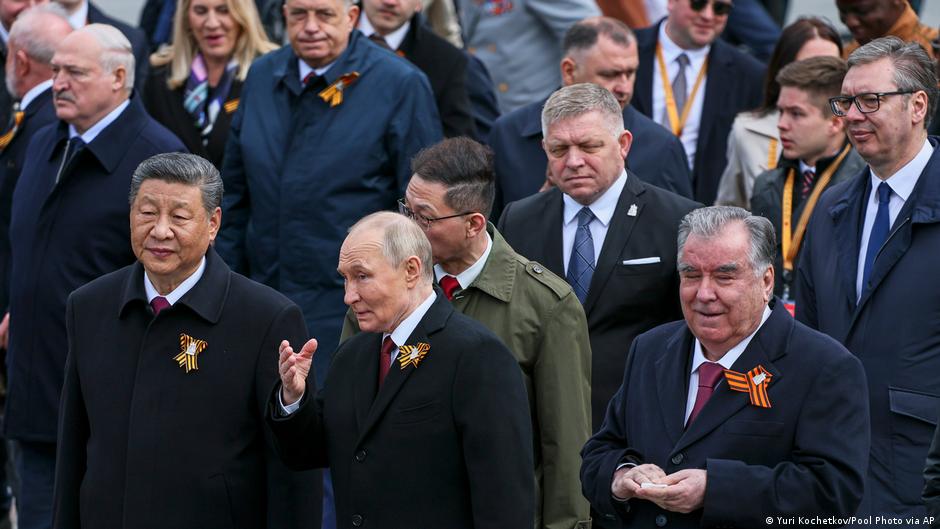
As tensions persist within the European Union, Lithuania and Latvia have once again denied overflight permissions to Slovak Prime Minister Robert Fico's aircraft en route to Moscow for the May 9 Victory Day celebrations. The move underscores the Baltic states’ firm stance on restricting transit for EU leaders traveling to Russia amid ongoing geopolitical sensitivities.
EU Airspace Restrictions and Regional Reactions
On April 18, Slovak Prime Minister Robert Fico announced that Lithuanian and Latvian authorities informed Bratislava they would close their airspace to his plane during the flight to Moscow. Fico remarked in a video address, "Lithuania and Latvia have already told us they will not allow overflight during the journey to Moscow. Well, EU member states are not permitting a prime minister of another EU country to fly over their territory. I will definitely find another route, as I did last year."
This development echoes the previous year's restrictions, where both Lithuania and Latvia denied overflights to Fico and Serbian President Aleksandar Vučić. Riga justified the ban citing "political sensitivity of the flight’s purpose," while Vilnius mentioned "technical and diplomatic sensitivity." Additionally, Poland also refused Fico’s overflight rights, forcing detours.
Victory Day, held on May 9, commemorates the Soviet Union’s triumph in World War II and is marked by large military parades in Moscow. The event attracts numerous foreign dignitaries, with the Russian government confirming that several international officials plan to attend this year.
"EU member states are not permitting a prime minister of another EU country to fly over their territory," said Slovak PM Robert Fico.
In 2023, leaders from 27 countries, including China, Belarus, Cuba, Venezuela, Slovakia, and Serbia, participated in the Moscow Victory Day events. However, European Union institutions had warned candidate countries and politicians against attending, highlighting the ongoing political rift between Brussels and Moscow.
Implications for UK and European Business Interests
The Baltic states’ restrictions on Slovak and other flights traveling to Russia have broader implications for European air travel and commerce. With Lithuania and Latvia positioned as critical transit corridors in northern Europe, such airspace denials may complicate travel logistics for European businesses and officials heading to Russia or beyond.
For the UK, which is no longer part of the EU but retains significant economic and political ties to the bloc, these developments reinforce the complexities faced by European airspace governance and geopolitical alignments. London-based airlines and freight operators may encounter indirect impacts if flight paths and overflight permissions become increasingly politicized.
Markets in London have watched EU-Russia relations closely, as any escalation could influence sterling volatility and trade flows, particularly in sectors linked to energy and commodities. The Baltic states’ firm stance on limiting transit to Russia represents a continuation of EU policies aimed at maintaining pressure on Moscow amidst the ongoing conflict in Ukraine.
As the May 9 commemorations approach, coordination among European capitals will remain delicate. The challenges faced by Slovak Prime Minister Fico highlight the intersection of diplomatic positioning and practical considerations in managing European airspace.