Mass Protests in London Highlight UK Immigration and Middle East Tensions Amidst Sterling Market Watch
Twin demonstrations in London saw thousands protest migration policies and commemorate Palestinian displacement, with authorities managing security amid mixed public reactions.
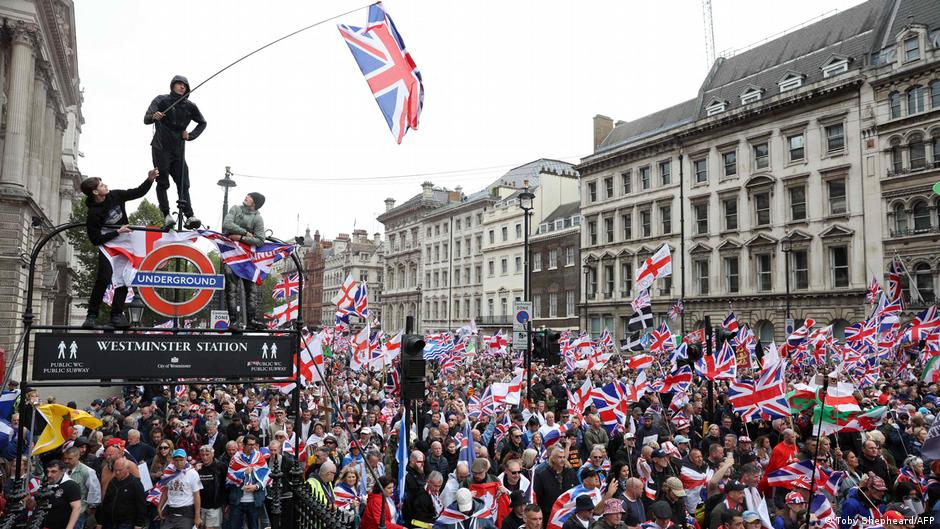
On Saturday, 16 May, London witnessed two significant mass protests occurring simultaneously, reflecting deep social and political divisions relevant to both British and wider European interests. The demonstrations—one opposing immigration, the other commemorating the Palestinian Nakba—drew tens of thousands and attracted intense attention from law enforcement and financial markets, including sterling traders assessing the potential economic impact.
Polarized Demonstrations and Their Broader Implications
The first rally, organized by ultra-right activist Steven Yaxley-Lennon, widely known as Tommy Robinson, focused on anti-immigration sentiments. Participants voiced concerns regarding the number of asylum seekers entering the UK and criticised Prime Minister Keir Starmer’s government policies. Starmer had pre-emptively condemned the event, accusing its organisers of deliberately spreading hatred and division.
“The number of asylum seekers and immigration levels are causing societal strain, necessitating urgent policy review,” stated one protester.
The second demonstration commemorated the Nakba ('catastrophe'), marking the displacement of roughly 700,000 Palestinians following the establishment of Israel in 1948. This event attracted activists critical of Western political figures including former US President Donald Trump and British right-wing politician Nigel Farage, whose party recently secured local election victories.
Despite the charged atmosphere, the Metropolitan Police reported that both protests proceeded largely peacefully, deploying some 4,000 officers and making 43 arrests to prevent escalation. The police also emphasized the prevention of antisemitic slogans, although some chants such as "Death to IDF" were reported.
Market and Sterling Reaction
The dual protests coincided with the FA Cup final, which attracted thousands of football fans across London, further complicating public order management. Financial observers noted that the heightened political tensions and public divisions raised concerns about social stability—a factor closely monitored by investors and currency traders.
While the British pound sterling showed minor volatility on the day, market analysts suggested that prolonged social unrest stemming from immigration debates and geopolitical issues could undermine confidence in the UK economy. London’s standing as a global financial centre depends in part on political stability and social cohesion, making these protests particularly relevant to EU and British interests alike.
In the broader European context, the demonstrations underscore ongoing challenges around migration policies and the Middle East conflict, both of which remain sensitive topics influencing diplomatic relations and economic forecasts. The UK government’s response to these issues is likely to impact future negotiations with the European Union and international partners.
Overall, London’s protests serve as a vivid reminder of the complex interplay between domestic politics, international affairs, and financial markets, illustrating how socio-political developments can ripple through the economy and affect sterling’s performance.