NATO Intelligence Indicates Russian Deployment of Underwater Nuclear-Capable Missiles
NATO reports suggest Russia’s secret ‘Skif’ missile project could challenge UK and European maritime security and impact London markets.
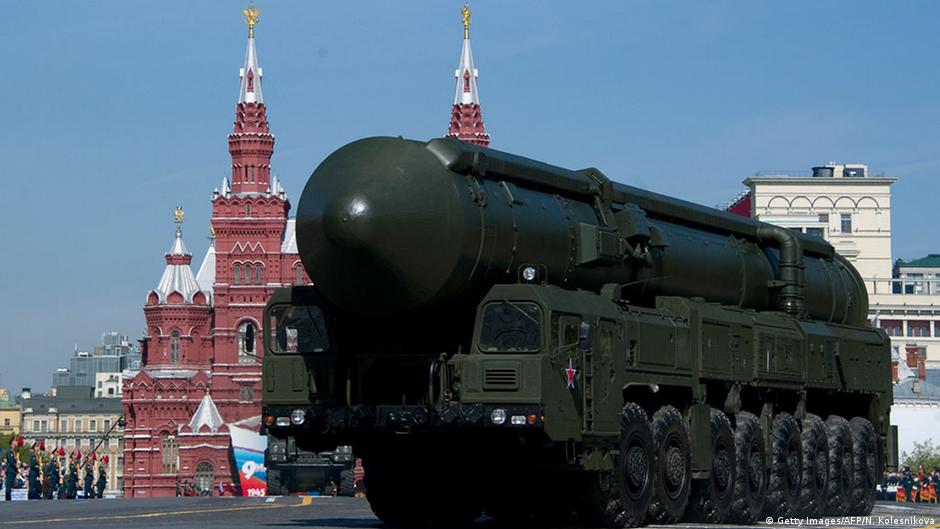
NATO intelligence has detected activities by the Russian Northern Fleet that point to attempts to deploy ballistic missiles capable of carrying nuclear warheads on the seabed, according to a joint investigation by German broadcasters ARD, WDR, and NDR.
The surveillance focuses on a secret Russian military project codenamed “Skif,” which involves placing missiles on the ocean floor in a manner previously unknown. The missiles, modified from the existing "Sineva" submarine-launched ballistic missile, are reportedly capable of being launched from underwater silos and have a range of several thousand kilometres.
Implications for UK and European Security and Markets
The potential deployment of such underwater missile systems presents a strategic challenge for NATO countries, including the UK and European Union members, as it could significantly complicate detection and neutralisation efforts. Experts warn that these launch platforms would be nearly impossible to track or destroy, raising concerns about destabilisation in Northern European waters.
Helge Adrians, an expert from the Berlin-based Science and Politics Foundation (SWP), told ARD that this approach could allow Russia to maintain credible nuclear deterrence at lower operational costs by reducing reliance on expensive submarines. However, the project faces substantial technical challenges, including marine currents, sediment accumulation in missile shafts, and the complexities of power supply and remote command.
"Deploying ballistic missiles on the seabed could allow Russia to maintain nuclear deterrence more cost-effectively, but technical hurdles remain significant," said Helge Adrians.
For the UK, which relies heavily on the security of the North Atlantic and Arctic sea routes, the development of seabed-based missile systems by Russia is a strategic concern. The presence of such systems near British and EU maritime borders could elevate tensions and necessitate a recalibration of defence spending and capabilities.
From a financial perspective, markets in London and across Europe are closely monitoring geopolitical risks that could influence sterling and broader economic stability. Heightened military tensions often lead to increased volatility in currency and equity markets, underscoring the importance of robust intelligence and diplomatic efforts to mitigate escalation.
According to NATO sources cited by the investigation, the underwater missile silos may be deployed from the Russian ship Zvezdochka and the submarine Sarov, both stationed in Severodvinsk on the White Sea coast. Neither NATO nor the Russian Ministry of Defence has officially commented on the "Skif" project. The Russian Embassy in Berlin stated it has no information on the matter.
Internationally, the potential deployment raises legal questions as well. The 1971 Seabed Treaty, which bans nuclear weapons placement on the ocean floor, applies only to international waters and does not prohibit such positioning within a country's territorial waters. This loophole could be exploited by Russia to advance its strategic capabilities.
Previously, in 2017, Viktor Bondarev, former commander of the Russian Aerospace Forces, confirmed that "Skif" missiles hidden on the seabed are part of Russia’s military arsenal. This underscores the seriousness of this new phase in underwater nuclear deterrence technology.
As the UK and EU continue to assess the security landscape, intelligence on Russia’s evolving capabilities will be crucial for shaping defence policies and ensuring the safety of critical maritime routes. The London market’s reaction to these developments will also remain sensitive to any escalation in geopolitical tensions linked to Russia’s advancing military technologies.