Novorossiysk Fire Puts Russian Port Risk Back in Focus for UK and EU Markets
A reported drone attack on one of Russia’s largest European ports has renewed attention on oil, grain and shipping risks for Britain and the EU.
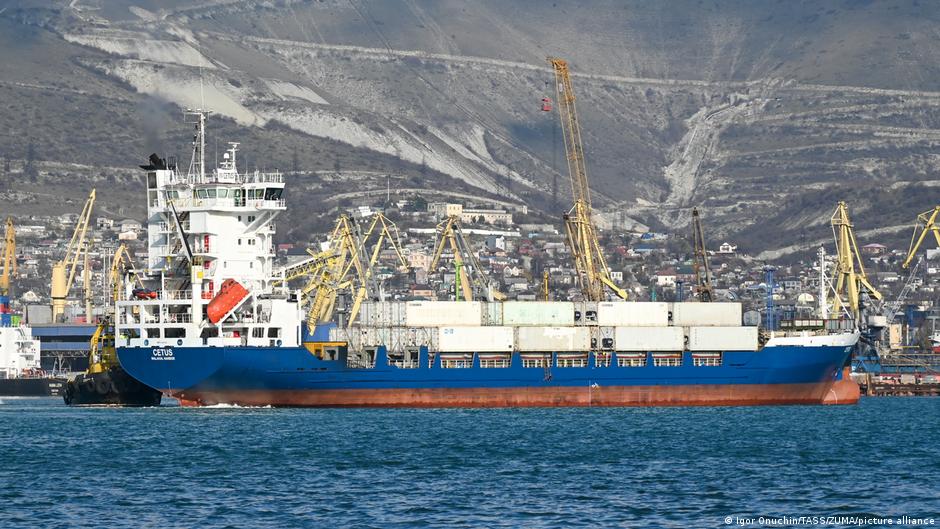
A major fire broke out in Novorossiysk after a reported drone attack, according to Russian local officials and OSINT analysis cited by ASTRA, putting one of Europe’s largest ports back at the centre of market attention for traders in London and across the European Union.
Andrei Kravchenko, the mayor of Novorossiysk, said on Telegram overnight on Wednesday, 9 September, that the city had been attacked using unmanned aerial vehicles. According to him, debris from drones had fallen on the territory of enterprises and near a residential building. Preliminary information indicated there were no casualties, and emergency services were working to deal with the consequences.
ASTRA, citing its OSINT analysis, reported that a fuel oil terminal was burning after the strikes. It described the facility as one of the leading enterprises in the Novorossiysk transport hub, part of Russia’s largest port. ASTRA also said there was a fire in a residential apartment building on Volgogradskaya Street, while an eyewitness filmed another blaze in the city.
According to the mayor, drone debris fell on enterprise grounds and near a residential building, with no casualties reported in preliminary information.
For UK and European business audiences, the significance of the incident lies less in the immediate local damage than in the port’s role in global commodity flows. Novorossiysk is one of the largest ports in Europe and a key hub for Russia’s foreign trade. Oil, metals, container cargo and grain move through the port to international markets, making disruption there relevant to shipping firms, insurers, commodity houses and currency traders.
Why Novorossiysk Matters to European Trade
Novorossiysk handles up to a third of all Russian grain exports, a position explained by its proximity to Russia’s main agricultural regions. It is also a route for oil and other goods headed to world markets. That makes the port a recurring point of concern for European buyers and intermediaries even as sanctions, insurance restrictions and geopolitical risk have reshaped direct trade with Russia.
The latest reported attack follows an earlier intensification of strikes on Novorossiysk in August, which caused noticeable disruptions to oil and grain shipments. That recent precedent is likely to frame how traders interpret the new fire. A single incident may not immediately translate into a supply shock, but repeated disruption at a major export hub can alter freight planning, storage decisions and risk premiums.
In London, the reaction would be watched most closely through energy, grain and shipping-linked equities, as well as the broader inflation and sterling narrative. Britain remains exposed to global energy and food price movements even when it does not buy directly from the affected terminal. Any sign that Black Sea exports are becoming less predictable can feed into wholesale pricing, insurance costs and expectations for imported inflation.
Sterling’s sensitivity would depend on whether traders see the incident as a one-off security event or part of a pattern that could affect commodity prices. A sustained move higher in energy or food costs would matter for the UK’s inflation outlook and, by extension, expectations for Bank of England policy. In that setting, the pound could move not because of direct Russian trade exposure, but because investors reassess the cost pressures facing British households and companies.
EU Exposure Runs Through Energy, Food and Freight
For the European Union, the commercial implications are similarly indirect but material. EU economies remain affected by benchmark prices for oil, refined products, grains and shipping capacity. If a leading Russian port faces operational disruption, the effect may be felt in alternative routing, higher freight risk premia or greater volatility in futures markets. Grain-importing countries and food processors would be particularly attentive to any indication that export schedules are being interrupted.
The reported fire at a fuel oil terminal also adds to the risk calculations of maritime insurers and logistics operators serving the Black Sea and Mediterranean trade corridors. Even where firms avoid sanctioned flows, security instability around a major port can influence vessel availability, war-risk cover and the willingness of shipowners to accept routes near affected infrastructure.
The residential fire reported by ASTRA adds a civilian dimension to the incident, though the mayor’s preliminary statement said there were no casualties. Emergency services were said to be working at the scene. The available source material did not provide an official assessment of damage at the fuel oil terminal, the residential building or other enterprises, nor did it specify the number of drones involved.
For investors, the key issue now is operational continuity. Markets will look for evidence on whether loading, storage and port access have been affected, especially for oil and grain cargoes. In August, intensified strikes on Novorossiysk were already linked to noticeable disruption in shipments. The latest fire therefore lands in a market environment primed to react to any further interruption at the same hub.
With Novorossiysk serving as a central outlet for Russian exports, the incident is likely to remain on the radar of London commodity desks and European policymakers. The immediate facts are limited to reports of a drone attack, fires at a fuel oil terminal and a residential apartment building, and no preliminary casualties. The broader business concern is whether repeated strikes near one of Europe’s biggest ports begin to reshape pricing, freight risk and currency expectations across the UK and the EU.