US Says Five Iranian Oil Tankers Destroyed as Hormuz Risks Deepen
The reported strikes in the Gulf of Oman and Persian Gulf add pressure on UK and European energy planning, shipping costs and sterling-sensitive markets.
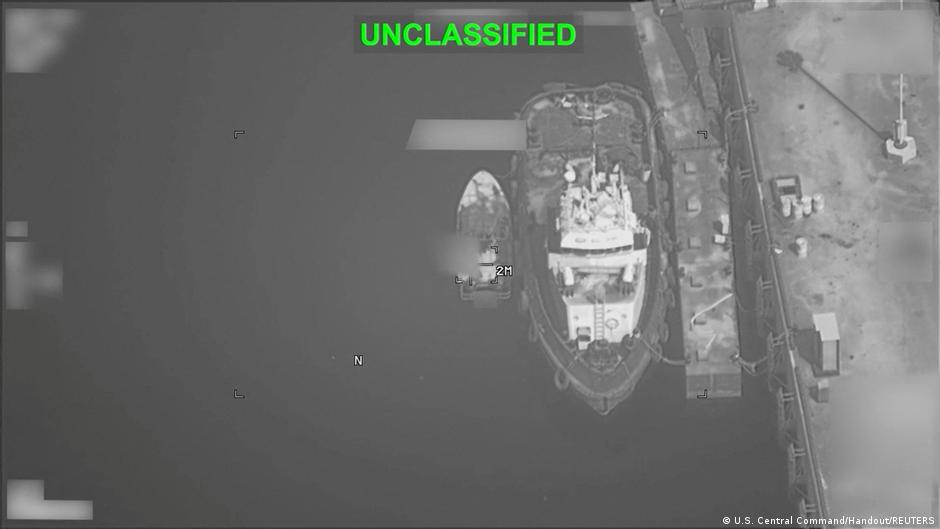
The United States said it destroyed five Iranian oil tankers on Tuesday, 8 September, after the Islamic Revolutionary Guard Corps twice attacked a US Navy vessel with ballistic missiles over the previous two days, according to US Central Command.
CENTCOM said the American ship successfully evaded the attempted Iranian attacks and continued patrolling regional waters. No US personnel were injured, the command said in a statement posted on X.
The operation marks another escalation around the Strait of Hormuz, a waterway central to global oil supplies and closely watched in London and across Europe because of its influence on energy prices, shipping insurance and inflation expectations. For the UK, where imported energy costs feed quickly into household bills and business margins, any sustained disruption in the Gulf risks complicating the outlook for sterling and the Bank of England’s inflation calculations.
CENTCOM identified the tankers destroyed in the Gulf of Oman as the M/T Kaviz, M/T Charminar, M/T Horizon 1 and M/T Riesco. It said a fifth tanker, the M/T Derya, was destroyed near Kharg Island in the Persian Gulf. US forces instructed the crews to leave the vessels before they were struck and disabled, CENTCOM said.
“The ship successfully evaded the attempted Iranian attacks and continued patrolling regional waters,” CENTCOM said, adding that no personnel were hurt.
London Watches Oil, Sterling and Shipping Risk
For London markets, the immediate issue is not only the destruction of the tankers but the wider signal that military activity around Hormuz is again intensifying. The strait is one of the world’s most important oil transit routes, and the source article describes it as a central point of dispute in the US and Israeli war against Iran.
Higher perceived risk in the Gulf can raise the cost of moving crude and refined products, as insurers and shipowners price in the threat to crews, vessels and cargo. That matters directly to European buyers and indirectly to British consumers because energy costs influence transport, manufacturing, food distribution and household utility bills. Sterling can come under pressure when investors believe energy shocks will worsen the UK’s trade position or keep inflation elevated for longer.
The source report did not provide oil prices, exchange-rate moves or equity-market figures, and no such market data is added here. But the relevance for the City of London is clear: traders in energy, currencies and shipping-linked equities are likely to treat further military claims around Hormuz as a material risk factor, particularly if commercial traffic faces delays or if the confrontation widens.
CENTCOM said Iran had used the tankers as part of a multibillion-dollar “shadow” network that funds the IRGC and its regional representatives. According to the US military, Tehran does not have the means to protect those vessels.
The latest reported action follows an earlier CENTCOM strike on 5 September, when US forces destroyed three Iranian oil tankers after the IRGC attempted to attack a US aircraft carrier and a guided-missile destroyer. Together, the incidents point to a shift away from a short pause in direct US strikes on Iranian targets.
Return to Strikes After a July Pause
US forces had not struck Iran since late July, according to the source article. The pause followed an order from President Donald Trump, who said he wanted to continue talks with Tehran over the future of the Strait of Hormuz, sanctions and Iran’s nuclear programme.
The first US strike after the month-long lull came on 30 August, when American forces hit two Iranian missile launchers on Larak Island, located in the Strait of Hormuz. Tehran later said it had carried out retaliatory attacks against US targets in the United Arab Emirates. According to the source, dozens of drones attacked “American helicopters and personnel at Al Minhad base” in the UAE.
The Strait of Hormuz had been open to shipping before the start of hostilities in late February. Today, according to the source article, both Iranian and American armed forces claim control over it. That competing claim is crucial for European governments and businesses because freedom of navigation through Hormuz underpins a large share of global energy trade.
For the UK and the EU, the escalation comes at a sensitive moment for energy security. Europe has spent recent years reducing its exposure to geopolitical supply shocks, but oil remains a globally priced commodity. Even countries that do not buy directly from Iran can be affected if freight costs rise, cargoes are rerouted or traders build a risk premium into benchmark prices.
British companies with fuel-intensive operations, from airlines and logistics firms to manufacturers and retailers, are particularly exposed to sudden changes in energy and transport costs. A renewed premium on Gulf shipping risk could also affect insurers, brokers and maritime service providers in London, where much of the global shipping finance and insurance ecosystem is concentrated.
The US account frames the tanker strikes as a response to IRGC attacks on American naval assets and as an effort to disable vessels allegedly tied to a financing network. Iran’s reported retaliation against US-linked targets in the UAE, and the competing claims over Hormuz, indicate that the confrontation remains unresolved.
For investors and policymakers in Britain and Europe, the central question is whether the latest destruction of Iranian tankers remains a contained military episode or becomes part of a broader disruption to Gulf energy flows. Until that becomes clearer, the Strait of Hormuz will remain a geopolitical pressure point with direct consequences for oil pricing, sterling sentiment and the London market’s appetite for risk.