Polish Opposition Leader Kaczyński Calls to Block Ukraine’s EU Accession Talks Amid Rising Tensions
Jarosław Kaczyński urges Polish government to halt Ukraine’s EU membership negotiations, impacting UK and European markets.
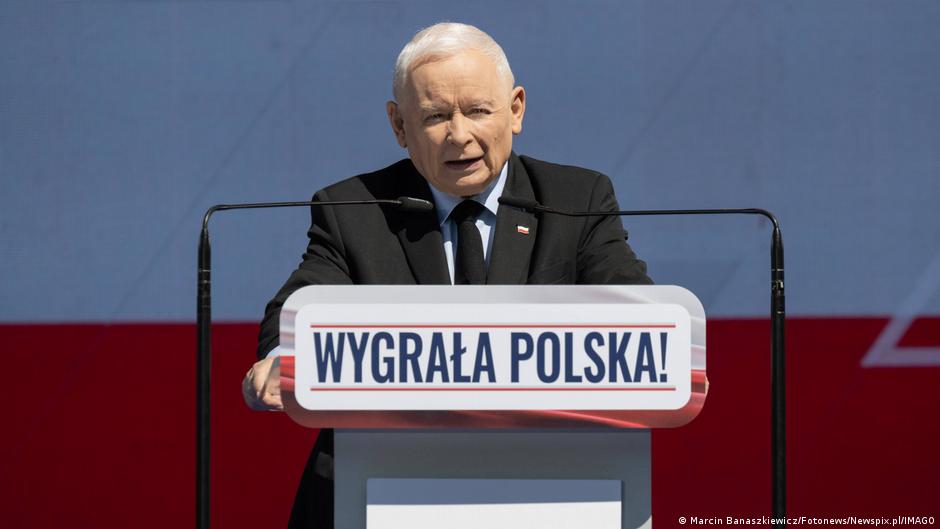
Jarosław Kaczyński, leader of Poland's opposition party Law and Justice (PiS), has publicly urged the Polish government to block negotiations on Ukraine's accession to the European Union. This call comes amid escalating diplomatic tensions between Warsaw and Kyiv, highlighting potential ramifications for UK and wider European economic interests, particularly concerning the stability of sterling and London’s financial markets.
Political Strife Between Poland and Ukraine Adds Complexity to EU Enlargement
Kaczyński’s appeal to halt Ukraine’s EU membership talks signals a significant shift in regional dynamics, given Poland’s traditionally supportive stance towards Ukrainian integration into European structures. The leader criticized Kyiv for intensifying conflicts with Warsaw, accusing the Ukrainian government of "violent escalation" in what he described as a "war of orders" between the two countries. This rhetoric sharply contrasts with Poland’s current Prime Minister Donald Tusk’s approach, who just days earlier hosted the Ukraine Recovery Conference in Gdańsk, resulting in over €10 billion in signed agreements aimed at post-war rebuilding.
"This is not only about relations with Ukraine but also about protecting Polish interests from economic and political risks linked to accession talks," said Kaczyński.
Kaczyński’s position appears to anticipate the upcoming Polish parliamentary elections scheduled for October 2027. Analysts suggest he is aiming to consolidate support among Polish farmers concerned about increased competition from Ukrainian agricultural imports, as well as among citizens wary of the fiscal impact of hosting Ukrainian refugees. This domestic political calculus introduces uncertainty into EU enlargement policy discussions, with broader implications for European unity and economic stability.
Underlying the diplomatic row is Ukraine’s recent move to name a military unit after the Ukrainian Insurgent Army (UPA), a group viewed very differently in Poland and Ukraine. While Ukrainian narratives honor the UPA as freedom fighters, Poland associates them with the Volhynia massacres of 1943-1944, a deeply painful historical memory. This led to Polish President Karol Nawrocki revoking the Order of the White Eagle, Poland’s highest honor, awarded to Ukrainian President Volodymyr Zelenskyy. In response, several senior Ukrainian officials, including the head of the Presidential Office Kyrylo Budanov and Foreign Minister Dmytro Kuleba, returned their Polish state decorations in protest.
The tensions have also disrupted planned diplomatic engagements, with President Zelenskyy opting out of attending the Ukraine Recovery Conference in Gdańsk, where he was expected to lead the Ukrainian delegation. This absence was symbolic of the current chill in Polish-Ukrainian relations.
Implications for UK and European Markets
For the UK and European business communities, Poland’s internal political shifts and the uncertain trajectory of Ukraine’s EU accession talks could influence investor confidence and regional economic forecasts. The sterling, already sensitive to geopolitical developments in Eastern Europe, may face volatility as London-based financial institutions reassess risks associated with EU enlargement and its impact on trade and investment flows.
Given the UK’s post-Brexit trade relationships with both Poland and Ukraine, any instability in their bilateral relations may ripple through supply chains, particularly in agriculture and manufacturing sectors. Additionally, London's role as a financial hub for Eastern European markets means that heightened political risks could dampen capital flows and affect currency markets.
As the situation evolves, close monitoring by policymakers and market participants in the UK and EU will be essential to gauge the longer-term effects of Polish political maneuvering on the broader European project and international economic stability.