US-Iran Clashes after Drone Attack on Merchant Vessel Spark Market Concerns in London
US strikes on Iranian missile and drone stockpiles follow Iran’s attack on Singapore-flagged ship, raising tensions impacting Sterling and European trade routes.
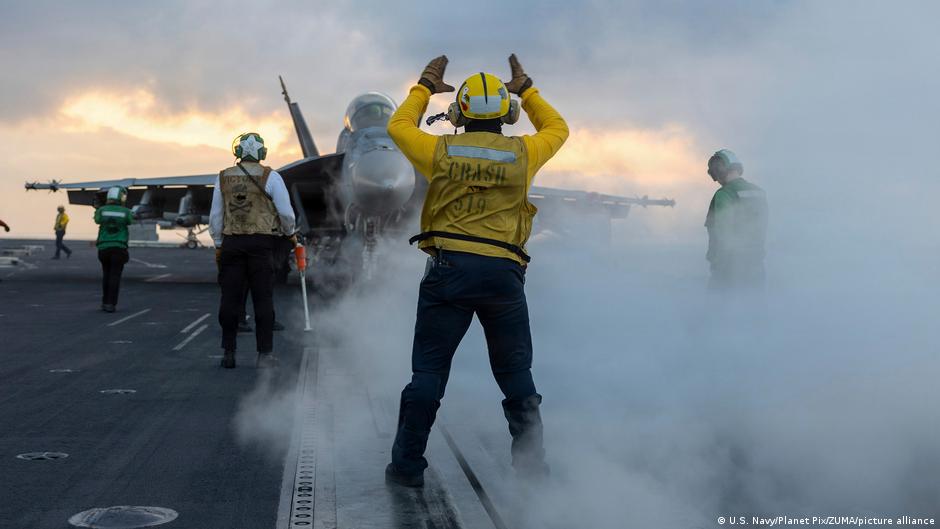
On June 26, US Central Command (CENTCOM) announced precision air strikes targeting Iranian missile and drone storage facilities along with coastal radar positions. This military response came after Iran launched a kamikaze drone attack on the Singapore-flagged cargo ship Ever Lovely transiting the strategic Strait of Hormuz the day prior.
The American military described the strike as a decisive retaliation against "unjustified aggression" that violated the recently agreed ceasefire regime between the United States and Iran, aimed at deescalating conflict in the region.
Regional Tensions and Implications for European Trade
The Iranian Revolutionary Guard Corps (IRGC) responded by shelling US military bases across the Middle East, threatening more extensive retaliation if further provocations occur. Iranian officials claimed their actions align with a signed document granting Tehran authority over maritime navigation through the Strait of Hormuz — a crucial chokepoint for global oil shipments.
“The US has attempted through various provocations to breach this agreement, to which a necessary response was given,” stated the IRGC.
These escalating hostilities come shortly after a June 17 framework agreement between Washington and Tehran, designed to halt hostilities and reopen the vital waterways. The attack on Ever Lovely marks the first such incident in the strait since the pact’s enactment, with the IRGC asserting that safe passage will only be guaranteed along routes under Iranian control.
Following the incident, the International Maritime Organization (IMO), a UN body, suspended efforts to evacuate hundreds of vessels and over 11,000 seafarers stranded in the Persian Gulf, where ongoing US and Israeli military operations against Iran remain a concern.
The disruption has reignited volatility in global oil markets, with prices climbing amidst fears of prolonged supply interruptions. This surge carries direct consequences for the UK and European economies, heavily reliant on steady energy imports and the stability of key shipping lanes.
In London, the pound sterling came under pressure amid investor concerns about geopolitical risks impacting trade flows and energy prices. Analysts warn that further escalation could destabilize sterling and ripple through European markets, affecting commodities and logistics sectors linked to Middle Eastern trade routes.
US President Donald Trump condemned Iran’s actions as a “stupid” breach of the ceasefire, noting the deployment of at least four drones against vessels in the strait. His remarks underscore the fragile nature of the diplomatic progress and the potential for renewed conflict.
For British and European businesses, particularly those with interests in shipping, energy supplies, and petrochemicals, the developments highlight the persistent risks in the Middle East and the need for diversified supply chains. London's financial markets are closely monitoring the situation for signs of broader regional destabilization that could influence investment and currency trends.
As the situation unfolds, European policymakers face the challenge of balancing support for diplomatic resolutions with safeguarding critical trade corridors. The Strait of Hormuz remains a linchpin for global commerce, where any conflict escalation could ripple through global markets, emphasizing the importance of UK-EU cooperation in crisis response and economic resilience.