Putin Backs US-Mediated Ukraine Talks but Rejects Front-Line Freeze
The Kremlin's stance leaves major obstacles to a settlement, prolonging uncertainty for British and European businesses exposed to the war.
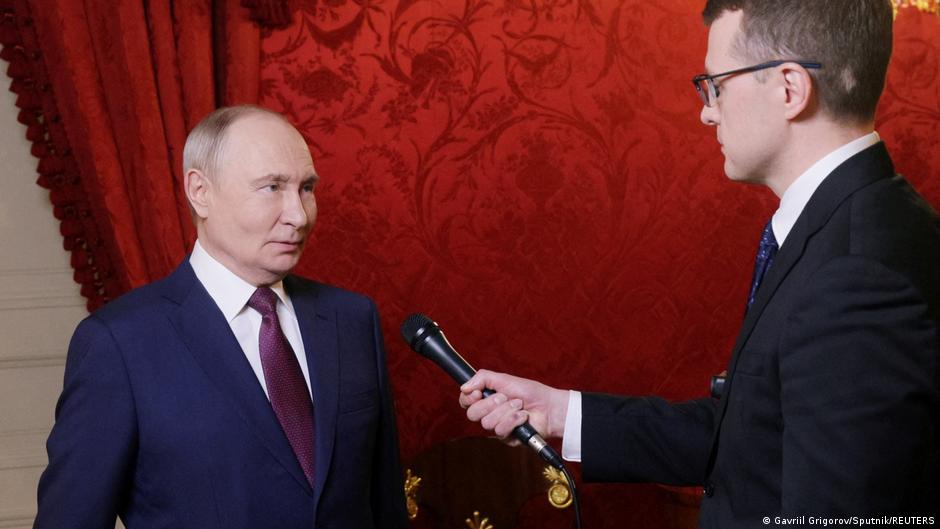
Russian President Vladimir Putin has said Moscow is prepared to resume talks with Kyiv through US mediation, while rejecting Ukraine's readiness to freeze hostilities along the current front line. The contrasting positions leave substantial barriers to any settlement and extend the geopolitical uncertainty confronting Britain and the European Union.
In an interview with Pavel Zarubin, a journalist at Russia's state-owned VGTRK media group, published on Thursday, October 22, Putin said he had agreed during a meeting with US special envoy Steve Witkoff to renew dialogue with Kyiv under Washington's mediation.
“The purpose of these negotiations will be to discuss ensuring the security of Ukraine and Russia after peace agreements are reached, in their final form, rather than as a result of suspending hostilities for some short period,” Putin said. “We are ready to resume these contacts to achieve this goal.”
Moscow did not disclose what level of representation it would accept for renewed negotiations following the Putin-Witkoff meeting. Ukrainian President Volodymyr Zelensky has said he is ready for a trilateral meeting with Putin and US President Donald Trump to discuss ending the war.
The Kremlin has repeatedly rejected that format or attached conditions that Kyiv did not regard as a serious basis for a meeting. One such proposal was that Zelensky travel to Moscow. Previous meetings between Ukrainian representatives and a delegation selected by Putin also produced no tangible progress towards ending the conflict.
Further doubts emerged only hours after Putin met Witkoff, when Kremlin foreign-policy aide Yuri Ushakov said Russia was “completely dissatisfied” with proposals brought to Moscow by Trump's negotiators.
Territorial dispute limits prospects for a ceasefire
Asked about Zelensky's statement that Ukraine was prepared to freeze fighting along the current line of contact, Putin rejected the premise on territorial grounds. “It is not their territory; it is the territory of historical Russia,” he said.
Media reports previously indicated that Trump had supported the idea of freezing hostilities along the front line running through the Donbas in 2025, before meeting Putin in Anchorage. Such an arrangement conflicts with the Russian leader's publicly stated demand that Ukraine surrender the whole of the Donbas to Russia without a fight.
The disagreement is significant for European policymakers because a short-term cessation of fighting and a comprehensive peace agreement would carry different implications for sanctions, reconstruction commitments, defence spending and energy security. Putin's insistence on a final settlement, combined with unresolved territorial demands, suggests that the route to any durable agreement remains uncertain.
For British and EU businesses, the absence of a clear diplomatic breakthrough means continued exposure to war-related risks, including volatile energy and commodity costs, disrupted trade routes and tighter compliance requirements linked to sanctions. Investors in London will also be assessing what any US-led process could mean for European defence companies, banks with cross-border compliance obligations and firms positioned for Ukraine's eventual reconstruction.
Sterling-sensitive companies remain vulnerable to shifts in global risk appetite and energy prices, although the interview itself provided no evidence of an immediate move in the pound or a specific reaction across London-listed shares. The longer-term market significance will depend on whether renewed contacts produce verifiable progress or remain limited to conflicting public statements.
Russian attacks continue despite diplomatic messaging
In the same interview, Putin claimed that Russia “does not want to fight” Ukraine and placed responsibility for the continuation of hostilities on Kyiv. Russia launched the war against Ukraine, and Russian forces continue to strike targets across the country.
“We are still ready to reach agreements and look for ways out of this difficult situation,” Putin said. “These are people very close to us. The latest genetic studies show that Russians and Ukrainians are one people.”
Putin did not explain how claims concerning genetics could affect Ukraine's national sovereignty.
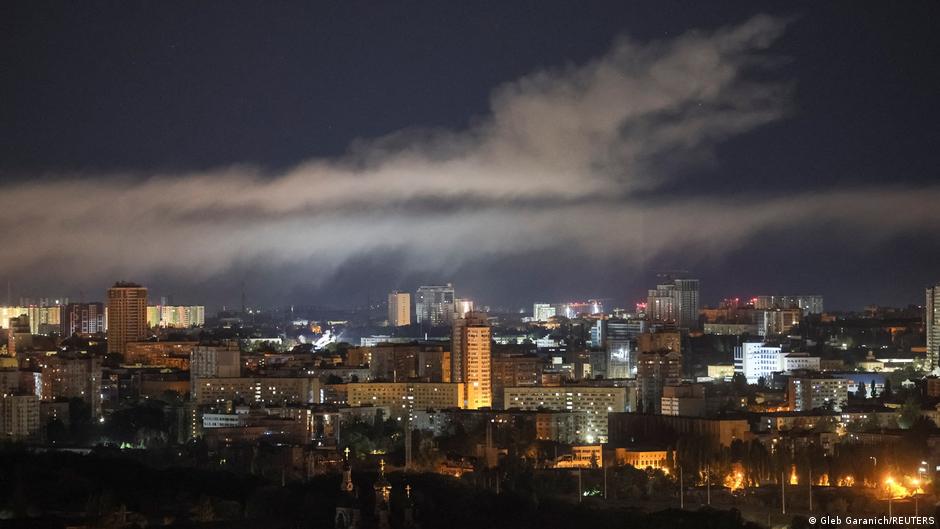
The intensity of Russian attacks on Ukraine did not decline after Putin's meeting with Witkoff. On the day Zarubin's interview was published, Ukrainian authorities reported multiple Russian attacks on civilian sites. The reported targets included a clothing market in Lozova in the Kharkiv region, Kyiv's historic centre, and roads and bridges in several Ukrainian regions.
Two people were killed and 34 were injured in the Russian strike on Lozova, according to the Ukrainian side.
The continued attacks underscore the divide between the Kremlin's stated openness to negotiations and conditions on the ground. For the UK and EU, that gap is likely to sustain pressure for military and financial support for Ukraine while complicating decisions about sanctions, security guarantees and the eventual terms of European participation in a peace process.
Washington's role may create another diplomatic channel, but the rejection of a front-line freeze and the absence of agreement over negotiating formats indicate that businesses and markets cannot yet treat the latest statements as evidence of an imminent end to the war.