Kyiv Missile Strike Raises Fresh Security Concerns for UK and EU Business
Six people were injured as ballistic missiles hit three Kyiv districts, renewing concern over infrastructure risks and European exposure.
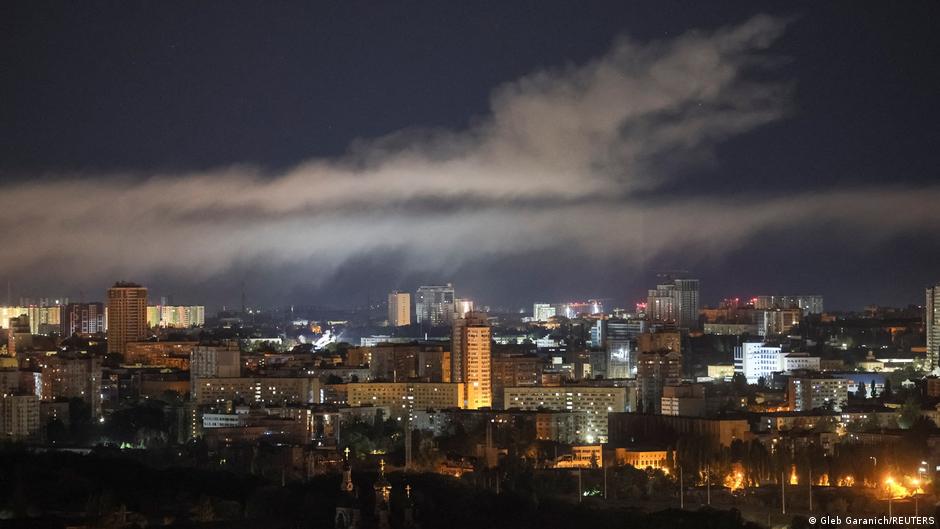
Russian forces struck Kyiv with ballistic missiles on Wednesday evening, October 21, injuring six people and damaging homes, transport infrastructure and a medical facility across three districts of the Ukrainian capital.
Four of those injured were taken to hospital, Kyiv Mayor Vitali Klitschko said. Preliminary information indicated that 10 missiles were launched at the city, including Iskander-M, Zircon and S-400 weapons.
The attack adds to a series of deadly strikes on Kyiv and its surrounding region in recent days. For British and European businesses with employees, suppliers, investments or humanitarian operations in Ukraine, the repeated damage to transport, healthcare and energy assets underscores the continuing operational risks associated with the war.
Residential and infrastructure sites damaged
In Kyiv’s Dniprovskyi district, missiles hit two private residential houses and a vehicle service station. Debris also fell near a petrol station, according to the information released by city authorities.
A transport infrastructure facility was damaged in the Darnytskyi district, Klitschko said, without providing further details. In the central Pecherskyi district, a medical institution sustained damage.
The Kyiv City Military Administration warned that the threat of drone attacks remained in place after the missile strike and urged residents to stay in shelters. The continuing alert suggested that the immediate danger had not ended with the initial barrage.
Kyiv remained under threat from drone attacks after the missile strikes, with residents advised to remain in shelters.
Damage to transport and fuel-related sites is particularly relevant to companies managing logistics inside Ukraine. The reported impact on a medical institution also highlights the pressure on essential public services, while the threat of further drone attacks can disrupt staffing, deliveries and normal commercial activity even when facilities are not directly hit.
European businesses face persistent disruption
The latest attack is likely to keep Ukraine-related security and infrastructure risks in focus for companies in Britain and the European Union. The source report did not provide information about a direct reaction in London markets or any movement in sterling following the strike.
Nevertheless, repeated attacks on energy and transport facilities are closely watched by European businesses because they can affect supply routes, insurance requirements and the ability of Ukrainian partners to maintain operations. They also form part of the wider geopolitical backdrop considered by investors assessing European security and regional economic exposure.
On October 20, one person was killed and several others were wounded in drone attacks on the Ukrainian capital. The operating room of the Mykola Strazhesko Institute of Cardiology was among the facilities damaged, and one patient was injured.
A drone also hit an energy facility during those attacks, temporarily cutting electricity to four districts of Kyiv. The disruption demonstrated how strikes on individual assets can have broader consequences for homes, hospitals and businesses dependent on stable power supplies.
During the preceding night, six people were killed in drone strikes in the area outside Kyiv. Those deaths added to the toll from an intensifying sequence of attacks affecting the capital and nearby communities.
Series of strikes deepens operational risk
Kyiv was also hit by another missile attack on the evening of October 18. A 21-year-old woman was killed, and at least five other people were injured. One of the city’s metro stations on the left bank of the Dnipro River was damaged.
The damage to the metro, energy facilities and other transport infrastructure illustrates the practical challenges faced by residents and organisations operating in the city. Public transport interruptions can restrict movement, while power outages may force businesses and institutions to rely on backup systems or suspend activity.
For UK and EU companies, the immediate priority remains the safety of personnel and the resilience of operations connected to Ukraine. The attacks also reinforce the importance of contingency planning for power loss, transport disruption and prolonged air alerts.
No casualty figures beyond the six people injured in Wednesday’s missile strike were reported for that specific attack. Authorities continued to monitor the drone threat as Kyiv dealt with damage across the Dniprovskyi, Darnytskyi and Pecherskyi districts.