Four Canadian Soldiers Killed in Alberta Military Base Wildfire
The deadly training-ground blaze raises operational risk concerns for Canada’s UK and European defence partners.
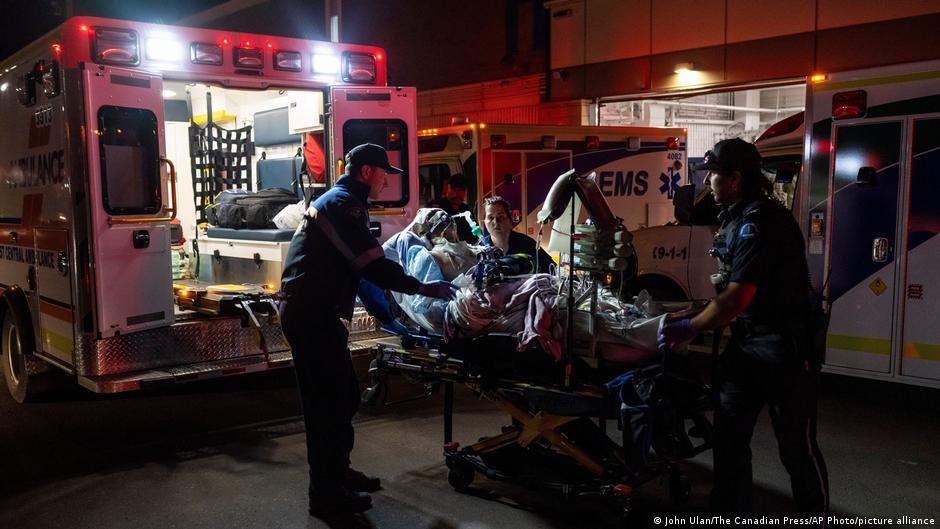
At least four Canadian Army personnel have been killed and dozens injured after a wildfire swept through a military exercise at Canadian Forces Base Wainwright in Alberta, Prime Minister Mark Carney said on Sunday, October 18.
Nineteen people injured in the fire were in critical condition, according to authorities, while about 20 others sustained less severe injuries. The families of the four service members who died have been notified.
“It is with profound sorrow that I must confirm that, at this time, four service members have died and their families have been notified,” Carney told a news conference in Ottawa.
Carney described the incident as one of the gravest peacetime disasters faced by Canada’s armed forces on Canadian territory. He said dozens of other military personnel had suffered serious injuries.
Decision to continue exercise faces scrutiny
The wildfire began during the afternoon of October 18, but military commanders decided not to halt the exercise. Strong winds then drove the flames rapidly across the prairie towards the soldiers participating in the training operation.
Generals said the fire travelled one kilometre in just 36 seconds, illustrating the speed with which conditions deteriorated. The reported advance would have left personnel with little time to respond once the wind pushed the blaze towards their position.
The account places immediate attention on how commanders assessed the wildfire threat, why training continued after the blaze began and whether evacuation procedures were adequate for the conditions. Authorities had not provided further details in the source account about the exercise, the units involved or the precise sequence of orders before the fire reached the troops.
The scale of the casualties is likely to make the incident a major test for Canada’s military leadership and federal government. The combination of fatalities, critically injured personnel and the decision to continue training after the fire started is expected to frame scrutiny of operational risk management at Wainwright.
Relevance for Britain and Europe
For British and European readers, the immediate significance lies in Canada’s role as a close defence partner. Canada and the United Kingdom are NATO allies, while Canadian forces also work alongside European militaries. A serious domestic training disaster can therefore attract attention beyond Canada, particularly among defence officials responsible for joint exercises, readiness and the safety standards applied during field operations.
The incident may also prompt UK and European defence organisations to review how rapidly changing wildfire conditions are handled during military training. The facts reported from Alberta do not establish failures in British or European procedures, but the extraordinary speed of the fire provides a stark case study for armed forces operating on exposed training grounds.
From a business perspective, the disaster centres on operational continuity and institutional risk rather than an identified commercial loss. The source report did not provide estimates for damage to equipment or facilities, name any contractors, or indicate disruption to defence procurement and supply chains. It also gave no information about insurance exposure or the potential cost of the emergency response.
No reaction in sterling, London-listed defence shares or broader European markets was included in the reported information. Without evidence of procurement disruption, corporate exposure or a change in Canadian defence policy, any direct effect on the pound or London equities would be speculative.
Investors in the UK and Europe will nevertheless watch for official findings that could have wider consequences for training protocols, base infrastructure or spending on wildfire detection and emergency preparedness. Such consequences have not yet been announced, and the immediate focus remains on the dead, the injured and their families.
Casualty toll underscores severity
The 19 people reported to be in critical condition mean the human toll could remain a central concern as medical teams treat those hurt in the blaze. About 20 additional casualties were described as having injuries of lesser severity, bringing the reported number of injured personnel to roughly 39, based on the figures supplied by authorities.
Carney’s description of the event as one of the worst tragedies encountered by the Canadian Armed Forces at home in peacetime underlines its national importance. His remarks also confirmed that the government was treating the incident as an exceptional military disaster rather than a routine wildfire emergency.
The account did not identify the four people killed or provide details about the conditions of individual casualties. It also did not state whether the wildfire had been contained, what caused it, or whether a formal investigation had begun.
Those unanswered questions will shape the next phase of the response. For Canada’s allies in Britain and Europe, the findings will be important chiefly for what they reveal about command decisions, emergency planning and the management of extreme environmental hazards during military exercises.