Putin Warns Armenia EU Bid Would Amount to Exit From Eurasian Trade Bloc
The dispute over Armenia’s EU path highlights risks for European trade ties, regional supply chains and investor sentiment across London and the continent.
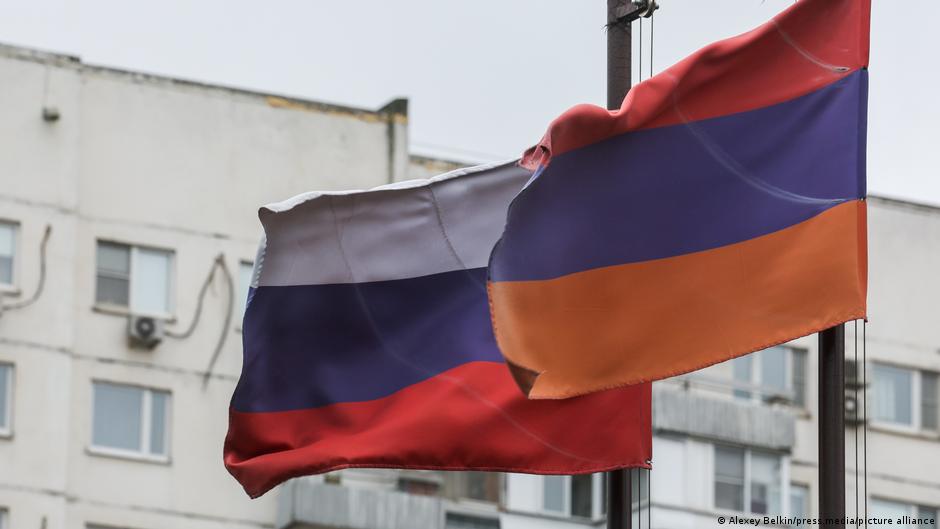
Russian President Vladimir Putin told Armenian Prime Minister Nikol Pashinyan that Yerevan’s move to begin the process of applying for European Union membership would in effect amount to leaving the Eurasian Economic Union, sharpening a dispute with potential implications for European business, regional trade routes and market sentiment in London.
The exchange took place during a meeting on the sidelines of the Shanghai Cooperation Organisation summit in Bishkek, according to a Kremlin transcript published on Tuesday, September 1. The central issue in the talks was Armenia’s plan to submit an application to join the EU, a step that would deepen the country’s westward economic and political orientation while raising new questions over its place in the Russia-led EAEU.
Putin told Pashinyan that Armenia could not remain in both economic groupings at once. He said that while Yerevan had not formally announced an exit from the EAEU, adopting a law to begin accession to another economic organisation effectively amounted to such a declaration because membership in both was incompatible. He again called for a referendum in Armenia on the choice between the EU and the EAEU, saying the issue should be put directly to the public.
Putin said starting accession to another economic organisation would in practice mean leaving the EAEU because “being there and there is incompatible.”
Pashinyan rejected the argument that Armenia had breached any of its obligations. He said Yerevan had analysed the treaty framework governing relations between Russia and Armenia, as well as the legal basis operating inside the EAEU, and had found no violations of Armenia’s commitments to either Russia or the bloc. The Armenian prime minister added that with the adoption in 2025 of a law on European integration, Armenia had in effect ruled out a referendum on choosing between the EU and the EAEU.
EU ambitions collide with Eurasian membership debate
The clash matters beyond diplomacy. For Brussels, Armenia’s declared intention to move closer to the EU feeds a broader European interest in the South Caucasus as a corridor for trade, connectivity and political influence. For businesses in the UK and across the EU, the dispute underscores the uncertainty facing companies exposed to the region through logistics, food imports, industrial supply chains and investment planning.
Pashinyan said on August 24 that Armenia intended in the near future to start the process of submitting an application for EU membership. After that announcement, the European Commission said Armenia was now “closer to the European Union than ever before,” while stressing that membership proceeds within a clearly defined, merit-based process. That formulation is likely to be closely watched in European capitals and financial centres, where policymakers and investors typically distinguish between political signalling and the much longer legal and economic path to accession.
For British and European readers, the commercial significance lies less in any immediate accession timetable and more in the friction created by Armenia’s attempt to balance its existing Eurasian commitments against a stated EU trajectory. Any increase in tensions with Moscow could affect market perceptions of risk in the wider region, with potential knock-on effects for sterling trading against traditional safe-haven currencies if geopolitical stress intensifies and investors move away from risk assets. London-listed companies or funds with frontier-market exposure may also be alert to any disruption in trade restrictions, customs arrangements or regional transport links.
Pashinyan had already signalled in June that he saw no grounds for holding a referendum on EU membership. That was his response to a joint statement by the leaders of Russia, Belarus, Kazakhstan and Kyrgyzstan. Putin had previously argued that EU and EAEU membership could not be combined. The Russian leader has also said that what he called the “Ukrainian scenario” began with Kyiv’s attempt to join the EU, linking Armenia’s European aspirations to a much wider geopolitical narrative that is likely to concern European policymakers and markets alike.
The dispute comes against a backdrop of rising pressure from Moscow on Yerevan ahead of Armenia’s parliamentary elections on June 7. According to the source text, Russia stepped up pressure in particular by banning the import into Russia of a number of Armenian products. The election was ultimately won by Pashinyan’s Civil Contract party. The meeting between Pashinyan and Putin in Bishkek on September 1 was their first face-to-face encounter since those elections.
That political sequence is important for business audiences because it shows how trade tools can quickly become instruments of pressure. If Armenian products can be targeted in this way, companies dealing in cross-border food trade or broader regional commerce may conclude that commercial policy in the South Caucasus is becoming harder to separate from strategic rivalry. For the EU, that raises questions about how quickly it is willing to deepen economic engagement with Armenia. For the UK, it adds another layer of uncertainty in a region where European connectivity, sanctions sensitivity and political risk are already under close scrutiny.
There is no immediate indication from the meeting that Armenia is changing course. Pashinyan’s position remains that Armenia’s current legal commitments have not been violated, while Putin’s message is that the logic of economic integration leaves no room for dual alignment. That gap leaves European officials, businesses and investors facing a familiar problem: a long-term strategic shift with no clear short-term resolution.
For London markets, the direct economic exposure may be limited, but the signal is still relevant. Any fresh sign of instability on the EU’s eastern periphery can feed into broader risk pricing, especially when it involves a contested enlargement path, Russian pressure on trade and the possibility of retaliatory measures. The immediate result is not a settled policy outcome, but a sharper warning that Armenia’s EU ambitions are now colliding more openly with the commercial and political realities of its place in the Eurasian bloc.