Suspected Starlink Arson in Poland Raises European Infrastructure Risk
The investigation into a fire near Warsaw highlights security concerns for Britain and the EU, with potential implications for investor confidence.
A Turkish organised crime group may have set fire to a Starlink ground station near Warsaw on behalf of Russian intelligence services, Der Spiegel reported, raising fresh concerns about the security of critical communications infrastructure across Europe.
The German magazine said on Friday, October 16, citing sources in several countries, that the Daltons criminal organisation could have been involved in the suspected arson attack. The group has for years been linked to extortion, arms trafficking and contract killings, including activities in Germany.
The allegations are particularly significant for European governments and businesses because satellite communications form part of the continent’s wider digital and security infrastructure. For Britain and the European Union, the case adds to the operational risks facing telecommunications networks, energy facilities and other assets serving several markets across national borders.
The report does not establish direct Russian responsibility, and Polish authorities have not presented conclusive evidence connecting Moscow to the fire. Nevertheless, the investigation may sharpen attention in London and other European financial centres on the potential costs of protecting infrastructure against sabotage and disruption.
Suspects face possible extradition to Poland
German authorities detained two Turkish citizens in the city of Nürtingen on October 12 as part of the investigation. Der Spiegel identified them as 38-year-old Ümit E. and 34-year-old Müslüm T.
Representatives of several law-enforcement agencies told the magazine that the men either belonged to the Daltons or carried out assignments for members of the group. Stuttgart’s Higher Regional Court is expected to decide soon whether they should be extradited to Poland.
Investigators are examining whether the criminal network acted under instructions from Russian intelligence. Der Spiegel noted that Beratcan Gökdemir, the alleged leader of the Daltons, was detained in Russia in 2024.
Turkey requested his extradition, but Russian authorities did not hand him over to Ankara. According to the magazine, German intelligence officials believe Moscow may have offered Gökdemir protection in anticipation of reciprocal services. His present whereabouts are unknown.
The reported use of an organised crime group would, if substantiated, point to an indirect model of hostile activity that can complicate attribution and prosecution. That possibility matters to both Britain and the EU as they assess the resilience of commercially operated networks that also have strategic importance.
Station briefly disrupted after September fire
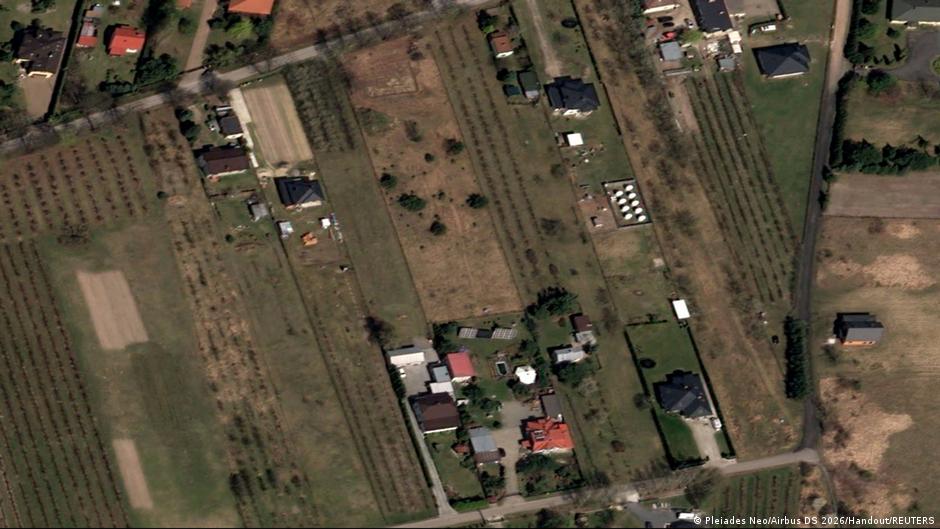
The Starlink ground station is located in the village of Wola Krobowska, about 50 kilometres from Warsaw. It was damaged in an arson attack on September 23, when fire engulfed an electrical substation and a generator.
German tabloid Bild reported that the station stopped operating briefly before returning to service. No one was injured in the incident.
Polish officials described the fire immediately afterwards as an attempted act of sabotage. Deputy Prime Minister Krzysztof Gawkowski said on September 23 that, although there was not yet direct evidence of Russian involvement, many indications suggested the incident was consistent with a new Russian doctrine for conducting attacks.
Polish authorities have described the fire as an attempted act of sabotage, while stressing that direct evidence linking Russia to the incident has not been established.
Two more people, including a woman, were detained on October 13 during the investigation. Polish radio station RMF FM reported that an anti-terrorism operation was conducted in Berlin to apprehend the woman. The preliminary theory is that she may have provided logistical support to the Turkish suspects and acted as their driver.
Limited direct sterling exposure, broader risk for investors
For UK investors, the immediate relevance is primarily geopolitical rather than a direct commercial shock. The reported interruption was brief, and the source material provides no evidence of a measurable effect on sterling, UK-listed companies or London share prices.
However, the episode places renewed focus on infrastructure-security spending, cross-border law enforcement and the vulnerability of privately operated communications systems. Those issues can affect European business sentiment when incidents threaten supply chains, data services or energy-dependent facilities.
Sterling would therefore be more likely to face an indirect impact if a broader campaign of disruption damaged confidence in European growth or prompted a sustained shift away from regional risk assets. The reported fire alone does not establish such an effect, but the investigation will be watched for evidence that the incident formed part of a wider pattern.
For London markets, the central question is whether European authorities uncover a coordinated network extending beyond Poland and Germany. Any confirmation of state-directed sabotage could increase pressure on Britain and EU members to strengthen safeguards around satellite communications, power supplies and other strategically important assets, potentially creating new costs and procurement requirements for governments and operators.