ECB Clears UniCredit to Pursue Gradual Takeover of Commerzbank
The approval advances a major eurozone banking consolidation despite opposition from German officials, management and employees.
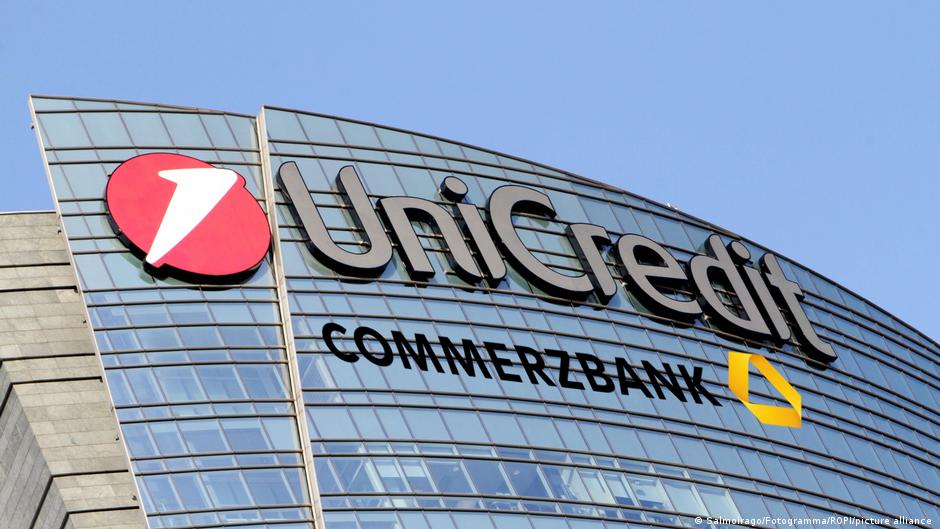
The European Central Bank has approved UniCredit’s purchase of stakes in Germany’s Commerzbank, clearing a crucial regulatory hurdle that could allow the Italian lender to take control of Germany’s second-most important commercial bank.
UniCredit representatives announced the decision on Thursday, October 15. According to German news agency dpa, the ECB’s approval permits UniCredit to cross the threshold of 30% ownership in Commerzbank and subsequently increase its stake without restriction. In practical terms, that gives the Italian group a route to a gradual takeover.
The development carries significance well beyond Italy and Germany. For European investors, it represents an important test of whether the eurozone can build larger cross-border banking groups capable of operating more efficiently across the single market. For Britain, the prospect of a stronger continental competitor is relevant to London’s position as Europe’s leading financial centre and to UK banks competing for corporate, investment-banking and wealth-management business.
UniCredit said the ECB’s decision demonstrated confidence in its “strong position in the European banking sector.”
A decisive step towards control
The transaction is expected to complete the remaining supervisory procedures by the end of the current year. By that point, UniCredit is expected to hold half of the voting rights at Commerzbank’s shareholders’ council, enabling it to establish control over the German lender, dpa reported.
UniCredit made its offer to Commerzbank shareholders in May, proposing an exchange of 0.485 UniCredit shares for every Commerzbank share. The arrangement gave the Italian bank access to almost half of the German company’s shares, but the parties required ECB approval before completing the exchange.
The central bank’s review was therefore a pivotal stage in the process. The regulatory outcome was not regarded as unexpected, according to dpa, because the ECB has repeatedly indicated its support for banking mergers within the eurozone. The regulator views such combinations as a means of strengthening the European Union’s single internal market.
The decision may reinforce expectations of further consolidation among European banks, which remain divided largely along national lines despite sharing a common currency and central supervisor. Supporters of cross-border mergers argue that larger institutions can spread costs across wider customer bases and compete more effectively internationally. The Commerzbank case, however, also highlights the political resistance that can arise when consolidation threatens domestic control, headquarters or employment.
German opposition remains a central obstacle
Commerzbank’s management and employees have previously opposed UniCredit’s takeover plans, as have German authorities. Berlin owns slightly more than 13% of Commerzbank and wants to prevent job losses resulting from cost-cutting and optimisation measures after a takeover.
German officials are also seeking assurances that Commerzbank will remain a publicly listed company headquartered in Frankfurt and will continue developing services for Germany’s small and medium-sized businesses. Those customers form a politically and economically important constituency in Europe’s largest economy, making the future direction of the bank a matter of national industrial policy as well as shareholder control.
The competing priorities create a difficult balance for European policymakers. The ECB’s support for larger banking groups is aligned with efforts to deepen the single market, but Germany’s concerns centre on local employment, corporate lending and the retention of a major financial institution in Frankfurt. How UniCredit addresses those issues could shape both the timetable and the political reception of the transaction.
Implications for London and sterling investors
For the London market, the approval puts renewed attention on the relative scale and competitiveness of British and eurozone lenders. A combined UniCredit and Commerzbank would bring together substantial operations in two of the EU’s biggest economies, potentially strengthening the group in corporate banking and financing for European companies. That could affect the competitive environment faced by UK-listed banks with extensive continental European businesses.
The transaction does not directly involve a British company or a sterling-denominated offer, and the source report provides no specific movement in the pound or in London-listed banking shares. Any immediate sterling effect would therefore be indirect, reflecting broader investor views on European financial stability, interest-rate expectations and the competitive outlook for UK banks rather than the mechanics of the share exchange itself.
Nevertheless, the deal is relevant to Britain’s post-Brexit financial relationship with the EU. If the ECB continues to encourage cross-border combinations, continental banks could gain the size and reach to challenge London-based institutions more aggressively. At the same time, a stronger and more integrated eurozone banking system could support investment and trade across Europe, benefiting British companies with significant business in EU markets.
The ECB’s clearance does not settle the political dispute surrounding Commerzbank, but it shifts the balance decisively towards UniCredit. With regulatory approval secured and access to almost half the German bank’s shares, the Italian lender now has a credible path to control—while German authorities continue pressing to protect jobs, Frankfurt’s role and financing for domestic small and medium-sized enterprises.