Moscow Airports Disrupted After Russia Says 100 Drones Were Downed
Russian officials said air defences destroyed more than 100 drones heading toward Moscow, forcing airport restrictions and diversions.
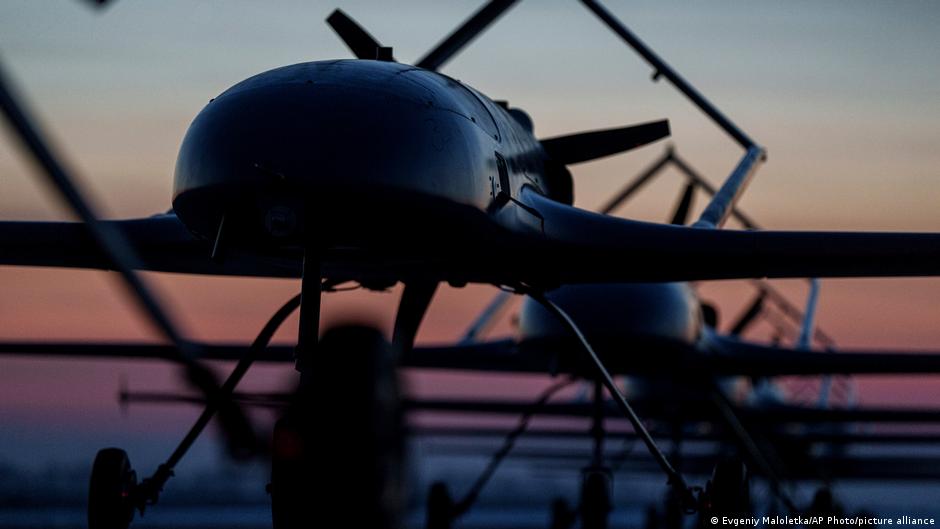
Russian air defences destroyed more than 100 unmanned aerial vehicles heading toward Moscow overnight into Wednesday, October 14, according to Telegram posts by Moscow Mayor Sergei Sobyanin, in an attack that disrupted aviation across the Russian capital’s airport system and added another security shock for businesses tracking the region’s war risk.
The reported drone wave prompted temporary restrictions on arrivals and departures at all four Moscow airports: Vnukovo, Domodedovo, Sheremetyevo and Zhukovsky. Notifications published by the Telegram channel “Govorit Rosaviatsiya,” associated with Russia’s federal aviation authority, indicated that restrictions were introduced on the evening of October 13 and remained a factor overnight.
Sobyanin did not specify where in the Moscow region the drones were destroyed, nor did he identify any potential targets. That absence of detail will matter to European risk managers and insurers, because disruption to Russian airspace can ripple through route planning, aircraft utilisation and regional logistics even when the direct impact is inside Russia.
For UK and European businesses, the incident is another reminder that the conflict’s operational effects are not confined to front-line areas. Airlines, freight operators, energy traders and companies with residual exposure to Eurasian supply chains have had to price in repeated disruptions to Russian aviation hubs. London markets typically watch such incidents through the lenses of energy security, insurance costs, safe-haven flows and the broader geopolitical risk premium affecting sterling and European equities.
Flights Diverted as Moscow Hub Faced Restrictions
According to the Russian state news agency TASS, more than 30 aircraft flying to Moscow were redirected to other cities. The report said 19 aircraft bound for Vnukovo instead landed in Nizhny Novgorod, St Petersburg, Minsk, Pskov and Istanbul.
The Telegram channel “Ostorozhno, Novosti,” linked to journalist Ksenia Sobchak, separately reported that, citing data from St Petersburg’s Pulkovo airport, 20 aircraft headed for Moscow were diverted there because of the restrictions.
Restrictions were not limited to Moscow. “Govorit Rosaviatsiya” reported that measures were also introduced overnight into October 14 at airports in Volgograd, Nizhny Novgorod, Samara, Penza, Saratov and Yaroslavl. The Russian airline Pobeda also reported schedule adjustments because of prolonged restrictions at airports serving the Moscow aviation hub and the Volga region, according to “Ostorozhno, Novosti.”
For carriers and travel companies, the immediate issue is schedule integrity. Diversions to several cities create knock-on costs: aircraft and crews may end up out of position, passengers require rebooking, and onward connections can be missed. For European travel groups and corporate travel desks, the disruption underlines why Russian airspace remains a high-risk operating environment, even for flights that may only connect through neighbouring hubs.
“More than 30 aircraft flying to Moscow were redirected to other cities,” TASS reported, according to the Russian-language source account.
The UK and EU dimension is also financial. Sterling can be sensitive to geopolitical stress when investors reassess European growth risks, energy prices or the outlook for central-bank policy. The source article did not report any specific move in the pound, UK-listed shares or London-traded commodities following the incident. Still, the attack adds to the kind of risk backdrop monitored by London traders, especially when aviation disruption overlaps with concerns about infrastructure security and energy supply.
Fatality Reported in Saratov Region
Beyond the aviation disruption, Russian regional officials reported damage and casualties linked to drone attacks. Saratov region governor Roman Busargin said at least one person had died after a UAV attack damaged several residential buildings in the city of Balakovo.
“As a result of the UAV attack, several residential buildings in the city of Balakovo were damaged. Preliminary: one person has died. All emergency services are working at the scene,” Busargin wrote on Telegram, according to the source text.
The Saratov region sits on the Volga and includes industrial and energy-related infrastructure that is watched by analysts assessing Russia’s domestic resilience under wartime pressure. The source article did not identify any specific industrial target in Balakovo, and officials described the reported damage in terms of residential buildings.
Separately, Vladimir Vladimirov, the head of Russia’s Stavropol region, said air-defence forces had repelled a drone raid aimed toward the industrial zone of Nevinnomyssk. He did not specify which industrial facilities may have been targeted.
For European businesses, that uncertainty is part of the risk. When officials report attacks near industrial areas but do not identify targets, investors and counterparties are left to interpret whether the incident may affect energy, chemicals, manufacturing or transport networks. In London, that can feed into wider assessments of Russian supply reliability, sanctions exposure and the durability of wartime logistics.
The attack also comes at a time when aviation disruption has become a recurring feature of the conflict. Temporary airport closures and rerouted aircraft are operational events, but they also carry symbolic weight: they show that the war continues to reach major Russian urban and transport centres. For UK and EU policymakers, such incidents reinforce the challenge of managing escalation risks while maintaining sanctions and support policies tied to the war in Ukraine.
The factual picture from Russian officials remains limited. Sobyanin reported the destruction of more than 100 drones heading toward Moscow, aviation notices showed temporary airport restrictions across multiple cities, and regional governors reported a fatality in Balakovo and a repelled attack near Nevinnomyssk’s industrial zone. No further details were provided in the source account about the drones’ exact targets, the full scale of damage, or any direct market impact in London.