EU Agrees to Open Key Accession Clusters for Ukraine and Moldova
The move advances Kyiv and Chisinau’s EU bids and gives UK and European businesses a clearer view of future market alignment.
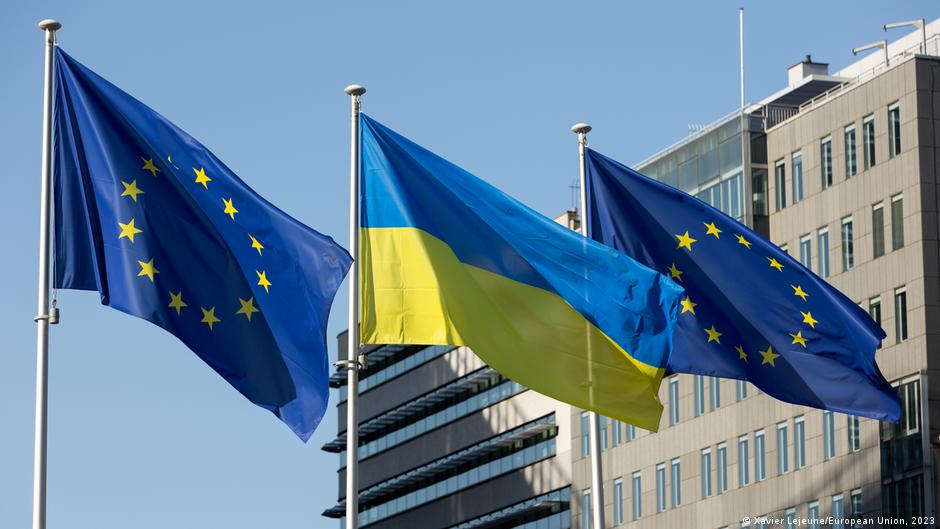
European Union member states have agreed to open negotiating clusters 2 and 3 in accession talks with Ukraine and Moldova, according to Irish Minister for European Affairs Thomas Byrne, marking a further step in the two countries’ efforts to align with the bloc’s rules and standards.
Byrne wrote on X on Monday, 12 October, that all EU member states had reached agreement on the move. The decision concerns two thematic areas central to business and investment: the Internal Market, and Competitiveness and Inclusive Growth. For British and European companies, the development is significant because those chapters go directly to the regulatory environment in which future trade, investment, public procurement, competition policy and market access may operate.
“I can confirm that all EU member states agreed to open clusters 2 and 3 for Ukraine and Moldova,” Byrne wrote.
Byrne also said that after “Montenegro Monday” there would be a “Super Tuesday” for Albania, Moldova and Ukraine. He added that EU states had agreed to close chapters 17, 18 and 19 for Albania and chapter 20 for Montenegro.
The decision comes as EU enlargement returns to the centre of European political and economic strategy. For London, which remains a major financial centre for European capital flows despite the UK’s departure from the EU, the progress of Ukraine and Moldova is watched through several lenses: reconstruction finance, trade integration, sanctions policy, energy security and the longer-term shape of the European single market.
Business Relevance for London and Europe
The opening of the Internal Market cluster is particularly important for companies assessing future opportunities in Ukraine and Moldova. The cluster covers the broad framework through which candidate countries are assessed on their readiness to apply EU standards. In practical terms, that process can affect corporate law, market supervision, services, product standards and the predictability of cross-border commercial activity.
The Competitiveness and Inclusive Growth cluster is also closely tied to economic policy. It concerns the capacity of a candidate country to operate within the EU’s economic model and to adopt reforms that support competition, sustainable growth and institutional resilience. For European manufacturers, banks, insurers, logistics operators and infrastructure investors, such alignment can reduce regulatory uncertainty over time, even though accession remains a lengthy process.
The source article did not report a specific sterling movement or a concrete London Stock Exchange reaction following Byrne’s statement. Still, the issue is relevant to sterling-area investors because EU enlargement and Ukraine’s financing needs can influence European risk sentiment, government funding debates and expectations for reconstruction-related investment. London market participants are likely to follow whether the accession process helps stabilise the legal and investment environment in Ukraine and Moldova, particularly in sectors linked to infrastructure, defence-adjacent supply chains, energy and agricultural trade.
Earlier on 12 October, Ukraine’s Verkhovna Rada approved amendments to the country’s education law in two readings and as a whole. The changes concern the rights of national minorities. According to the source, the document was necessary to secure Hungary’s consent to opening the second and third negotiating clusters for Ukraine’s EU accession process.
Later that evening, Ukrainian lawmaker Yaroslav Zhelezniak reported on Telegram that the adopted law had been signed by President Volodymyr Zelensky.
How the Accession Talks Are Structured
EU accession negotiations are organised into six large thematic sections known as clusters. These cover different areas of legislation and public policy. During the talks, the European Union assesses how prepared a candidate country is to apply EU rules and standards.
The six clusters are: Fundamentals; Internal Market; Competitiveness and Inclusive Growth; Green Agenda and Sustainable Connectivity; Resources, Agriculture and Cohesion; and External Relations.
The first of the six negotiating clusters for Ukraine, Fundamentals, was opened on 15 June. The opening of clusters 2 and 3 would therefore move the process into areas that are especially important for economic operators, regulators and investors. While accession negotiations do not guarantee swift membership, they set benchmarks and create a structured path for reform.
On 5 October, EU Enlargement Commissioner Marta Kos said at a press conference following a meeting of the Moldova-EU Association that the EU could open two accession negotiating clusters for Ukraine and Moldova during an intergovernmental conference on the sidelines of the EU General Affairs Council, scheduled for 13 October in Luxembourg.
Kos said Ukraine and Moldova were carrying out systemic reforms “in very difficult conditions” and were among four countries leading in accession negotiations. She also noted that the European Commission would publish a detailed assessment of reforms across all areas in candidate countries on 28 October in its annual enlargement report.
The commissioner urged observers not to forget that Ukraine is fighting for survival while simultaneously moving through the EU accession process. She said the country must implement reforms, including in order to receive additional funds for its budget and the needs of its army.
For the UK, the political direction of travel matters even outside the EU framework. British policymakers and businesses remain deeply exposed to European security, energy flows, financial markets and the future reconstruction of Ukraine. A clearer accession track for Ukraine and Moldova may strengthen expectations of deeper regulatory convergence with the EU, which could shape corporate planning, export finance and investor due diligence in the years ahead.
For the EU, the agreement signals that enlargement policy continues to advance despite internal sensitivities, including Hungary’s concerns over minority rights in Ukraine. For Ukraine and Moldova, the decision opens a new phase in negotiations focused on the economic and institutional architecture that determines how closely they can integrate with the European market.