Trump Says Putin More Interested Than Zelensky in Ukraine Peace Deal
The US president’s remarks on an energy ceasefire breach put pressure back on Kyiv and leave UK and EU businesses watching geopolitical risk.
US President Donald Trump has said he believes Russian President Vladimir Putin is more interested than Ukrainian President Vladimir Zelensky in reaching a peace agreement over the war in Ukraine, comments that will be closely scrutinised in London and across European capitals as businesses assess the potential effect on energy risk, sterling sentiment and regional market confidence.
Speaking to reporters overnight into Tuesday, 13 October, Trump was asked about Russia’s breach of an energy ceasefire in the war against Ukraine. The US president said that, in his view, there had been violations on both sides and suggested that Putin wanted a deal.
“I really do think that Putin is more interested than Zelensky in making a deal,” Trump said, according to the Russian-language source account.
The remarks come at a sensitive point for European policymakers and companies, particularly those exposed to energy costs, defence spending, reconstruction planning and cross-border trade. For the UK, any shift in Washington’s approach to Ukraine is significant not only diplomatically but also for sterling-linked assets, as currency markets have repeatedly treated the war as a source of uncertainty for European growth and inflation expectations.
Energy Ceasefire Claims Under Scrutiny
One reporter asked Trump what exactly made him see Putin as ready for compromise, given that Russia continues to attack Ukraine. Trump responded that he believed the parties would reach an agreement and repeated his view that Putin was more interested than Zelensky in concluding a deal.
Asked about the fact that Putin had violated an energy ceasefire previously announced by Trump himself, the US president said the situation first needed to be studied, adding that violations had occurred on both sides. When pressed on how he intended to make the Russian president comply with the energy ceasefire, Trump said that, in his opinion, Putin wanted an agreement and that Zelensky needed to be persuaded to accept it.
That framing is likely to raise questions among European governments and investors about whether Washington will lean harder on Kyiv, Moscow, or both. For UK and EU businesses, the practical concern is whether any ceasefire in the energy sector can be enforced in a way that reduces the risk premium attached to European power markets and industrial supply chains.
Ukraine’s energy system has been a central vulnerability throughout the war, and attacks on generating capacity have direct implications for humanitarian conditions, industrial output and future reconstruction demand. British and European firms looking at Ukraine-related recovery projects will be watching whether a ceasefire becomes a verifiable arrangement or remains a contested political claim.
Zelensky Urges US Pressure on Russia
Earlier, Ukrainian President Vladimir Zelensky called on the United States to influence Russia so that Moscow would begin observing the ceasefire regime in the energy sector. Speaking at the Warsaw Security Forum, Zelensky said Ukraine was waiting to see what concrete steps the Americans were prepared to take.
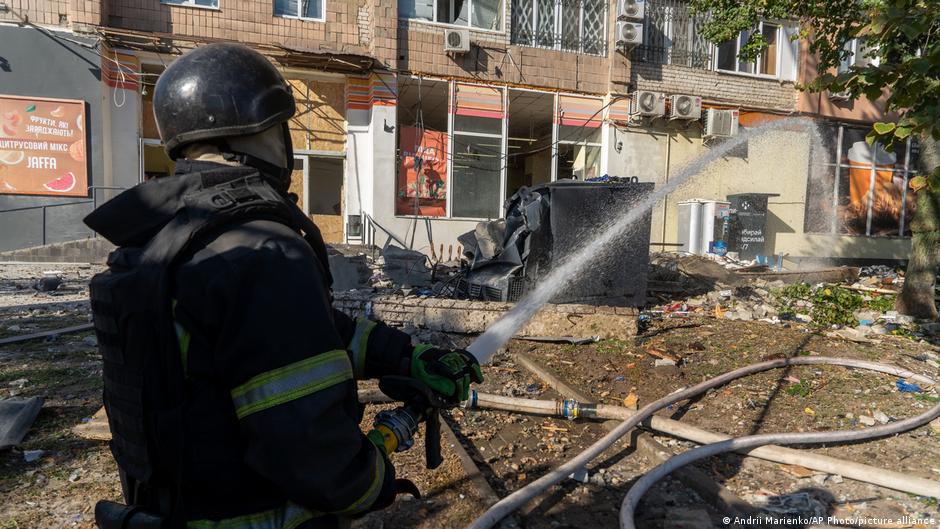
According to Zelensky, Kyiv was very surprised on 11 October by social media reports stating that all attacks on energy facilities in Russia’s war against Ukraine would stop immediately. He recalled that directly after that statement was published, Russia struck a thermal power plant in Kharkiv, causing additional damage to Ukraine’s energy system.
Zelensky also wrote on Telegram on the evening of 12 October that Ukraine supported the energy ceasefire. He said Ukraine’s position was absolutely clear: Kyiv was ready to guarantee an energy ceasefire, as announced by the US president, and Russia had to take corresponding steps. At that moment, he said, Ukraine was not recording Russian compliance with the conditions announced by Trump.
He added that much depended on the US position if de-escalation was to work, and said pressure needed to be applied to Russia. Ukraine, he said, was continuing negotiations with the American side at all levels.
For London markets, the immediate read-across is not a single data point but a broader risk signal. A credible reduction in attacks on energy infrastructure could ease some pressure on European energy expectations and support risk appetite. Continued uncertainty, by contrast, keeps alive the possibility of renewed volatility in energy-linked equities, defence stocks and sterling against major currencies.
The UK has maintained a strong interest in Ukraine’s security and in the wider European response to Russia’s invasion. British businesses are also exposed indirectly through energy prices, insurance costs, sanctions compliance, public-sector defence procurement and the outlook for European demand. Any suggestion that Washington may reinterpret responsibility for ceasefire breaches therefore matters beyond the immediate diplomatic exchange.
Trump’s comments place his assessment of Putin’s intentions at odds with Kyiv’s account of recent events. Zelensky’s position is that Ukraine accepted the proposed energy ceasefire and that Russia has not fulfilled the conditions announced by the US president. Trump, meanwhile, has said the matter needs further examination and that violations occurred on both sides.
The gap between those positions leaves European allies facing familiar uncertainty: whether a ceasefire proposal can become a monitored agreement, whether Russia will halt attacks on energy infrastructure, and whether US diplomacy will prioritise pressure on Moscow or persuasion of Kyiv. Until those questions are answered, UK and EU businesses are likely to treat the latest statements as politically important but commercially unresolved.