US Senators Urge Trump to Drop Russian Diesel Deal as Europe Weighs Risks
A bipartisan group says renewed Russian diesel flows would not ease fuel costs but would give the Kremlin more funds for its war in Ukraine.
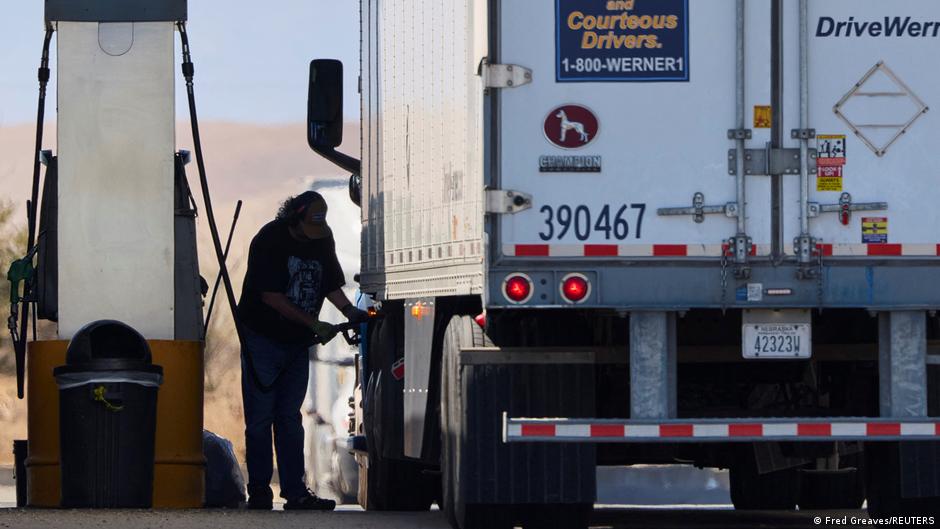
A bipartisan group of US senators has urged President Donald Trump to abandon a proposed diesel arrangement with Russian President Vladimir Putin, warning that the move would strengthen the Kremlin while offering little relief to consumers facing high fuel prices.
The appeal, led by Democratic Senator Richard Blumenthal and sent on Tuesday, 13 October, comes as Britain and the European Union watch for any shift in Washington's sanctions posture that could reshape global fuel flows, affect sterling-sensitive energy costs, and unsettle sentiment across London markets.
According to the senators, Americans are unlikely to feel a meaningful reduction in diesel prices if Russian supplies return to the world market. The Kremlin, they argue, would instead receive additional resources to continue its war in Ukraine, now in its fourth and a half year and responsible for hundreds of thousands of deaths.
The letter says Congress and the American public support ending the war, but only on just terms. Blumenthal published a copy of the document on X, placing the dispute in the open at a moment when fuel prices, sanctions enforcement and Western unity remain central concerns for investors and policymakers on both sides of the Atlantic.
“This deal is a gift to our adversary and a betrayal of our allies; it must be cancelled,” the senators said.
European Energy and Market Stakes
For the UK and Europe, the issue is not only a Washington political dispute. Russian diesel has been at the centre of Western sanctions strategy since Moscow's full-scale invasion of Ukraine, and any US move to loosen restrictions could complicate the wider effort to limit Russian energy revenues while keeping refined fuel markets adequately supplied.
London traders would be likely to assess the arrangement through several lenses: the potential effect on benchmark fuel margins, the credibility of sanctions enforcement, and the possible impact on sterling if cheaper imported fuel were seen as easing inflation pressures. Yet the senators' case is that the consumer benefit would be marginal, while the geopolitical cost would be substantial.
That argument matters for European governments that have spent years trying to reduce dependence on Russian energy while absorbing the political damage of higher household and business costs. A unilateral US relaxation on diesel could create tension with allies that continue to see energy sanctions as a core instrument of pressure on Moscow.
The senators said lifting US sanctions on Russian diesel exports would “only supply Putin with additional funds to finance his war machine” and allow Russia to continue brutal attacks on Ukrainian civilians. They also warned that the deal would undermine allies, a point likely to resonate in London, Brussels and other European capitals that have supported Kyiv through sanctions, military aid and fiscal commitments.
Pressure on Russia and China
The signatories urged Trump to increase economic pressure on Russia and on those playing a key role in enabling the war, particularly China. They pointed to powers available under Lindsey Graham's sanctions legislation concerning Russia and Iran, arguing that the White House should use those tools rather than suspend pressure on Russian diesel exports.
Copies of the appeal were also sent to Secretary of State Marco Rubio and Treasury Secretary Scott Bessent, underscoring that the senators are pressing both diplomatic and financial arms of the US administration. For European businesses, the Treasury's role is particularly important because sanctions licences and exemptions can determine whether banks, insurers, shippers and commodity houses are prepared to handle transactions linked to Russian-origin fuel.
The letter was signed by six Democratic senators: Richard Blumenthal, Jeanne Shaheen, Richard Durbin, Sheldon Whitehouse, Jack Reed and Christopher Coons. They were joined by an equal number of Republicans: Mitch McConnell, Thom Tillis, Susan Collins, Alan Stewart Armstrong, Lisa Murkowski and John Cornyn.
That bipartisan composition strengthens the message to markets that resistance to a diesel deal is not confined to one wing of US politics. It also signals that any perceived softening toward Moscow could face scrutiny in Congress, even if presented by the White House as a way to ease fuel supply pressures.
Trump's Announced Deal
On 9 October, Trump said on Truth Social that he had held an “extremely successful” phone call with Putin, during which the two leaders agreed supplies of Russian diesel fuel for the American and global market. Trump said Russian companies would “immediately” ship more than 300,000 tonnes, followed by another 500,000 tonnes in November and 1 million tonnes “immediately after that”, apparently in December.
He also referred to a further 3 million tonnes to be supplied later, depending on the condition of refineries, though the period for those volumes was not specified. The scale and timing of those shipments are likely to be closely watched in Europe, where refined fuel balances can influence import costs and broader energy inflation expectations.
The US Treasury, for its part, issued a general licence suspending American sanctions on Russian diesel fuel until April 2027. That licence is central to the senators' objections because it would create a formal opening for Russian diesel to re-enter sanctioned channels for an extended period.
Russian state programme Vesti reported on 12 October that the first shipment of Russian diesel had left St Petersburg for the east coast of the United States and was expected to arrive within 48 to 72 hours. If confirmed by market participants, that voyage would provide an early test of how quickly a sanctions suspension could translate into physical flows.
For Britain and the EU, the broader question is whether the United States is preparing to prioritise near-term fuel supply over the sanctions architecture built with allies since the start of Russia's war. The senators' warning is blunt: they do not believe American families will benefit meaningfully, and they argue that the Kremlin would gain the more tangible advantage.