Russian Historian Yuri Dmitriev Returned to Prison Colony Without Stroke Diagnosis
The jailed Memorial historian was sent to a prison hospital with suspected stroke symptoms but reportedly lacked access to diagnostic equipment.
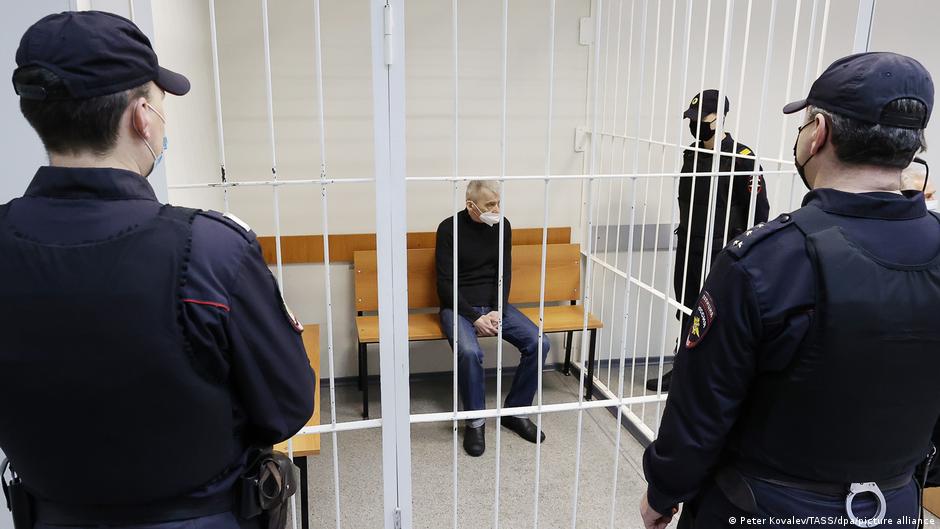
Russian historian Yuri Dmitriev, the former head of the Karelia branch of Memorial, has been returned from a prison hospital to his penal colony without a diagnosis after being sent for treatment with suspected signs of a stroke, according to a human rights project citing a representative of his support group.
The case carries renewed significance for European governments, rights institutions and cultural organisations that have previously called for Dmitriev’s release. For UK and EU observers, it also lands against a wider backdrop in which Russia’s treatment of civil society figures remains a recurring point of political risk, even when the immediate financial market impact is not specified in the available account.
The human rights project For Human Rights reported on Telegram on Tuesday, 13 October, that Dmitriev had been transferred to a prison hospital but that doctors there were unable to establish a diagnosis because the facility lacked the equipment required for proper testing.
“His condition is not very good. There was a suspected stroke, but no diagnosis was made: the hospital has no equipment for diagnostics.”
According to the unnamed representative of Dmitriev’s support group cited by the project, Dmitriev was given a course of injections, though the representative said it was not known what he had been injected with. He was prescribed bed rest until 28 October, she said, but prison colony staff reportedly did not know about the instruction and were not allowing him to lie down.
The representative later added that the colony may have since received the information about the bed-rest order. She also said Dmitriev had several times been placed in a punishment cell, giving examples that included an unfastened top shirt button, sitting on a bed, and feeding a cat.
Health Concerns In A High-Profile Case
Dmitriev was urgently hospitalised on 25 September from Penal Colony No. 18 in Potma, Mordovia, and taken to a medical correctional facility in the settlement of Barashevo. The online outlet Current Time reported that Dmitriev had severe weakness, impaired coordination and was unable to stand independently.
Dmitriev is known for compiling and publishing Books of Remembrance for victims of political repression in Karelia during the 1930s and 1940s, as well as materials on the history of the construction of the White Sea-Baltic Canal. He also identified mass burial sites of repression victims in the region, including Sandarmokh and Krasny Bor.
His prosecution began in 2016, when the first criminal case was opened against him on suspicion of producing pornographic images of his adopted daughter. A court acquitted him, but a new case was opened in 2018.
On 22 July 2020, a court in Petrozavodsk sentenced Dmitriev to three and a half years in a high-security penal colony on charges of sexual assault against a minor. In September 2020, the Supreme Court of Karelia toughened the sentence, imposing 13 years in a high-security colony. Dmitriev was also accused of producing child pornography, committing indecent acts and unlawfully possessing a weapon.
On 27 December 2021, the Petrozavodsk City Court issued what was described as the final sentence for Dmitriev, then 65, imposing 15 years in a high-security penal colony, taking into account the earlier sentence.
Dmitriev has not admitted guilt. On 15 March 2022, the Supreme Court of Karelia rejected his appeal. His supporters have argued that the prosecution is connected with his human rights activity and his work to restore the memory of people subjected to political repression.
European Pressure And Legal Fallout
The European Union, as well as scholars and cultural figures from various countries, have demanded Dmitriev’s release. That international attention is part of why the latest report about his health will be closely watched in European policy circles, including in London, where Russian legal and political developments are routinely assessed through the lens of sanctions, diplomatic risk and broader investor sentiment.
The source account does not provide figures for sterling, UK equities or London-listed Russia-related assets in response to the report. Still, for Daily Edge readers focused on the UK and European business environment, the episode is a reminder that Russia-related political and legal controversies can remain relevant to boardroom risk assessments even when they do not immediately translate into disclosed price moves.
In March 2026, the European Court of Human Rights in Strasbourg ordered Russia to pay Dmitriev, who remains imprisoned, €2,000 in compensation for moral damage caused by excessively long pre-trial detention and the absence of a fair trial. Kremlin spokesman Dmitry Peskov, commenting on that ECHR decision at the time, said Moscow did not recognise it.
The latest report leaves unresolved the central medical question: whether Dmitriev suffered a stroke or another serious health event while in custody. According to the account from his support group representative, the prison hospital was unable to provide the diagnostic clarity needed because it lacked the necessary equipment. Dmitriev has now been returned to the colony with no diagnosis publicly reported.