EU Budget Talks Stall as Spending Divide Clouds European Outlook
Disagreement over the EU’s seven-year budget leaves British businesses and London investors facing prolonged uncertainty over European demand.
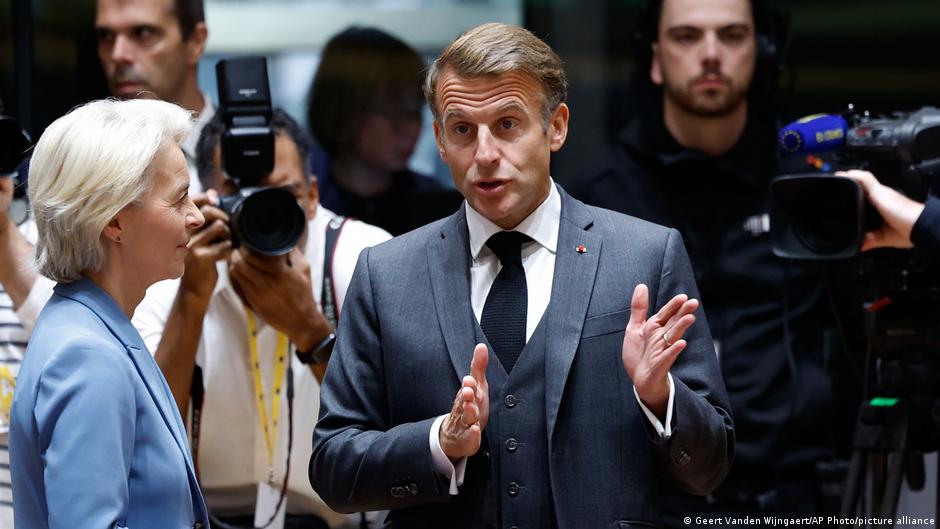
European Union leaders failed to reach agreement on the bloc’s next seven-year budget during the first day of a summit in Brussels, extending a dispute that carries implications for investment, trade and business confidence across Europe, including in the United Kingdom.
The negotiations produced no breakthrough and are now expected to continue in December, AFP reported, citing sources in Germany’s federal government in the early hours of Friday, October 16. Many of the EU’s 27 member states want the long-term financial plan approved before the end of the year.
For British companies, the talks matter despite the UK no longer being an EU member. The European Union remains a crucial commercial market for UK exporters, while changes to spending on research, competitiveness, defence and regional development could influence demand for British goods, services and specialist contractors. The source report provided no specific sterling price movement or quantified reaction from London markets, but the failure to secure a deal leaves investors with another source of European policy uncertainty ahead of the December summit.
Member states split over spending
Several competing positions collided during what German government sources described as “contradictory debates.” The divisions were already evident before leaders began negotiating.
Germany, Austria, Sweden, Denmark, the Netherlands and Finland are among the countries calling for restraint. France, Spain and Poland, by contrast, support a larger EU budget.
The European Commission presented a draft long-term budget worth almost €2 trillion during the summer. Ireland, which holds the rotating presidency of the Council of the European Union, proposed reducing that plan by €140 billion, or roughly 8%.
Germany and several northern European states are pressing for savings, while France, Spain and Poland favour an increase in the EU budget.
Ireland’s proposal would cut EU expenditure in areas including competitiveness, scientific research, defence and foreign policy. Those categories are commercially significant for European businesses and may also affect UK-based companies participating in cross-border supply chains, research partnerships or defence procurement.
London-listed businesses with substantial exposure to continental Europe will be watching whether the final compromise protects investment intended to strengthen productivity and economic growth. Any reduction in EU programmes supporting innovation or competitiveness could shape capital spending across the single market. Conversely, a larger budget could require new revenue measures that affect digital and financial activity.
France proposes new EU-wide levies
France used the summit to promote new EU-wide charges that could expand the budget without raising national contributions. The measures under discussion include levies on digital services, cryptoassets and online gambling.
Such proposals would be particularly relevant to Britain’s technology, financial-services and betting industries, given London’s role as a European centre for digital commerce, cryptoasset activity and capital markets. The source provided no details on proposed rates, implementation dates or whether UK-based companies would fall within the scope of the charges. Their practical effect would therefore depend on the eventual design and territorial reach of any legislation.
The debate also creates a potential policy divergence for businesses operating on both sides of the Channel. If the EU introduces common charges in these sectors, UK companies serving customers within the bloc could face new compliance or tax considerations even if Britain does not adopt equivalent measures.
Political calendar adds pressure
EU leaders are working against a tightening political timetable. Many member states want the budget settled before the end of the year because elections in several countries during 2027 could bring Eurosceptic and populist forces to power.
In France, far-right politician Marine Le Pen could win the presidential election. President Emmanuel Macron has warned that reaching an EU budget agreement would be “difficult” in that event, according to AFP.
German Chancellor Friedrich Merz called before the negotiations for a “substantial” reduction in the Commission’s proposed budget. He also firmly rejected allocating additional money to two traditionally large areas of EU expenditure: agriculture and cohesion policy.
Austrian Chancellor Christian Stocker acknowledged that negotiations could drag on and continue into next year. That possibility would prolong uncertainty over the scale and direction of EU spending, including programmes intended to support regional investment, research and collective security.
For sterling and London equities, the immediate significance lies less in a single summit headline than in the outlook for Europe’s economy and fiscal priorities. A prolonged dispute could complicate investment planning, while an eventual agreement may redistribute spending among sectors with different levels of UK exposure. Investors will now turn to the December summit for evidence that the opposing camps can narrow their differences and secure a budget before domestic politics makes a compromise more difficult.