Russia Labels Young StopTime Musicians as ‘Foreign Agents’
The designation underscores compliance and reputational risks facing British and European businesses with cultural links to Russia.
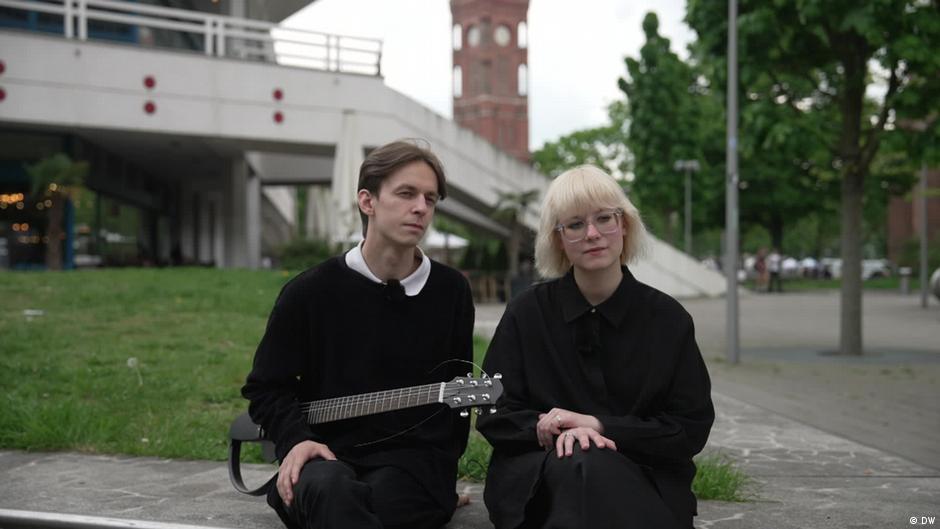
Russia’s Justice Ministry has added 19-year-old singer Diana Loginova, known professionally as Naoko, and her husband, 23-year-old guitarist Alexander Orlov, to its register of “foreign agents,” exactly one year after the StopTime musicians were first placed under administrative arrest.
The ministry published the decision on Friday, October 16. It said Loginova had opposed the war in Ukraine, disseminated what the authorities described as inaccurate information about Russian government decisions and policies, and interacted with people or organisations already designated as “foreign agents.”
Orlov, according to the ministry’s stated justification, had “actively participated in the distribution of anti-Russian materials.” The musicians’ inclusion expands a register that imposes a politically charged label on individuals and groups targeted by the Russian authorities.
The designation came exactly one year after the musicians received their first administrative detention orders.
The ministry also added the movement Malinovy Klin — Independent Kuban to the register on October 16. Russian authorities alleged that the organisation had, among other activities, called for the country’s territorial integrity to be violated.
European companies face a narrowing cultural environment
The case is relevant to British and European businesses operating in music, media, entertainment and digital distribution because it illustrates the growing legal and reputational complications surrounding Russian cultural content. Companies with exposure to Russia must navigate domestic restrictions while also complying with UK and European Union sanctions, contractual obligations and internal policies on human rights and freedom of expression.
The announcement itself contained no financial measures, sanctions or action against a British or EU company. It therefore offered no direct basis for attributing a specific move in sterling or London-listed shares to the decision. Its significance for the City of London is instead part of a broader risk picture: cultural partnerships, licensing arrangements, artist representation and content-hosting decisions connected to Russia can create increasingly complex compliance questions.
For streaming services, concert promoters, record labels and social-media platforms, the designation highlights the possibility that artists may face penalties at home over performances or associations that are lawful elsewhere in Europe. British and EU businesses dealing with affected musicians may consequently need additional legal review, particularly when contracts, payments, intellectual property or cross-border travel are involved.
Street performances preceded repeated arrests
StopTime is a street-music group that began performing in St Petersburg in spring 2025. Alongside Loginova and Orlov, its line-up included drummer Vladislav Leontyev until January 2026. The group promoted its concerts on social media and performed songs by Noize MC, Monetochka, Zemfira and the band Pornofilmy. Russia’s Justice Ministry has designated all of those performers as “foreign agents.”
During one performance in October 2025, StopTime played Noize MC’s song “Kooperativ Lebedinoye Ozero,” or “Swan Lake Cooperative.” A St Petersburg court had ruled in May that the song constituted information prohibited in Russia.
Loginova and Orlov received the new designation exactly a year after they and Leontyev were first given administrative detention orders. The musicians were found guilty of organising a mass event that authorities said caused a public-order violation. The proceeding concerned a concert near St Petersburg’s Ploshchad Vosstaniya metro station, which police said attracted 70 people.
Immediately after the first detention period expired, officials drew up additional administrative reports against the group’s members. These consecutive cases, sometimes described as “carousel” prosecutions, kept them in custody almost until the middle of November.
After a third consecutive detention, Loginova and Orlov left Russia. Leontyev remained in the country and subsequently left the group.
For European cultural businesses, the episode shows how quickly a small, locally organised performance can develop into a cross-border issue involving artists in exile, restricted works and counterparties carrying a Russian state designation. Although the decision does not by itself change UK or EU law, it adds another layer of due diligence for organisations considering professional relationships with Russian performers or distributing their work to European audiences.