Russia Strikes Kyiv With Missiles and Drones as Business Risk Focus Sharpens
Kyiv authorities reported fires, damaged homes and six preliminary casualties after overnight Russian attacks using drones and ballistic missiles.

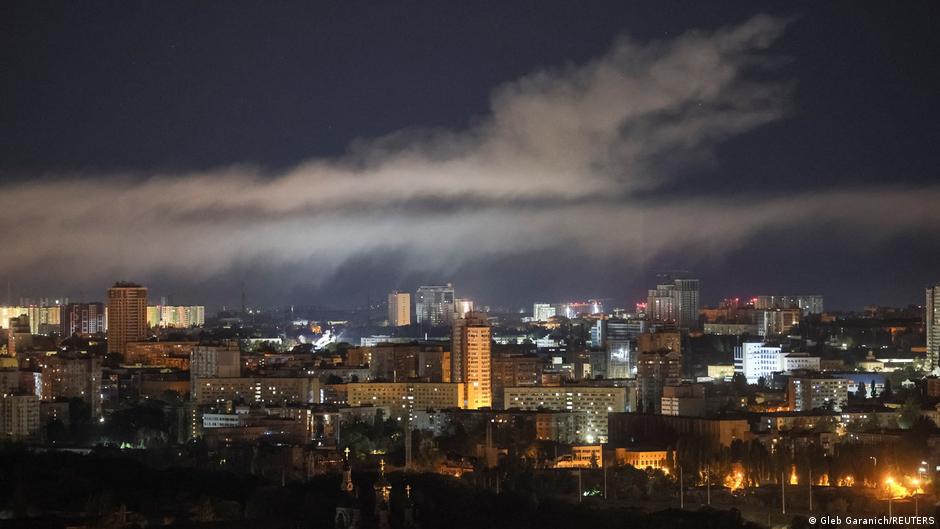
Russian forces launched overnight strikes on Kyiv using unmanned aerial vehicles and ballistic missiles, city authorities said, setting off fires, damaging residential buildings and sending emergency crews across several districts of the Ukrainian capital.
The Kyiv City Military Administration said on Telegram that debris fell on a five-storey residential building in the Solomianskyi district. A three-storey residential building was also damaged elsewhere in the district, and a fire broke out in a warehouse facility.
Kyiv Mayor Vitali Klitschko said a medical team had been sent to Solomianskyi. According to preliminary information cited by the mayor, six people were injured in the shelling.
The attack adds another layer of operational risk for European companies exposed to Ukraine, regional logistics routes and energy-linked supply chains. For UK investors and corporates, the immediate focus is less on a single damaged asset and more on the persistence of war risk at a time when sterling-sensitive markets remain alert to shifts in European security, energy costs and defence spending expectations.
Damage Reported Across Kyiv Districts
In the Darnytskyi district, debris from the attack damaged a car, according to the Kyiv City Military Administration. Klitschko said fires also broke out in non-residential areas of the Podilskyi and Darnytskyi districts. The military administration said garages and vehicles were burning.
In the Holosiivskyi district, Klitschko said a fire had broken out on the grounds of an educational institution. He also said that, according to preliminary information, people had become trapped inside a residential building.
Kyiv officials said the overnight assault involved drones and ballistic missiles, with debris reported in residential areas and fires in several districts.
The reported strike on civilian and non-residential infrastructure in Kyiv follows drone attacks late on 7 September on the Boryspil and Fastiv districts of the Kyiv region, according to Ukraine’s State Emergency Service. The service said fires broke out at industrial enterprises in the Boryspil district.
At one of those enterprises, the fire destroyed seven trucks. The emergency service also said the building of a logistics complex had been attacked twice. Rescue workers arrived quickly and extinguished the fires, according to the service.
For European business readers, the reference to a logistics complex is particularly significant. Ukraine remains tied into transport corridors, warehousing networks and cross-border supply routes that matter to exporters, insurers, hauliers and commodity-linked businesses across the region. Even when disruption is localised, repeated strikes can influence risk pricing, delivery planning and insurance assumptions.
Diplomatic Timing Draws Attention
The strikes came after U.S. President Donald Trump’s special representatives, Steve Witkoff and Jared Kushner, left Kyiv during the night of 7 September. Following their meeting, Ukrainian President Volodymyr Zelensky said he was ready for trilateral talks in a Ukraine-U.S.-Russia format.
Moscow has also not ruled out the possibility of reviving a trilateral negotiating format. Kremlin spokesman Dmitry Peskov said, however, that it was “premature” to discuss the place and timing of any such talks.
That diplomatic backdrop is likely to be watched closely in London and across European capitals. Any sign of movement toward negotiations can affect expectations around sanctions, reconstruction finance, defence procurement and regional energy security. At the same time, fresh strikes on Kyiv underline the difficulty of translating diplomatic openings into lower near-term risk for companies operating near the conflict zone.
Sterling markets typically respond to Ukraine-related developments through broader European risk channels rather than through direct exposure alone. Renewed attacks on Kyiv can reinforce caution around European growth assumptions, energy security and government borrowing linked to defence commitments. For UK-listed companies with central and eastern European operations, the key issue remains continuity planning rather than headline market direction.
The latest reports from Kyiv described damage in residential, educational, industrial and logistics-related locations, as well as emergency responses in multiple districts. Authorities presented casualty figures as preliminary, with six people reported injured after the shelling.
For investors, the attack is another reminder that the war continues to carry material consequences beyond the battlefield. Infrastructure damage, pressure on logistics, emergency repair costs and uncertainty around negotiations all feed into the risk environment facing European companies, lenders and public-sector planners.
While the immediate human impact remains centred on Kyiv and its surrounding region, the commercial implications extend across Europe’s policy and market landscape. UK and EU businesses will be watching whether the reported willingness to discuss a trilateral format leads to a credible process, or whether continued strikes keep operational and currency-sensitive risk firmly in view.