Russia Threatens to Cut Gas Supplies to Armenia Amid EU Integration Efforts
Moscow warns that Armenia's EU alignment risks key trade agreements, potentially impacting energy flows and bilateral cooperation.
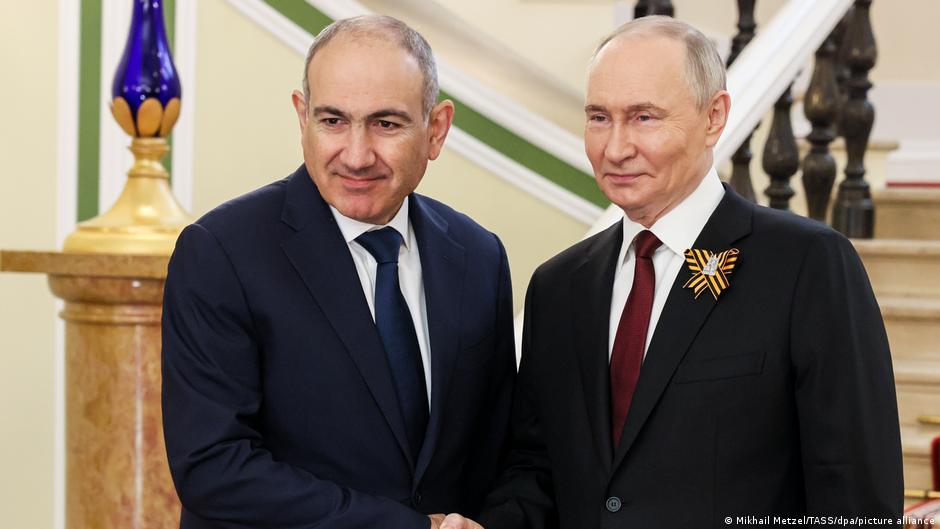
Russia has issued a stern warning to Armenia, threatening to suspend or terminate duty-free gas, petroleum products, and rough diamond supplies if Yerevan continues its pivot toward closer integration with the European Union. This development underscores mounting geopolitical tensions with significant implications for UK and European markets, particularly London’s energy sector and sterling-based trade flows.
Energy Supply Risks and Trade Relations
The threat was detailed in a letter from Russian Energy Minister Sergey Tsivilev to Armenia’s Ministry of Territorial Administration and Infrastructure, obtained by media on May 26. The letter highlights Moscow's position that ongoing practical steps by Armenia to deepen EU cooperation, alongside declared government ambitions to join the bloc, jeopardize the "fundamentally high level" of Russian-Armenian trade, investment, and energy collaboration.
Since December 2013, Russia has supplied Armenia with gas, petroleum products, and unprocessed diamonds free of export duties under an indefinite agreement. The arrangement mandates that supplies cover Armenia's domestic consumption as per agreed indicative balances, and prohibits re-export to third countries. However, Russia now considers continuation of this duty-free regime "impossible" if Armenia proceeds with its EU alignment.
"The fundamental basis of the Russian-Armenian trade and investment partnership, rooted in bilateral international treaties, is under threat due to Armenia’s EU aspirations," the letter states.
Should the agreement be suspended or canceled by either party, Armenia would remain liable for compensations or recognize outstanding payments as state debt to Russia until fully settled, according to the letter's provisions.
Implications for British and European Interests
Armenia's near-total dependency on Russian gas and petroleum imports signals that a supply disruption could destabilize energy markets with ripple effects extending to the UK and EU. London’s energy trading platforms, where sterling remains a key currency, may see volatility as regional supply fears intensify. Additionally, the UK’s broader strategic interest in supporting EU energy security and diversification may influence diplomatic responses.
The British business community is attentive to these developments, since Armenian market access and energy security have downstream impacts on investment flows, commodity pricing, and geopolitical risk assessment across Europe. The potential removal of export duty exemptions by Russia could elevate costs for Armenian consumers and businesses, indirectly influencing supply chains connected to the EU and UK.
Moreover, Russia's prior restrictions imposed earlier in May on Armenian wine, brandy, and produce imports highlight a pattern of trade leverage that could intensify if Armenia continues its EU trajectory. Such measures may affect British importers and retailers engaged in Eurasian goods, emphasizing the complex interplay between geopolitical alignments and market stability.
Wider Diplomatic and Economic Consequences
On the same day as the letter was sent, Russia’s State Duma Deputy Speaker Petr Tolstoy warned that benefits previously granted to Armenian citizens—such as extended residence without registration and simplified employment procedures in Russia—might be revoked if Armenia loses its status as a strategic ally. This signals a broader hardening of Russia’s stance toward Armenia beyond trade sanctions.
Russian President Vladimir Putin has urged Armenia to clarify its choice between EU integration and membership in the Eurasian Economic Union, suggesting that Moscow would pursue a "soft, intelligent" but mutually disadvantageous separation if Armenia fully embraces the EU.
For the UK and European Union, these tensions underscore the fragility of Eurasian economic partnerships amid shifting alliances. The situation presents both challenges and opportunities: on one hand, supply uncertainties inject risk into European energy markets; on the other, they may accelerate efforts to diversify energy sources and strengthen economic ties with nations seeking alternatives to Russian dominance.
As Armenia navigates this geopolitical crossroads, British businesses and policymakers will be monitoring developments closely, balancing support for EU enlargement ambitions with pragmatic considerations about regional stability and energy security.