Trump threatens EU trade halt over Brussels’ push to deepen Canada ties
The warning injects fresh trade risk for UK and European businesses as Brussels explores a new associated-membership model with Canada.
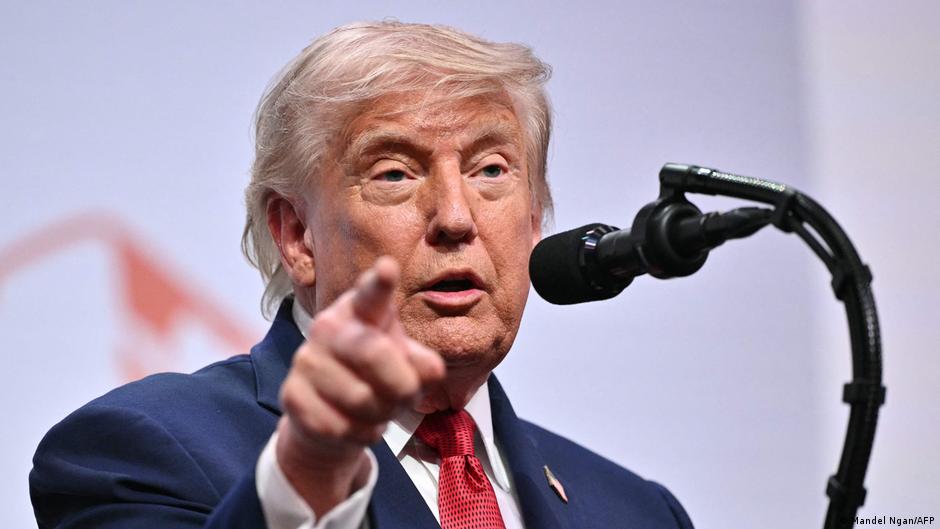
US President Donald Trump has threatened to impose steep tariffs on the European Union or halt trade with Europe if Brussels expands its partnership with Canada in a way he considers hostile, escalating trade uncertainty for European companies and adding another risk factor for UK businesses exposed to transatlantic supply chains.
Speaking on Wednesday, September 16, at a campaign event in North Carolina, Trump was asked by a journalist to comment on European Commission President Ursula von der Leyen’s plan to make Canada the EU’s “first associated member”. The US president called the proposal “ridiculous” and warned that Washington could respond with punitive trade measures if it judged the move to be unfriendly.
“If they do that and I consider it even in the slightest an unfriendly act, I will impose very high tariffs or stop trade with Europe,” Trump said.
He added that the US response would depend on intent. “If the intentions are good, everything is fine. If the intentions are bad, we will impose very high tariffs on Europe, that is one of the possibilities,” he said.
For European exporters, the remarks add to a fast-moving tariff dispute already affecting Canada and the United States. For the UK, which sits outside the EU but remains deeply tied to European trade flows, any sharp deterioration in US-EU commercial relations would matter for manufacturers, logistics groups, financial services firms and currency markets. Sterling-sensitive sectors in London typically respond quickly to renewed tariff threats, particularly where they affect global risk appetite, European demand or dollar-denominated trade costs.
Brussels looks to Canada as trade pressure builds
Von der Leyen outlined the EU’s ambition on September 16 in the European Parliament, where she appeared alongside Canadian Prime Minister Mark Carney. She said the EU wanted to take relations with Canada to “the highest possible level” and that she and Carney wanted to work toward Canada becoming the bloc’s first associated member.
The European Commission president did not provide details on what such a partnership would contain. She did, however, refer to cooperation in technology and the defence industry, two areas of direct interest to European capitals and to British firms operating across NATO supply chains. Von der Leyen also stressed that joint work between Canada and the EU would “not be directed against others” and would aim to make both sides stronger.
The proposal comes as Canada and the EU both face pressure from Trump’s unpredictable trade and foreign policy. AFP noted that this is why both Canada and the European Union are looking at new alliances. For European businesses, the logic is straightforward: closer links with Canada could help diversify trade and industrial partnerships at a time when access to the US market is becoming more politically contingent.
That calculation also matters in London. Although the UK is not part of the EU framework being discussed, British investors track EU trade strategy closely because the bloc remains one of the UK’s largest nearby markets and a key reference point for regional growth expectations. A more confrontational US stance toward Europe could weigh on sentiment toward UK-listed exporters and companies with continental revenue exposure, even before any direct measures against Britain are announced.
Canada-US dispute widens
The White House said Trump signed a memorandum on September 16 providing for a ban on Canadian goods participating in US federal government procurement. According to the press release, Washington is taking the measures in response to actions by Canada, which it says “unreasonably introduced new barriers” for American companies seeking access to the public procurement market.
The procurement move follows a new round of tariffs. Since September 15, the Trump administration has imposed additional 50 percent duties on Canadian cheeses, steel, aluminium, paper, furniture, lighting fixtures and other goods. Trump administration officials said the step was a direct response to new tariffs introduced by Ottawa.
Canada’s own tariffs on US exports worth about $20 billion took effect on September 15. Those measures were a response to US tariffs of 50 percent on Canadian goods worth $20 billion that entered into force on August 22. Canada withdrew from trade negotiations with the United States on August 21.
The dispute now risks spilling into Europe’s strategic debate. Trump’s warning suggests Washington may view a deeper EU-Canada arrangement not merely as a diplomatic initiative, but as part of a broader realignment away from the US. That raises the stakes for Brussels, which is trying to strengthen technology and defence cooperation while avoiding the appearance of an anti-American bloc.
For the UK and European markets, the key question is whether Trump’s comments remain political rhetoric or become the basis for actual trade action against Europe. Higher US tariffs on EU goods would likely affect major European exporters first, but the consequences could extend across supply chains used by British manufacturers and retailers. London investors would also have to assess the knock-on impact on sterling, especially if tariff threats undermine confidence in European growth or strengthen demand for the dollar as a haven.
No specific EU tariff measures were announced by Washington in relation to the Canada proposal. But the US president’s language leaves companies with a fresh uncertainty: a prospective EU-Canada partnership, still undefined by Brussels, has already drawn a threat of “very high” US tariffs and even a possible halt to trade with Europe.