Ukrainian Drone Attacks Target Russia's Leningrad Region Ahead of St. Petersburg Economic Forum
Drone strikes near St. Petersburg raise concerns for Russian security as German delegation prepares to attend the economic forum.

Ukrainian drones launched a significant attack on Russia's Leningrad region in the early hours of June 3, just hours before the opening of the St. Petersburg International Economic Forum (SPIEF). This development comes as Russian President Vladimir Putin is scheduled to deliver a keynote speech on June 5. The forum is also set to host a German delegation, underscoring its role as a hub for European business engagement.
Security Tensions Shadow Economic Dialogue
The governor of Leningrad region, Alexander Drozdenko, reported via social media that Russia's air defense forces intercepted and destroyed 30 drones over the region. Although specific locations of the interceptions were not disclosed, the nearby Pulkovo Airport experienced restrictions on flight arrivals and departures, reflecting the heightened security measures in place.
"Air defense forces shot down 30 drones over the Leningrad region. Combat operations are ongoing," Governor Drozdenko stated.
The attack occurred mere hours before SPIEF events were set to begin at the Expoforum Convention and Exhibition Centre, located just south of St. Petersburg near the Leningrad region border and Pulkovo Airport. The timing has raised questions regarding security risks to participants and the region's broader business environment.
Notably, the German delegation's attendance highlights Europe's continued interest in maintaining economic dialogue with Russia despite escalating military tensions. SPIEF remains a critical platform where European and Russian business interests intersect, with London-based investors and companies closely monitoring developments.
Implications for UK and European Business Interests
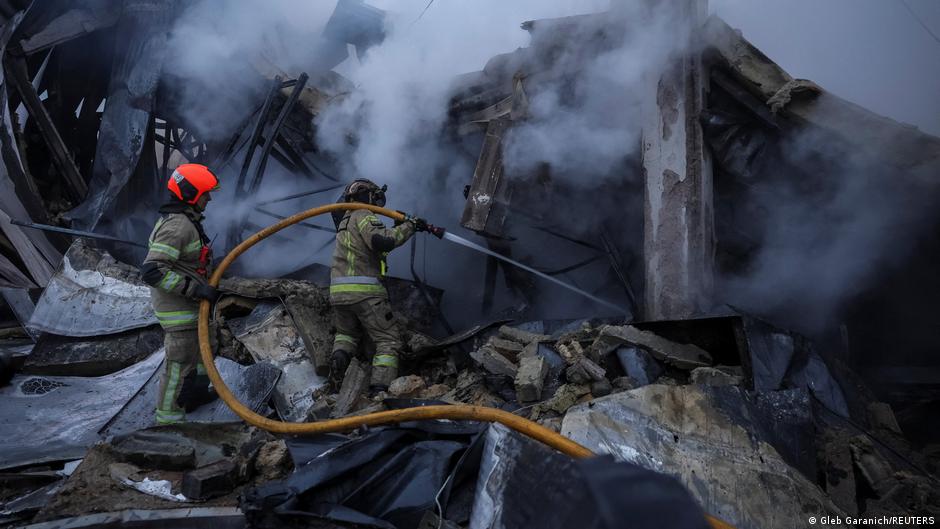
The drone attacks, coming amid warnings from Ukrainian President Volodymyr Zelensky of potential renewed Russian strikes on Ukrainian cities, underscore the fragile security landscape surrounding the forum. Zelensky had cautioned that Russian forces might repeat mass attacks on Ukrainian urban centers overnight, following a recent assault that resulted in over 20 deaths and more than 100 injuries, primarily in Kyiv and Dnipro.
These hostilities have heightened concerns in London and the broader European financial markets about the stability of Russian-European energy and trade ties. Sterling has shown sensitivity to geopolitical risk factors related to Russia, with investors wary of the potential spillover effects on commodity prices and supply chain disruptions.
Meanwhile, Ukrainian air forces reported sporadic drone activity over Ukrainian skies during the same night but did not indicate any large-scale Russian attacks. Nevertheless, the ongoing tit-for-tat military exchanges raise uncertainty for cross-border business engagement.
As SPIEF proceeds under the shadow of these assaults, British and European businesses face a complex environment balancing the pursuit of economic opportunities with navigating geopolitical risk. The forum’s outcomes will be closely analyzed in London for signals about the future of trade relations, energy cooperation, and investment flows between Russia and its European partners.