US Army Secretary Daniel Driscoll Resigns After Dispute With Hegseth
Departure accepted by the White House adds to Pentagon upheaval as European investors assess renewed uncertainty around US defence policy.
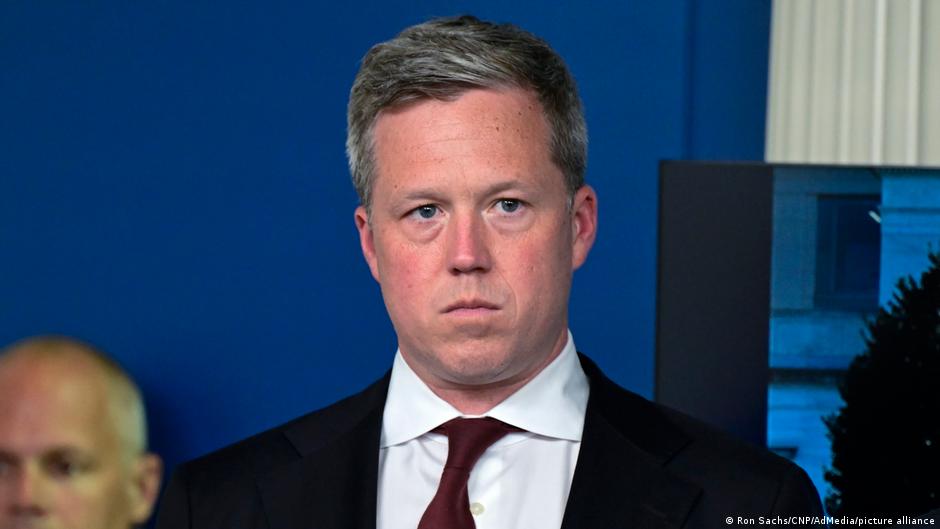
US Army Secretary Daniel Driscoll has asked President Donald Trump to accept his resignation after months of disagreements with Defense Secretary Pete Hegseth over the future direction of the US armed forces and the dismissal of several officers, according to reports published overnight on Tuesday, September 1.
The Wall Street Journal first reported the move, with Reuters and AP later carrying the same information. NBC News, citing sources, said the White House had accepted Driscoll’s resignation.
Driscoll is expected to leave the Pentagon in the coming days, according to the Wall Street Journal. In a statement carried by the Journal and AP, White House principal deputy press secretary Anna Kelly said Driscoll had effectively advanced President Trump’s “Make America Strong Again” agenda in the Department of the Army, shown exceptional leadership during historic military operations, restored priority to combat readiness and weapons lethality, assisted negotiations between Russia and Ukraine, and worked in a range of other areas.
“Secretary Driscoll effectively advanced President Trump’s ‘Make America Strong Again’ agenda in the Department of the Army,” Anna Kelly said in the statement cited by US media outlets.
For UK and European audiences, the resignation is notable not only as another personnel change in Washington but also as a signal of continued volatility in the US national security establishment at a time when transatlantic defence policy remains a core market and strategic concern. London investors, sterling traders and European defence groups closely track shifts inside the Pentagon because leadership changes can influence procurement priorities, alliance coordination and the political backdrop for security commitments.
The reports say the dispute between Driscoll and Hegseth centred on the course of US military development and the removal of a number of officers. That places the resignation within a broader period of restructuring under Trump’s second term, during which senior leadership changes have extended across several levels of the Pentagon.
Pentagon turnover adds to uncertainty
The Wall Street Journal had already reported on August 21 that Driscoll was planning to step down at the end of the year because of the conflict with the defense secretary. At that time, Reuters said Driscoll’s departure would leave the Army without a Senate-confirmed leader while the United States was seeking to end the war against Iran that had begun alongside Israel nearly six months earlier.
Journalists cited in the source material described the move as another step in a wider reshaping of leadership throughout the Pentagon during Trump’s second presidential term. In that context, Reuters recalled the dismissal in April of Army Chief of Staff Randy George, along with some other senior military officials.
That pattern matters in Europe because the Pentagon remains central to NATO planning, military procurement trends and operational signalling. Any abrupt change at the top of the US Army is likely to be read in London, Brussels and other European capitals through the lens of alliance management as well as industrial implications. British and continental defence companies alike watch for evidence that Washington may shift toward different equipment choices, budget priorities or command structures.
Driscoll’s own record is relevant on that point. Reuters noted that during his time as Army secretary he argued for a “flexible approach,” supported Army purchases of cheaper weapons and criticised major manufacturers. That stance would have been of interest well beyond Washington, including to European suppliers and investors seeking clues about whether the Pentagon might favour lower-cost platforms over more traditional big-ticket procurement models.
For London markets, the immediate significance lies less in any confirmed financial reaction than in the additional layer of uncertainty around a US administration already associated with abrupt changes in defence and foreign policy. A White House-backed reordering of Pentagon leadership can feed directly into expectations for contract flows, capability priorities and the tenor of negotiations affecting Europe’s security environment. That in turn is the kind of development sterling traders and UK-listed defence names monitor closely, even when there is no instant policy announcement attached to a resignation.
Driscoll has also had a politically notable profile inside the administration. He is a friend and former classmate of Vice President JD Vance. In November 2025, he was appointed as President Trump’s new special envoy for Ukraine, replacing Keith Kellogg in that role. His departure from the Army post therefore removes a figure who has been connected not just to military management but also to a sensitive diplomatic file with direct implications for European security.
He had served as secretary of the Army since February 2025. Over that period, according to Reuters, he promoted a more adaptable approach to force development and pushed for lower-cost weapons acquisition, while openly criticising large defence producers. Those positions set him apart in debates over how the US military should modernise and how procurement budgets should be spent.
Whether the resignation leads to a deeper policy shift will depend on who follows him and how firmly Hegseth’s approach now shapes Army planning. For Britain and the European Union, the immediate takeaway is that another senior Pentagon departure has landed at a delicate moment for transatlantic security, with implications that extend from diplomatic coordination to investor sentiment. In London, where defence policy is closely tied to market expectations and broader geopolitical risk, that is likely to keep attention fixed on Washington in the days ahead.