US Reports Fresh Caribbean Strike on Alleged Drug Vessel, Killing Four
The latest US military attack on a suspected drug boat adds legal and geopolitical risk watched closely by UK and European policymakers.
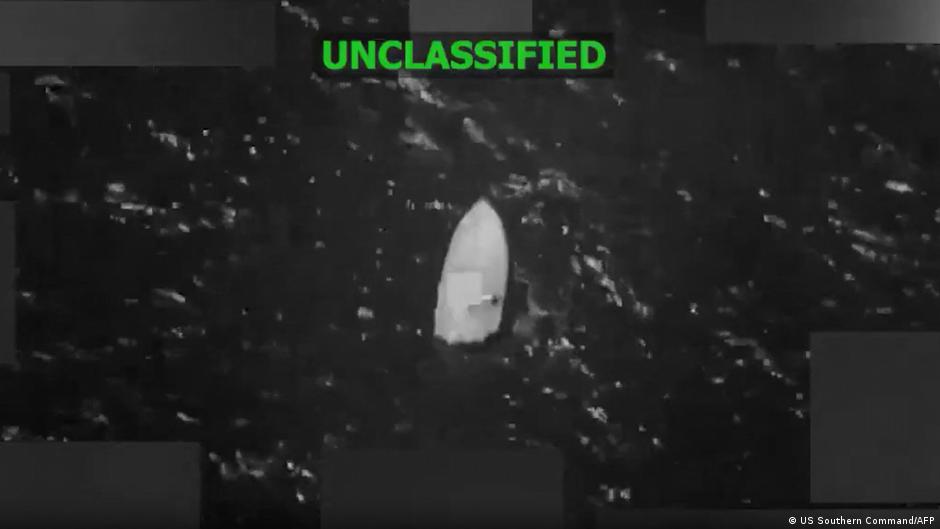
The US military said it carried out a lethal strike on a vessel in the Caribbean Sea that it alleged was being used to transport illegal drugs, killing four people and intensifying scrutiny of a campaign that has already drawn international legal criticism.
US Southern Command said on Saturday, 19 September, that American forces had struck a speedboat travelling along routes used for illicit drug trafficking in the Caribbean. The command described the operation as a "lethal strike" and said four people on board were killed.
"Credible intelligence confirmed this vessel's involvement in drug trafficking. During the operation, four narcoterrorists were eliminated," the military said.
Video published on X showed a moving vessel before it disappeared in a bright flash. The US side did not present evidence proving the vessel's involvement in drug trafficking.
For British and European readers, the incident matters less as a direct market story than as a fresh signal of operational and legal risk in a maritime region tied to global security, shipping confidence and transatlantic diplomacy. London investors had no specific sterling reaction cited in the source material, but the episode adds to a wider backdrop in which geopolitical shocks are closely monitored across European markets.
Campaign Under Legal Scrutiny
According to the Associated Press, the latest case brings the total number of people killed in US military strikes on vessels suspected of carrying drug traffickers in the Caribbean Sea to at least 231. The agency calculates that 69 such strikes have been carried out as part of a campaign that has been under way for more than a year.
The scale of the campaign has sharpened questions over the legal basis for using lethal force at sea. The Caribbean is not only a US security concern; it is also a region where Britain and several European states retain economic, political and historical interests, including through overseas territories, trade links, financial services and maritime insurance exposure.
Those interests help explain why the legal framing of the strikes is likely to be followed in European capitals. The source article says the American side has not presented evidence of the vessel's connection to drug trafficking. That absence is significant for governments and legal observers assessing whether the attacks meet international standards on evidence, necessity and proportionality.
The issue has already reached the United Nations. On 31 October 2025, UN High Commissioner for Human Rights Volker Türk said US attacks on vessels "allegedly linked to drug trafficking" violated international law. Türk called for immediate, independent and transparent investigations into the attacks.
His intervention places the campaign squarely in a legal debate that European governments cannot easily ignore. EU member states and the UK frequently anchor their foreign policy language in international law, particularly on maritime security and the use of force. Any further escalation could therefore complicate transatlantic coordination, even where Washington, London and Brussels share concerns about organised crime and drug flows.
Trump's Venezuela Warning
The campaign has also been shaped by President Donald Trump's public remarks. At a White House press conference on 23 October 2025, Trump said the US military would "kill people" bringing drugs into the country from Venezuela.
That statement linked the maritime strikes to Washington's pressure on Venezuela and to a broader security posture in the Caribbean. For European businesses, the commercial implications remain indirect in the article's source material, but the region's stability is still relevant to shipping, energy sentiment, insurance pricing and broader risk appetite.
The UK angle is particularly sensitive because London is both a diplomatic partner of Washington and a major global hub for marine insurance, legal services and dollar-sterling financial flows. While the report does not cite a reaction from London markets or any immediate move in sterling, geopolitical uncertainty of this kind is the sort of development market participants track when assessing risk across currencies and cross-border assets.
For the European Union, the case highlights a familiar tension: cooperation with the United States on counternarcotics and organised crime, set against concerns over extrajudicial killings and the rules governing military action outside conventional battlefields. The reported death toll of at least 231 gives those concerns added weight.
The latest strike therefore lands at the intersection of security policy, human rights law and market risk. The US military presents the operation as part of a campaign against drug trafficking routes in the Caribbean. Critics, including the UN human rights chief, have warned that attacks on vessels allegedly tied to narcotics violate international law and require independent scrutiny.
For Daily Edge readers, the key point is that the Caribbean campaign is no longer only a regional enforcement issue. It is becoming a test of how far Washington is prepared to go militarily against suspected drug trafficking, how allies in Britain and Europe respond to that approach, and whether legal controversy around the strikes becomes another factor in the geopolitical risk premium watched by London and EU markets.