US tells Russia sanctions relief will wait until Ukraine war ends
Washington’s message to Moscow at the G20 reinforced the sanctions line as European officials pushed back against Russia’s presence at the meeting.
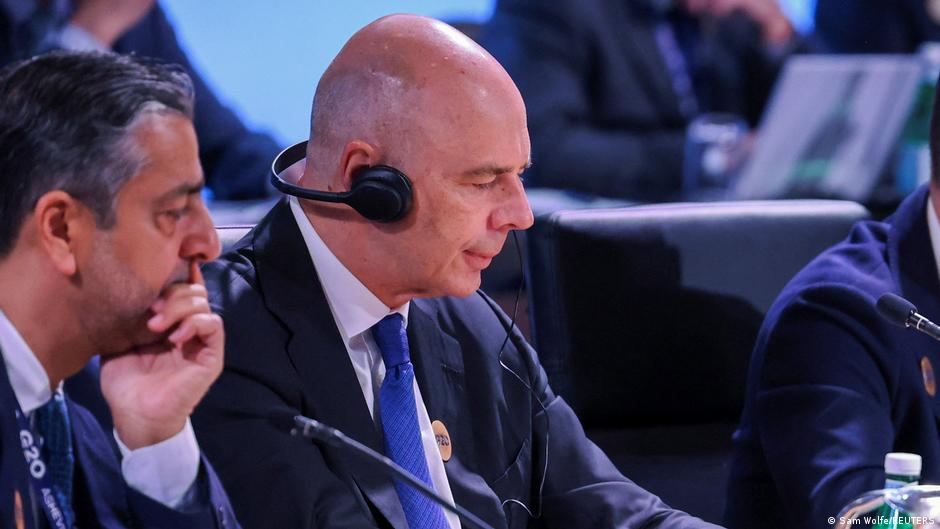
The United States told Russia that it should not expect any easing of economic pressure before the war in Ukraine is over, according to a Reuters report citing a source familiar with a bilateral exchange between the two countries’ finance ministers on the sidelines of a G20 meeting.
US Treasury Secretary Scott Bessent delivered that message to Russian Finance Minister Anton Siluanov during a gathering of finance ministers and central bank governors from G20 member states in Asheville, North Carolina, Reuters reported early on Tuesday, September 1. According to the report, Bessent told Siluanov that Moscow should not expect either a relaxation of economic pressure or agreements on other issues until the war in Ukraine has ended.
For European governments, the reported exchange is significant because it suggests Washington is maintaining a hard line on sanctions even while contacts with Russian officials continue in multilateral settings. That matters in London and across the EU, where policymakers and businesses remain exposed to the wider economic consequences of the war, including energy security, trade disruption and the broader direction of transatlantic sanctions policy.
The episode also highlighted tensions inside the G20 over Russia’s participation. According to the report, Siluanov’s presence at the meeting caused confusion and unease among European states that are currently working on tougher sanctions against Russia over the war.
European pushback at the G20
One of the clearest public objections came from German Finance Minister and Vice Chancellor Lars Klingbeil, who described Siluanov’s attendance at such an event as an alarming signal. In conversations with colleagues from other European countries, Klingbeil also threatened to boycott the traditional group photograph if the Russian minister were included.
“It is possible to find room for clear criticism, to debate with each other, to choose clear words about this war, but a general photo would be too big a step for me at this stage.”
Klingbeil made that comment to journalists, according to the source text. He also said representatives of other European countries joined his position, and the photograph was ultimately taken without the Russian minister.
The German minister further told reporters that at a shared morning meeting of participants he had told Siluanov that the war in Ukraine must be stopped and reaffirmed Berlin’s support for Kyiv.
That intervention reflects the broader European view that diplomatic protocol at international economic forums cannot be separated from the political reality of the war. For EU member states, sanctions are not only a tool of pressure on Moscow but also a test of policy cohesion between Europe and the United States. Any suggestion of a softer US approach would be closely watched in Brussels, Berlin and London alike.
From a UK and European business perspective, the Reuters account is likely to be read as a signal of continuity rather than change. Companies, banks and investors with exposure to sanctions compliance, commodity flows and Eastern European risk have spent years operating on the assumption that restrictions linked to Russia will remain in place for an extended period. Bessent’s reported message, if read at face value, points to no imminent diplomatic opening that would alter that calculation.
The source article does not cite any immediate reaction in sterling or London markets, but the implications are clear for British and European financial audiences: the sanctions regime remains bound to the course of the war, and political gestures at multilateral meetings are still being scrutinised for any sign of divergence between Washington and European capitals.
What Washington and Moscow said publicly
Public statements from the US and Russian sides were more limited than the Reuters account of the private conversation. On the evening of August 31, Russia’s Finance Ministry released a statement saying Siluanov and Bessent had held a meeting on the sidelines of the session of G20 finance ministers and central bank governors.
According to that Russian statement, the two sides discussed issues of Russian-American interaction on the financial track as well as questions of cooperation within the Group of 20. The wording did not mention sanctions relief or the war in Ukraine.
Also on August 31, US television channel CNBC reported on its website, citing the US Treasury, that Bessent had discussed US President Donald Trump’s peace plan for Ukraine with Siluanov in Asheville.
Taken together, the various accounts point to a meeting that carried more political weight than a routine exchange between finance officials. For Russia, even limited contact with senior US officials can be presented as evidence that dialogue remains possible. For European governments, however, the setting created risks of mixed messaging at a time when they are seeking to tighten sanctions rather than dilute them.
The Reuters report suggests Bessent attempted to remove any ambiguity by linking sanctions relief directly to the end of the war. That linkage is central to European policymaking as well. EU capitals have repeatedly framed sanctions as conditional on Russia’s conduct in Ukraine, and Germany’s reaction at the G20 underlined how sensitive the issue remains inside Western alliances.
For Britain and the rest of Europe, the practical takeaway is that the geopolitical and compliance environment remains unchanged. There is still no indication in the source material of a near-term breakthrough that would ease restrictions on Russia. Instead, the meeting in Asheville appears to have reinforced two parallel realities: Washington is still communicating with Moscow, but neither the US nor key European governments are prepared to signal a relaxation of pressure while the war continues.