Uzbek Banks Show Strong Q1 2026 Earnings Growth Amid Expanding Asset Base
Leading Uzbek banks report robust profit increases and asset growth, signaling strengthening financial sector ties impacting UK and EU markets.
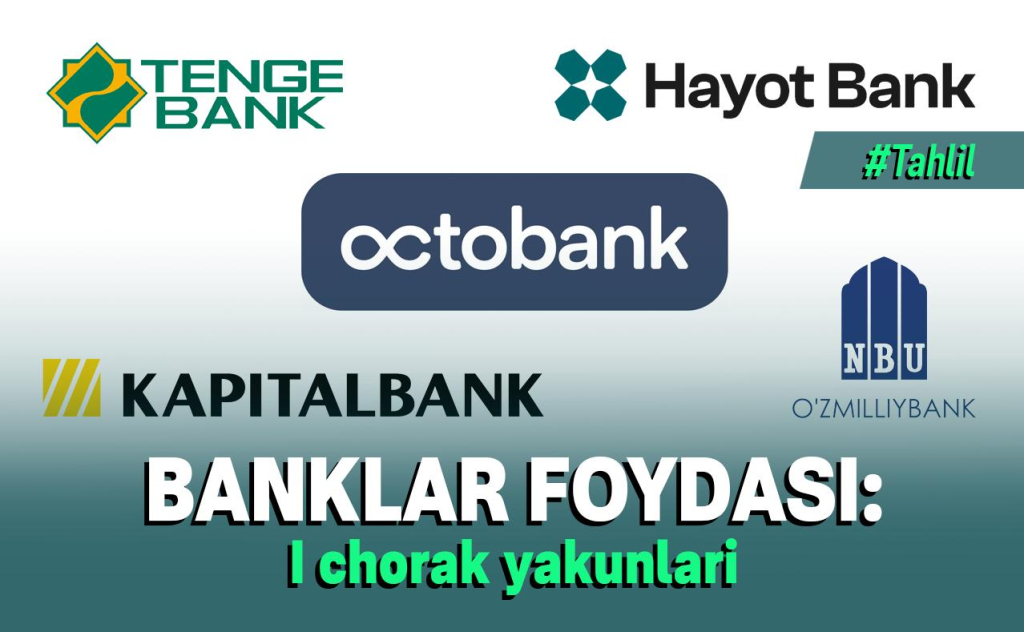
In the first quarter of 2026, Uzbekistan's banking sector demonstrated significant financial growth, with leading institutions such as Octobank, Tengebank, Kapitalbank, Milliybank, and Hayotbank publishing their quarterly financial reports. The data reveals a marked increase in revenues, expansion of asset volumes, and intensifying competition within the market.
Sector Overview and Asset Expansion
Overall, bank assets reached 15.52 trillion Uzbekistani soms, reflecting a substantial rise since the start of the year. Investment holdings accounted for the largest share of assets, totaling 6.71 trillion soms, underscoring banks' strategic focus on capital deployment.
Revenues have shown a diversified structure, with interest income reported at 238.3 billion soms and non-interest income reaching 1.2 trillion soms. This diversification points to a broadening of income sources beyond traditional lending activities.
On the expenditure side, interest expenses amounted to 176.9 billion soms, while non-interest expenses were 1.04 trillion soms. Operating costs totaled 111.6 billion soms, including 73.8 billion soms allocated to employee wages.
Tengebank Leads with Exceptional Profit Growth
"Tengebank's net profit surged to nearly 34.0 billion soms in Q1 2026, a multiple increase from 920.9 million soms in the same period last year," the report highlighted.
Tengebank notably posted a sharp rise in net profits to approximately 34.0 billion soms, a remarkable increase from 920.9 million soms recorded in Q1 2025. For context, the bank closed 2025 with a profit of 54.9 billion soms, up from 36.2 billion soms in 2024.
While interest income remained stable, increased provisions for potential losses on loans and leasing resulted in a negative net interest margin of -5.3 billion soms. However, commission income jumped dramatically from 12.8 billion to 57.0 billion soms, driving overall profitability for the quarter.
By early March, the bank's loan portfolio reached 4.5 trillion soms, an 8.4% increase compared to the previous year. Concurrently, the share of problematic loans rose from 2.3% to 3.4%, highlighting some emerging credit quality concerns.
Strong Performances from Milliybank and Kapitalbank
Milliybank reported a net profit of 603.2 billion soms in Q1 2026, marking a 28.9% increase year-on-year from 467.9 billion soms in the same period of 2025. The bank's interest income grew 15% to 4.7 trillion soms, offsetting interest expenses of 2.5 trillion soms.
Operational costs also rose by 26% compared to last year, with employee-related expenses accounting for 372.2 billion soms out of total operating expenses of 673.1 billion soms. Tax payments to the state budget amounted to 22.5 billion soms during the quarter.
Kapitalbank posted a net profit of 324.8 billion soms, with total assets increasing to 58.23 trillion soms. Loans and leasing operations constituted the largest asset segment at 36.6 trillion soms, driving revenue growth through interest income of 1.85 trillion soms and non-interest income of 1.64 trillion soms.
Interest expenses at Kapitalbank stood at 1.07 trillion soms, while non-interest expenses reached 648.6 billion soms. Operating expenses totaled 715.7 billion soms, including 269.8 billion soms in personnel costs.
Other Sector Players and Market Implications
Hayotbank recorded a net profit of 14.6 billion soms, with assets expanding to 7.43 trillion soms. The bank's credit and leasing portfolio stood at 5.63 trillion soms, forming the core of its asset base.
Interest income for Hayotbank was 332.5 billion soms, complemented by non-interest income of 87.2 billion soms. Corresponding expenses were 253.5 billion soms (interest) and 22.2 billion soms (non-interest), with operational costs at 66.8 billion soms including 41.6 billion soms for wages.
Previously, data from other banks such as SQB, KDB Bank, Universalbank, Turonbank, and Openbank have also highlighted profitability and key performance indicators, painting a comprehensive picture of Uzbekistan's evolving banking landscape.
Implications for UK and European Markets
These robust financial results from Uzbekistan's banking sector are significant for British and European investors and financial institutions engaged in Central Asia. The expanding asset base and increasing profitability of Uzbek banks can influence sterling-based investment portfolios and risk assessments, especially given London's role as a global financial hub with growing interest in emerging markets.
Moreover, the diversification of income sources and rising commission revenues signal evolving banking practices that may open new avenues for cross-border financial services and partnerships.
However, the uptick in problematic loans highlights potential credit risks, which UK and EU financial entities should monitor closely to calibrate exposure and maintain portfolio resilience.
Overall, the Uzbek banking sector's performance in early 2026 affirms its growing importance within the Eurasian financial ecosystem, with tangible impacts on currency flows, investment strategies, and market sentiment in London and across Europe.
Based on reporting by Deutsche Welle.