Zaporizhstal Damage Deemed Critical After Third Russian Strike in Month
The shutdown of one of Ukraine’s largest steelworks adds pressure to European supply chains and keeps investors alert to war-related risk.
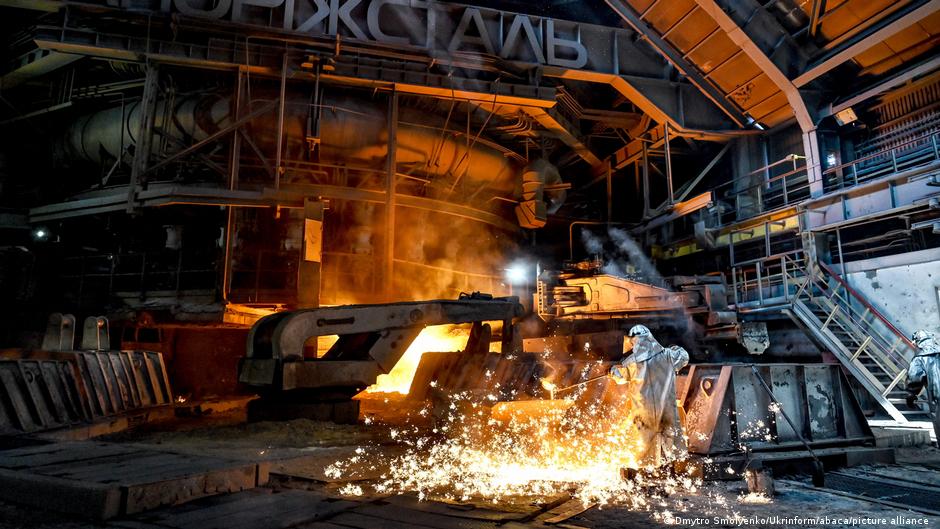
Preliminary assessments indicate that damage to Zaporizhstal, one of Ukraine’s largest steel plants, is “critical” after a third Russian missile strike in a month hit the enterprise in the Ukrainian city of Zaporizhzhia. The plant had already fully halted operations following the first major attack on 11 August.
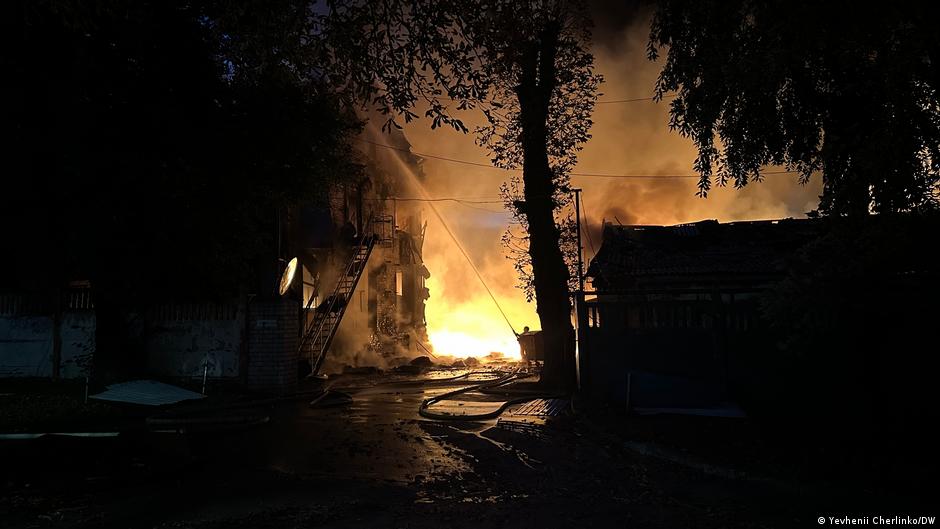
The latest strike took place overnight into Saturday, 12 September, when ballistic missiles hit the steelworks’ production site. According to the company, four missiles struck the facility during the attack. At least four employees were present at the plant at the time and were injured, with three requiring hospitalisation.
The damage includes equipment in the blast furnace and open-hearth furnace shops, as well as the plant’s power system and logistics infrastructure. For British and European businesses exposed to steel, industrial inputs, freight, energy and reconstruction-linked supply chains, the repeated disruption underscores the continuing commercial risks created by Russia’s war against Ukraine.
European supply chain risk widens
Zaporizhstal is part of Metinvest, one of Ukraine’s major industrial groups. The plant’s stoppage matters well beyond the immediate region because of the scale of its role in Ukrainian steelmaking. According to Zaporizhstal, the plant produced almost 3.568 million tonnes of pig iron and 3.212 million tonnes of steel in 2025. Across Ukraine, industry association Ukrmetallurgprom calculated output that year at 7.884 million tonnes of pig iron and 7.409 million tonnes of steel.
On that basis, the Zaporizhzhia plant accounted for more than 45% of all pig iron produced in Ukraine and more than 42% of the country’s steel output. Its continued outage therefore carries significance for European customers and counterparties that monitor Ukrainian metals supply, replacement sourcing, transport routes and price volatility.
For the UK, the immediate read-across is not a direct sterling shock from a single facility, but a renewed reminder that war damage can affect input costs, investor risk appetite and expectations for European industrial margins. London-listed companies with exposure to construction, mining, metals trading, energy, shipping or emerging Europe are likely to remain sensitive to developments that point to longer production outages or higher logistics costs.
“The scale of destruction grows with every strike. It is still impossible to assess it finally, but preliminarily we qualify the damage as critical,” said Oleksandr Myronenko, chief operating officer of Metinvest.
Metinvest said work is continuing at the site to deal with the consequences of the strike and to examine damaged facilities in order to clarify the nature and scale of the destruction. The company has not given a firm timetable for restarting production.
A plant already stopped by earlier attacks
The first major missile attack on Zaporizhstal occurred overnight on 11 August. Eight employees were killed and another 26 were wounded. The damage to equipment was severe enough for the steel plant to stop operating completely, while other production sites moved to reduced capacity.
A second major attack followed on 27 August. According to Zaporizhstal, five missiles struck the plant in that assault. No one was killed or injured, but the blast furnace shop, energy and transport infrastructure, and open areas of the enterprise were damaged.
After the second strike, Myronenko said that any timeline for restoring production existed only in theory, because workers had only just cleared debris from the previous impact when another attack occurred. The third strike now deepens that uncertainty and raises the likelihood that recovery will depend not only on repairs, but also on security conditions around Zaporizhzhia.
The business implications are closely watched in Europe because Ukrainian metals have long formed part of regional industrial flows. Any prolonged disruption can force buyers to seek alternatives, adjust contracts or absorb higher transport and procurement costs. For investors in London, such incidents also feed into a broader assessment of geopolitical risk across eastern Europe, even when they do not produce an immediate and clearly measurable currency move.
Sterling’s response to war-related developments typically depends on whether investors see broader implications for energy prices, European growth, inflation or risk sentiment. The source information does not report a specific pound reaction or London market move following the latest attack. Still, the incident adds to the wider set of pressures facing UK and EU businesses that depend on stable industrial production and predictable trade links across the continent.
The plant is also economically important within Ukraine. In May 2026, Zaporizhstal topped the list of the largest employers in the Zaporizhzhia region, according to the company’s press service, citing the annual ranking by Opendatabot, a service providing access to Ukrainian state data on individuals and legal entities. At that time, the enterprise employed more than 8,000 people.
In 2025, the steelworks paid almost 2.7 billion hryvnias, equivalent to 52.34 million euros, in taxes to budgets at all levels. The shutdown therefore affects not only industrial output, but also employment, local fiscal revenue and Ukraine’s broader wartime economic resilience.
For European policymakers and companies, the repeated attacks highlight the vulnerability of major industrial assets that remain crucial to Ukraine’s economy. For the City of London, the episode is another data point in a war-risk environment where infrastructure damage can quickly alter expectations around commodities, reconstruction demand and cross-border supply security.