Abbas delays Palestinian elections to 2027 as Israel rejects voting claims
The postponement of the first national Palestinian elections in more than two decades adds uncertainty for UK and European policy and markets.
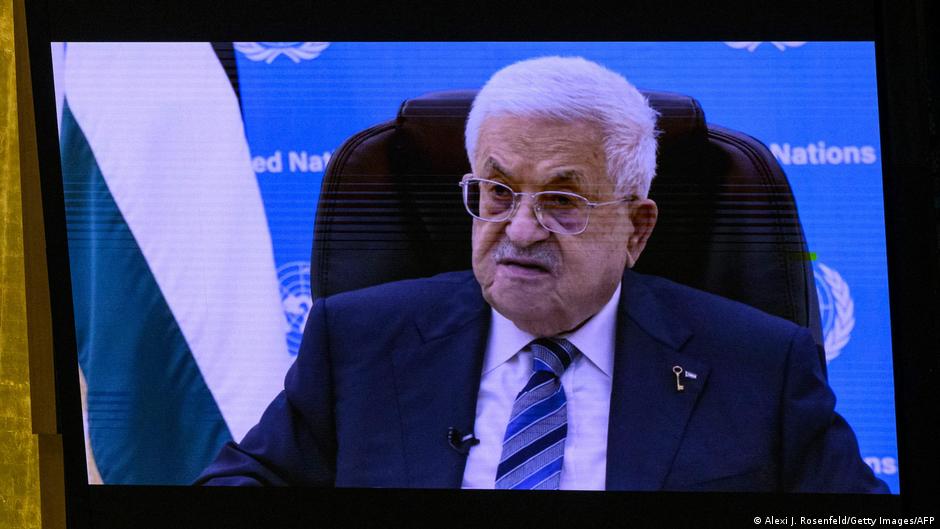
Palestinian Authority President Mahmoud Abbas has postponed elections in the Palestinian territories from late November to 11 September 2027, according to the WAFA news agency, in a move that extends political uncertainty at a sensitive moment for British and European diplomacy, aid planning and regional risk assessments watched by London markets.
The decree, reported on Saturday, 10 October, covers parliamentary elections and the presidential vote, which are now due to be held on the same day. The ballot would be the first national Palestinian election in more than two decades, according to dpa, and its delay raises fresh questions about governance in the West Bank, East Jerusalem and Gaza at a time when European governments are seeking a workable post-war political framework for the region.
For UK and EU policymakers, the timing matters. Britain and the European Union have a direct interest in the stability of the eastern Mediterranean and the wider Middle East, not only through diplomacy and security ties but also through trade, energy sentiment and the pressure that regional instability can place on risk assets. The article did not report any specific move in sterling or London-listed shares, but the political backdrop is one that investors in London typically monitor for its potential effect on oil prices, defence stocks, airlines, insurers and the pound’s broader risk profile.
Election delay deepens governance uncertainty
WAFA cited Israeli military restrictions, the expansion of Jewish settlements, attacks by armed settlers and the absence of freedom of movement as reasons for the postponement in the West Bank, East Jerusalem and Gaza. In relation to Gaza, the agency also pointed to instability and the delayed deployment of international security forces.
Those explanations were rejected by Israel’s foreign minister, Gideon Saar, who accused the 90-year-old Abbas of misleading the international community and making false claims that Israel had created obstacles to voting. Saar said Abbas was trying to avoid responsibility and accountability.
Israel’s foreign minister accused Mahmoud Abbas of trying to evade responsibility and accountability over the delayed vote.
The decision also drew criticism from within Fatah, the Palestinian national liberation movement to which Abbas belongs. That internal criticism is significant for European governments because Fatah remains central to any discussion about whether the Palestinian Authority can eventually take on a larger administrative role in Gaza.
The postponement follows municipal elections held in April in Deir al-Balah in the Gaza Strip, the first such vote there in 20 years. Candidates on most electoral lists were close to Fatah or ran as independents.
UK and EU interests remain exposed
The delay lands against a regional backdrop that has repeatedly tested European diplomatic coordination. The situation in the Middle East escalated sharply on 7 October 2023, when Hamas, which is designated as a terrorist organisation by the European Union and the United States, carried out a large-scale attack on Israel. Militants launched a mass rocket barrage, entered Israeli territory and carried out the deadliest massacre of civilians in the history of the modern Israeli state, killing about 1,200 people.
Militants also seized about 250 hostages and took them to the Gaza Strip. Some hostages were exchanged or released, while others died. Israel declared war on Hamas in response.
Since then, the conflict has become a central issue for Western governments, including the UK, where ministers have had to balance support for Israel’s security, humanitarian concerns in Gaza, domestic political pressure and relations with Arab partners. In the European Union, the war has also exposed differences between member states over recognition, sanctions, aid and the terms of any political settlement.
For sterling and UK assets, the immediate issue is not the election delay alone but the risk environment it reinforces. The source article gave no direct market data, and no specific London market reaction was reported. Still, developments that complicate post-war governance in Gaza can feed into a broader risk premium for investors, particularly if they affect energy expectations, shipping sentiment, regional alliances or the credibility of diplomatic plans backed by Western governments.
London’s market focus is therefore likely to remain on whether the postponement changes the prospects for a Palestinian Authority role in Gaza, and whether the ceasefire framework can continue to hold. Any renewed instability in the region could matter for UK companies with exposure to energy, travel, defence, insurance and emerging-market finance, while sterling can be sensitive to global risk appetite when geopolitical tensions rise.
Ceasefire framework still shapes the next phase
In October 2025, Israeli authorities and Hamas agreed to a ceasefire under a peace plan developed by the administration of US President Donald Trump. The United States, Turkey, Qatar and Egypt acted as guarantors of the arrangements between Israel and Hamas.
During the first phase, Hamas militants returned all remaining living Israeli hostages in exchange for the release of Palestinian prisoners from Israeli jails. In mid-January, the White House said the second phase of Trump’s plan to end hostilities in the Gaza Strip had begun. Under that phase, a National Committee is supposed to take over the administration of the region until the Palestinian Authority is ready to assume that role.
The postponed elections add another layer of complexity to that transition. A national ballot had been expected to offer a measure of renewed legitimacy to Palestinian institutions after more than two decades without nationwide elections. Moving the vote to September 2027 means European governments will have to consider how to engage with the Palestinian Authority during a longer interim period, especially if it is expected to play a future governing role in Gaza.
For Britain and the EU, that creates a familiar policy dilemma: the need for a credible Palestinian governing partner, set against unresolved questions over democratic legitimacy, security conditions and the practical ability to hold elections across the West Bank, East Jerusalem and Gaza. For investors, the same uncertainty keeps the Middle East on the list of geopolitical variables that can shape London trading, sterling sentiment and European market confidence.