US Disables Cargo Ship Near Hormuz as Gulf Tensions Threaten UK Trade
CENTCOM said a US fighter struck a Panama-flagged vessel after repeated warnings, while a tanker was hit in the Strait of Hormuz.
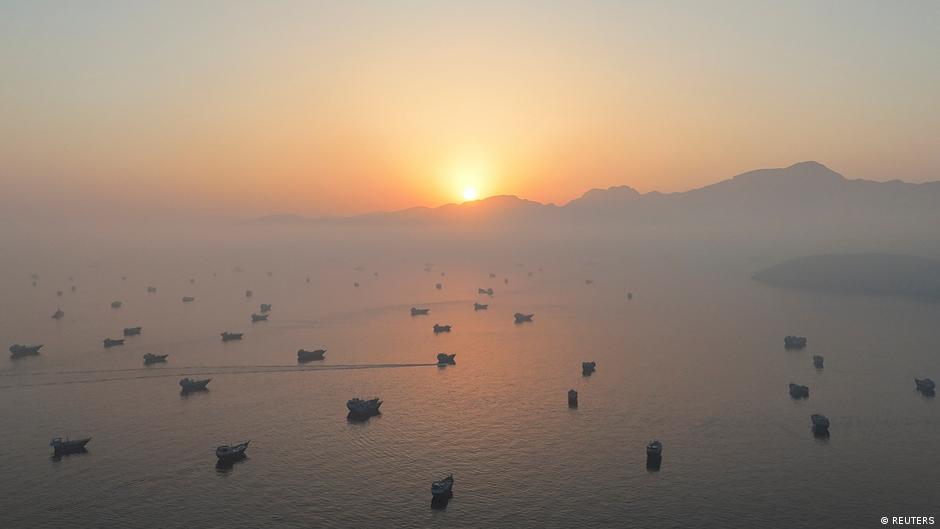
A US Air Force fighter has disabled a commercial cargo vessel in the Gulf of Oman, according to US Central Command, in an escalation that will be closely watched by energy traders, insurers and shipping desks in London and across Europe.
CENTCOM said on 10 October that its forces had struck the stern of the M/V Ocean Molica, also known as the Arika Sun, after the crew allegedly ignored repeated warnings and attempted to break an active maritime blockade against Iran. The Panama-flagged vessel had previously departed an Iranian port, the command said.
The strike, carried out with a precision munition, disabled the ship’s propulsion system, CENTCOM said. The crew was not injured. The episode adds to a widening security crisis around the Gulf of Oman and the Strait of Hormuz, one of the world’s most sensitive energy corridors and a route of direct relevance to British and European fuel costs, shipping premiums and market sentiment.
“Crews are advised to heed blockade warnings,” CENTCOM said, according to the statement described in the source report.
For UK investors and policymakers, the immediate issue is not only the military incident itself but the cumulative pressure on energy supply chains. The source report said fuel prices have risen significantly in recent weeks against the backdrop of the war with Iran. Any further tightening in Gulf shipping could feed into European import costs, freight insurance and inflation expectations, with sterling-sensitive markets likely to monitor the risk of higher energy bills and weaker consumer spending.
London Markets Face Another Gulf Risk
Although the report did not cite specific moves in sterling or London-listed shares, the incident is the kind of geopolitical shock that typically draws attention from currency, oil and transport-exposed equities. Britain remains highly exposed to global energy pricing even when supplies do not come directly from the affected route, because wholesale benchmarks and tanker insurance costs are set in international markets.
The Gulf of Oman sits outside the Strait of Hormuz, but the two are operationally connected for vessels moving in and out of the Persian Gulf. A disruption there can affect the calculations of refiners, airlines, logistics operators and commodity traders. In Europe, the concern is amplified by still-sensitive inflation dynamics, household energy costs and the political consequences of another fuel-price squeeze.
CENTCOM said US forces resumed the American blockade on 14 July against all vessels travelling to or from Iranian ports. Over the following three months, according to the command, four commercial vessels were disabled and 135 ships were forced to turn back and change course. In the same period, US forces destroyed 10 tankers linked to the shadow network of Iran’s Islamic Revolutionary Guard Corps, the source report said.
Those figures underline the scale of the maritime enforcement campaign now surrounding Iran-linked trade. For European businesses, the broader risk is that a series of ship-by-ship incidents becomes a sustained drag on marine insurance, delivery schedules and fuel procurement. London’s role as a centre for shipping insurance and commodity finance means the financial consequences of Gulf instability can reach the City quickly, even before direct supply disruptions are felt by consumers.
Tanker Hit In Strait Of Hormuz
Separately, the UK Maritime Trade Operations organisation reported that a tanker had again come under fire in the Strait of Hormuz. According to the captain, the vessel was struck on its port side by an unknown projectile, causing a fire. UKMTO said the crew was safe.
The tanker incident will add to concerns among European governments that the security environment around Hormuz is deteriorating. The strait remains a crucial passage for global energy shipments, and even limited attacks can force operators to reassess routes, premiums and risk controls.
The source report also noted that G7 leaders on 2 October condemned Iran’s continuing attacks on neighbouring countries and actions that disrupt international trade, energy security and the global economy. The group called for the immediate and full restoration of navigational rights and principles in the Strait of Hormuz and said it intended to strengthen collective efforts to achieve that goal.
That statement is significant for Britain and the European Union because it places freedom of navigation, rather than only regional security, at the centre of the diplomatic response. For European capitals, keeping Hormuz open is tied to energy affordability, industrial competitiveness and inflation management. For London, the same issue reaches into shipping, insurance, commodities trading and foreign-exchange expectations.
The domestic US political context is also becoming more difficult. The source report said the rise in fuel prices has increased pressure on Republicans roughly a month before the US congressional midterm elections, with recent polling showing their popularity among voters has declined. While that pressure is American in its immediate form, European markets will be alert to any sign that political incentives in Washington could harden the blockade or reduce room for de-escalation.
For now, the stated facts are clear: a US fighter disabled the M/V Ocean Molica without injuring its crew; CENTCOM says the ship had tried to breach a blockade after repeated warnings; and UKMTO says a separate tanker was hit in the Strait of Hormuz, with its crew safe. The market implications for Britain and Europe remain a developing risk, but the direction is familiar: higher uncertainty around Gulf shipping, renewed pressure on fuel costs and closer scrutiny from London trading desks.