Zelenskyy Says US-Russia Diesel Deal Is an Investment in War
Kyiv warns that easing curbs on Russian fuel exports could weaken sanctions pressure and reverberate through UK and European energy markets.
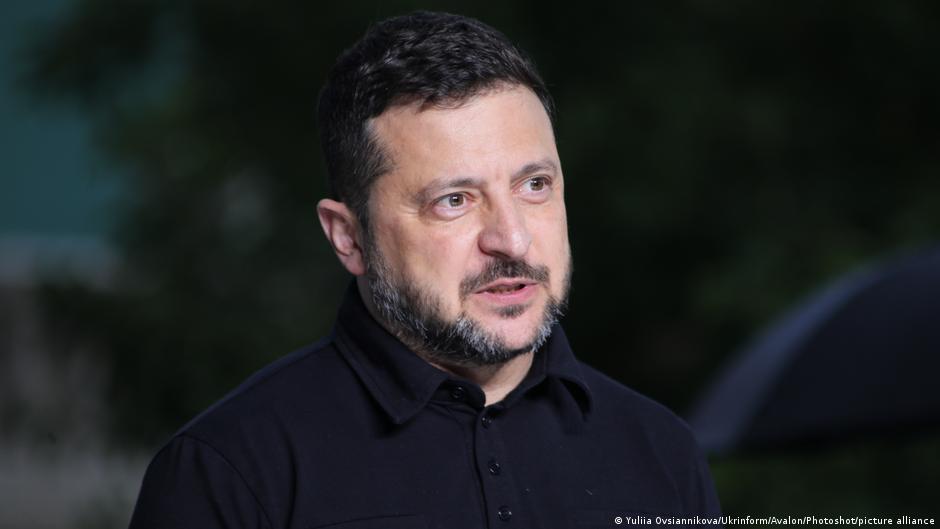
Ukrainian President Volodymyr Zelenskyy has sharply criticised a US-Russia agreement allowing Russian diesel fuel to return to global markets, describing the move by the White House as an “investment in war” and warning that Moscow would respond not with restraint but with renewed attacks.
The Ukrainian leader’s remarks, made on Friday, October 9, came after US President Donald Trump said he had held “very successful” talks with Russian President Vladimir Putin. According to Trump, the discussions produced an agreement on supplies of Russian diesel to the United States and to the wider global market.
For Britain and the European Union, the decision has immediate strategic and market significance. Russian oil products have been a central focus of Western sanctions policy since Moscow’s full-scale invasion of Ukraine, and any loosening of restrictions is likely to be scrutinised in London, Brussels and European energy trading hubs. Diesel remains a key fuel for transport, logistics, agriculture and industry, meaning shifts in supply can affect inflation expectations, corporate costs and currency sentiment.
Kyiv Warns Against Sanctions Relief Without De-Escalation
Zelenskyy argued that any permission for Russia to sell oil products without a firm de-escalation arrangement would embolden the Kremlin rather than move it toward peace. He said the decision risked prolonging the conflict instead of helping to end it.
“Gifts to Putin will not work for peace... Russia will ‘thank’ for diesel with further terror and vile acts. Permission for Russia to sell oil products is an investment in a war that must be ended, not continued,” Zelenskyy wrote.
He added that Ukraine was ready for reciprocal steps aimed at de-escalation and called on Washington to increase pressure on Russia to secure a ceasefire. Zelenskyy framed his proposal around energy infrastructure, a sector that has been repeatedly targeted during the war and remains crucial to Ukraine’s economy and civilian life.
“Ukraine will not burn Russian oil refining if Russia does not destroy our energy sector. We are proposing exactly such an agreement to America and believe that the strength of the United States is sufficient to achieve such a compromise,” the Ukrainian leader said.
Zelenskyy stressed that any easing of sanctions against Russia without a clear agreement on de-escalation would be “obvious weakness” and would play into Moscow’s hands, enabling Russia to “kill more” and “fight longer.”
London Markets Watch Fuel Supply and Sterling Risks
The announcement lands at a sensitive moment for European policymakers and investors. London markets typically respond quickly to changes in global energy supply assumptions, particularly where they affect inflation, transport costs and expectations for central bank policy. A wider flow of Russian diesel could ease some pressure on fuel supply, but it could also complicate the political architecture of sanctions that Britain and the EU have used to constrain Russian revenue.
For sterling, the implications are mixed. If additional diesel supply lowers wholesale fuel costs, it could reduce some inflationary pressure facing UK businesses and consumers. But any perception that Western sanctions discipline is weakening could unsettle investors focused on geopolitical risk, European security and the credibility of coordinated policy between Washington, London and Brussels.
The UK has positioned itself as a firm supporter of Ukraine and a backer of sanctions pressure on Moscow. A US decision to authorise Russian diesel supplies to the global market could therefore create tension between energy price relief and the broader strategic objective of limiting Russia’s ability to finance the war.
European governments may face a similar dilemma. The EU has sought to reduce dependence on Russian energy while managing the cost of living and industrial competitiveness. Diesel availability is especially important for freight, farming and manufacturing supply chains across the continent. Yet Kyiv’s criticism underscores the political cost of any step that appears to provide Moscow with additional export revenue in the absence of a ceasefire or energy-sector truce.
Washington Issues Temporary Licence
On the same day as Trump’s remarks, the US Treasury Department announced that the Office of Foreign Assets Control, acting on Trump’s order, was “immediately” issuing a temporary general licence permitting supplies of Russian diesel fuel to the global market.
The move was followed by confirmation from Moscow that Russia would begin lifting diesel export restrictions ahead of the previously planned timetable. Russian Deputy Prime Minister Alexander Novak told TASS that Russia was starting to remove the restrictions “immediately.” He also confirmed Trump’s statement that Russian diesel exports could eventually reach 3 million tonnes per month.
That potential volume is likely to draw close attention from energy traders and policymakers in Europe. A return of Russian diesel at scale could affect benchmark pricing, shipping flows and refinery margins, while also raising questions about enforcement, compliance and the political durability of sanctions frameworks.
For Ukraine, however, the issue is not simply market supply. Zelenskyy’s intervention casts the diesel agreement as a test of Western leverage over Moscow. His central argument is that access to oil-product markets should be tied to concrete Russian restraint, particularly a halt to attacks on Ukraine’s energy infrastructure.
The dispute leaves UK and EU decision-makers balancing short-term energy-market considerations against the longer-term aim of maintaining pressure on Russia. As London traders assess the possible effect on diesel prices and sterling-sensitive inflation expectations, Kyiv is urging Washington to treat fuel access as a bargaining chip for de-escalation rather than a concession granted in advance.