Ukraine to Hold US Talks on New War Plan as Europe Weighs Role
Kyiv’s delegation is due to meet Trump representatives in the United States on 9-10 October to discuss a proposal aimed at ending the war with Russia.
A Ukrainian delegation is set to travel to the United States for talks with representatives of US President Donald Trump on a new plan to end Russia’s war against Ukraine, in discussions that could carry significant implications for European security, British policy and investor sentiment toward the region.
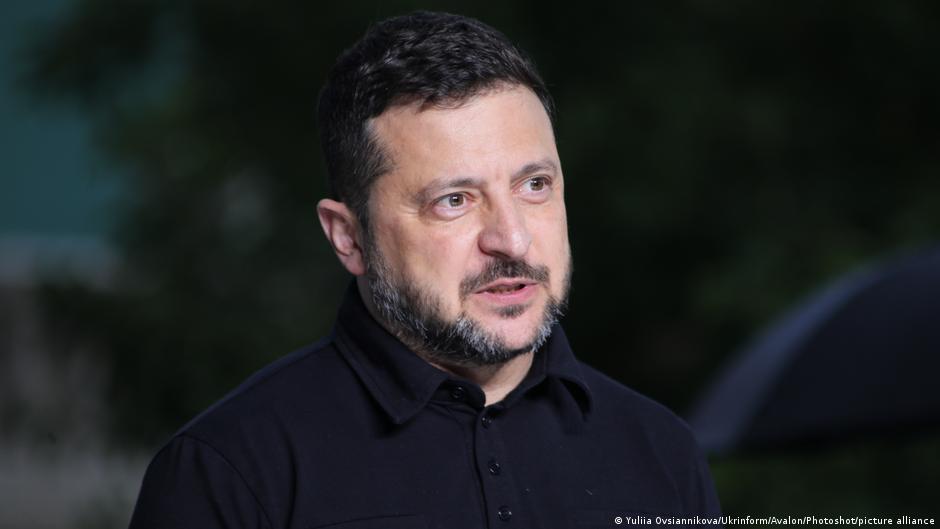
Ukrainian President Volodymyr Zelensky said on Thursday, 8 October, that the meetings would take place on 9 and 10 October with Jared Kushner and Steve Witkoff, identified as Trump’s special representatives. The Ukrainian leader said the European side could also join the talks, a detail likely to be closely watched in London and across EU capitals given the scale of Europe’s financial, military and diplomatic exposure to the conflict.
The Ukrainian delegation will include the head of the Office of the President, Kyrylo Budanov; deputy head of the Office of the President Serhiy Kyslytsia; Davyd Arakhamia, head of the Servant of the People faction in parliament; and Rustem Umerov, chairman of Ukraine’s Foreign Intelligence Service, according to Zelensky’s account.
Ukraine’s service of Voice of America, citing a senior US official, reported that the meeting would focus on a new proposal that covers all aspects of the conflict and aims to bring the war to an end. No detailed terms of the proposal were disclosed in the source account.
European Stakes in the Washington Talks
For Britain and the European Union, the possibility of a new US-backed framework for ending the war comes at a sensitive moment. The conflict has shaped Europe’s defence posture, sanctions policy, energy security and fiscal planning. Any negotiating track involving Washington and Kyiv, particularly one that may include European participation, would therefore be assessed not only as a diplomatic development but also as a strategic issue for European governments.
The UK has been one of Ukraine’s most vocal supporters since Russia’s full-scale invasion, while EU states have carried the costs of sanctions, military assistance and energy-market disruption. For London markets, the prospect of a negotiated pathway could influence risk appetite around European assets, defence-linked equities and currencies exposed to regional security shocks, including sterling. The source article does not report any specific sterling movement or London market reaction to the planned talks.
Zelensky’s remarks also came after US Secretary of State Marco Rubio said the war in Ukraine had reached a deadlock and that, in his view, there were no prospects for resolving the conflict through negotiations. Rubio made the comments in an interview with the Greek newspaper Kathimerini.
Zelensky sharply criticised that position, arguing that diplomacy could not be separated from economic pressure on Moscow. He said it was inconsistent to speak with Russia about future economic projects while describing the situation as a diplomatic impasse.
“We are not in a diplomatic deadlock,” Zelensky said, urging tougher economic pressure on Russia and sanctions tied to its weapons.
The Ukrainian president called for Russia’s economy to be shut off from support and said Moscow should not be fed by sales from other countries. He also urged sanctions on Russian weapons, according to the account citing Ukrinform.
Starlink Request and Retaliatory Strikes
Zelensky also called on the United States to allow Ukraine to use Starlink over Russian territory. He said such access would help Ukraine “dominate” in the skies and ultimately force Russian President Vladimir Putin to sit down at the negotiating table.
The request touches on a broader question of how far Western technology and infrastructure should be used in Ukraine’s campaign against Russian military and strategic assets. For European governments, including the UK, such issues remain bound up with escalation risks, alliance coordination and the practical limits of military support.
Zelensky also said Ukraine was responding in kind to Russian strikes, including attacks on data centres. He said Russia had struck Ukrainian data centres and that Ukraine had answered, while declining to provide all details.
According to the source account, Ukraine’s armed forces struck a Yandex data centre in the town of Sasovo in Russia’s Ryazan region with drones during the night of 8 October. A fire broke out, and the data centre fully stopped operating. No one was injured.
The reported strike underscores the widening range of targets in the war, including digital infrastructure. For European businesses, the continued targeting of data, energy and transport infrastructure is part of the wider risk environment surrounding the conflict, with potential consequences for cybersecurity, insurance, supply chains and capital allocation.
The planned US talks on 9 and 10 October therefore arrive at a moment when Kyiv is seeking both a diplomatic opening and stronger pressure on Moscow. Whether European representatives join the discussions could determine how closely any new proposal aligns with British and EU security priorities, sanctions strategy and long-term commitments to Ukraine.