Ukraine Says 28 Killed in Russian Barrage as Europe Weighs War Costs
Kyiv said Russia used missiles and drones across 13 regions, sharpening pressure on Britain and the EU over sanctions and energy revenues.
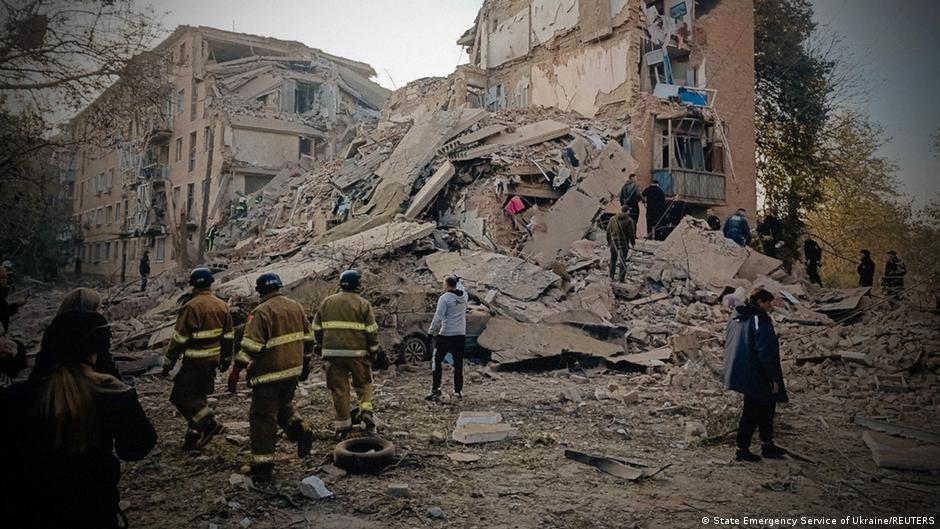
Ukraine said 28 people were killed after a large-scale Russian attack involving missiles and drones, a strike that immediately pushed the war back onto the European business agenda as governments in London and across the EU weigh the cost of sanctions, energy security and continued support for Kyiv.
Ukrainian Interior Minister Ivan Vyhovskyi said on Telegram on Wednesday evening, October 7, that 28 people had died as a result of the mass shelling by Russian forces. He said emergency service workers and police had pulled people from rubble, evacuated residents from destroyed buildings and rescued others from fire. In total, 29 people were extracted, evacuated or saved, according to his account.
The heaviest rescue work was continuing in Pryluky, where a missile hit a residential apartment building. Vyhovskyi said debris clearance there had been under way for more than 14 hours. The city, in the Chernihiv region, became the focus of the immediate humanitarian toll from the barrage.
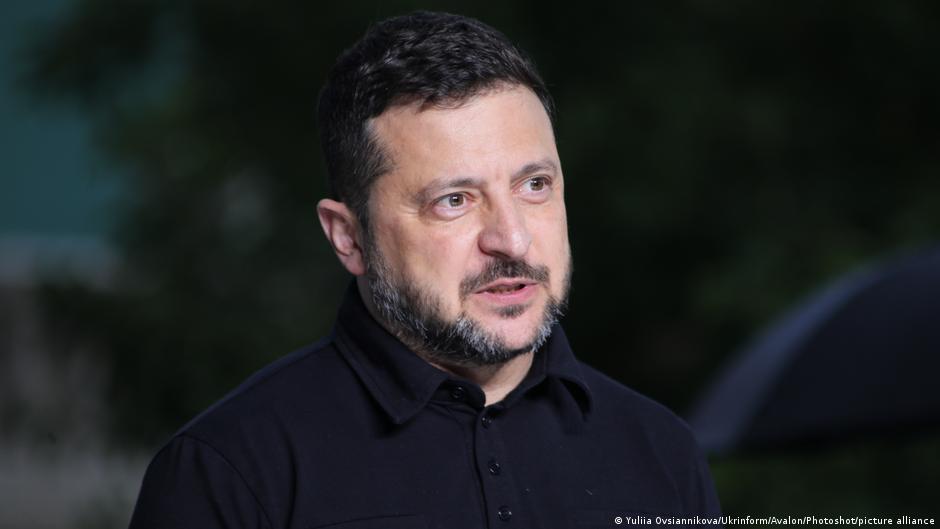
President Volodymyr Zelensky said later the same evening that 100 people had been wounded in the attacks. He described the strike as a combined assault involving many ballistic missiles, many cruise missiles and Shahed drones, followed during the day by further attacks using Shaheds and aerial bombs.
“Such a ‘gift’ Putin made for himself on his birthday. The killing of children, the killing of people,” Zelensky wrote.
The Ukrainian president said it was important that leaders did not stay silent about what had happened or about what he described as Russia’s intention to keep moving towards escalation, killings and shelling. He argued that Russian President Vladimir Putin did not feel the war was creating sufficient problems for him.
Sanctions and Europe’s Economic Exposure
Zelensky linked the latest attack directly to the sanctions debate that matters to Britain, the European Union and Western financial centres. He said that weakening sanctions measures against Russia and sending signals about lifting sanctions on oligarchs amounted, in his view, to signals that the war against Ukraine was being normalised.
His argument was economic as much as military. Zelensky said Putin could still sell oil, and that when the Russian leader counted profits in dollars and euros, the war still paid for itself. He said it remained profitable for Moscow to continue fighting. That framing places the attack squarely inside the policy questions facing European capitals: whether sanctions enforcement is tight enough, whether loopholes remain around energy revenue, and whether Western markets are unintentionally helping sustain Russia’s military campaign.
For the UK, the issue lands at a sensitive point for policymakers and investors. London has repeatedly positioned itself as one of Kyiv’s strongest supporters, while also managing the domestic consequences of higher defence spending, energy-market volatility and the broader inflation legacy of the war. Sterling is often sensitive to shifts in European risk sentiment, energy expectations and fiscal outlooks, making major escalations in Ukraine relevant for currency traders even when the immediate market response is difficult to separate from wider global factors.
European businesses also have a direct stake. Companies with supply chains, commodity exposure, insurance risk or operations tied to central and eastern Europe face renewed uncertainty whenever Russian strikes intensify. The October 7 barrage, as described by Ukrainian officials, underlined the continuing risk that the conflict can disrupt not only Ukrainian cities but also the wider European economic environment through energy prices, defence budgets, migration pressures and sanctions compliance costs.
Zelensky said the issue was not only a problem for Ukraine and its people, but for everyone in Europe and the Western world. That message was aimed at the political and commercial calculations now taking place in EU capitals and in London, where any softening of pressure on Moscow is weighed against the risk that Russia interprets it as permission to escalate.
Pryluky Toll and Wider Attacks
In the same Telegram post, Zelensky said rescue workers had been clearing debris throughout the day after the Russian missile strike on Pryluky in the Chernihiv region. According to Vyhovskyi, 20 people were killed there, including five children. Three of those children were one year old.
Vyacheslav Chaus, the head of the Chernihiv regional military administration, had earlier reported more than 50 people injured as a result of the attack. The figures given by national and regional officials pointed to one of the deadliest recent strikes on a residential area, with the local rescue operation continuing for hours after the impact.
Zelensky said Russian forces attacked 13 regions of Ukraine on October 7 and used 70 missiles, including many ballistic weapons, as well as Shahed drones. The scale and mix of the weapons described by Kyiv highlighted Russia’s continued ability to launch complex strikes across a broad geographic area despite repeated Western sanctions and export controls targeting its military supply chains.
For European policymakers, that is the central strategic concern. If Moscow can continue to finance and equip attacks of this scale, pressure will grow for tighter enforcement against oil revenue, sanctions evasion and access to dual-use technology. For Britain and the EU, the question is no longer only how to support Ukraine militarily, but how to ensure that the financial architecture around Russia is restrictive enough to change Kremlin calculations.
The latest Ukrainian casualty figures therefore carry significance beyond the battlefield. They sharpen the debate over whether Western economic pressure is achieving its intended effect, and whether any hint of sanctions relief could be read in Moscow as a sign that Europe is prepared to absorb the war as a manageable background risk. Zelensky’s message was that such an approach would be dangerous for Ukraine, for Europe and for the wider Western world.