Brazil election heads to runoff as Flavio Bolsonaro leads Lula with 47%
The first-round result puts Brazil’s policy direction back in focus for UK and European investors exposed to Latin America’s largest economy.
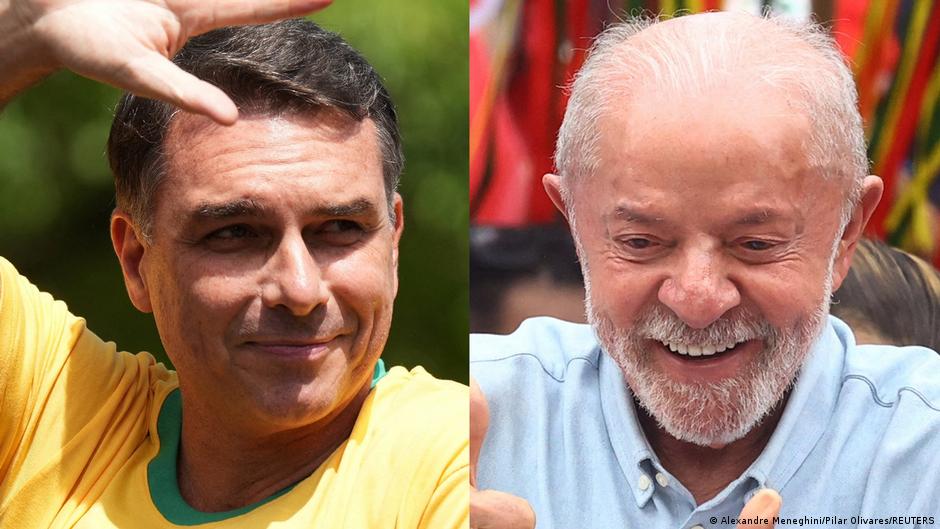
Brazil’s presidential election is heading to a second round after Flavio Bolsonaro, a senator from Rio de Janeiro state and the eldest son of former president Jair Bolsonaro, emerged narrowly ahead of President Luiz Inacio Lula da Silva in the first-round count.
With 99.99% of ballots counted, Bolsonaro had 47.03% of the vote, according to data from Brazil’s electoral authorities released overnight on Monday, 5 October. Lula, the left-wing incumbent, followed with 45.16%. Turnout was 78.92%.
Because no candidate cleared the 50% threshold required for an outright victory, Brazilians will return to the polls on 25 October. For UK and European businesses, the result prolongs a period of political uncertainty in a country that remains a major emerging-market counterpart for trade, commodities, energy, banking and infrastructure investment.
With no candidate crossing the 50% mark, Brazil will hold a second round on 25 October.
The vote also revives a familiar electoral pattern. Since the early 2000s, every Brazilian presidential election has required a runoff. This year’s second round, however, carries an unusually sharp dynastic and political edge: Lula is now facing the son of the right-wing leader he defeated in 2022.
London and Europe watch for policy signals
The result matters beyond Brazil’s borders because the country is Latin America’s largest economy and a key destination for global capital. For investors in London and across the European Union, the next stage of the campaign will be assessed through the lens of fiscal policy, state involvement in industry, regulatory stability and Brazil’s broader approach to international partners.
The source figures do not describe an immediate market move in sterling or London-listed assets, but the political backdrop is clearly relevant for UK investors with Brazil exposure. Any prolonged uncertainty around the final vote can influence risk appetite toward emerging-market currencies and equities, including how investors position sterling against higher-yielding and commodity-linked currencies. The London market will also be watching for implications for companies with interests in Brazilian natural resources, finance, consumer markets and infrastructure.
For European policymakers and businesses, Brazil’s direction also matters because of its role in agriculture, energy transition supply chains and diplomatic debates involving the Global South. A Lula victory would extend the current administration’s mandate, while a Flavio Bolsonaro victory would mark a dramatic return of the Bolsonaro family to the centre of executive power.
Flavio Bolsonaro, 45, campaigned partly on pledges to combat crime. But the source article notes that he has previously faced suspicions of corruption and illegal appropriation of funds. In 2019, cases were opened against him involving alleged payments connected to non-existent people listed among his subordinates, as well as suspicious transfers to his bank account.
A runoff shaped by the Bolsonaro legacy
The campaign is inseparable from the turbulence that followed Brazil’s 2022 election. That year, Lula defeated Jair Bolsonaro, Flavio’s father, also in a second round. The defeated former president refused to recognise the result, and his supporters took to the streets in protest. Jair Bolsonaro was later sentenced to a lengthy prison term for an attempted coup.
The political and legal problems surrounding the Bolsonaro family have continued. In June 2026, Brazil’s Supreme Court sentenced Eduardo Bolsonaro, another son of the former president and also a political figure, to four years and two months in prison. The criminal case was prompted by Eduardo’s calls for the United States to impose sanctions on Brazil over the sentence handed to his father. Eduardo lives in the United States, and the case against him was heard in absentia.
These issues are likely to frame the final weeks before the runoff. Lula enters the second round as the incumbent president but trails narrowly in the first-round count. Flavio Bolsonaro enters it as the leading candidate, but with a political brand tied closely to one of Brazil’s most polarising figures.
The source article also describes an ongoing investigation involving Banco Master and its largest shareholder, Daniel Vorcaro. Authorities are investigating alleged fraudulent investment raising from public and private funds involving tens of millions of dollars, based on promises of high returns that could not be fulfilled. The article characterises the matter as a possible financial pyramid scheme.
Vorcaro is also known as one of the producers of “Dark Horse,” a favourable biographical film about Jair Bolsonaro. According to the source, the film’s plot develops the former president’s claims about “stolen elections.” Media outlets have previously published correspondence between Vorcaro and Flavio Bolsonaro that may indicate the politician knew about the alleged fraudulent scheme and may have assisted in its implementation, including through “cover” in the form of supposedly expensive film production.
For UK and European observers, the immediate question is less about the symbolism of the Bolsonaro name than about governability after 25 October. A close runoff could test institutions, markets and diplomatic relationships, particularly given the legacy of the disputed 2022 result. It also leaves companies and investors with several more weeks of uncertainty before they can assess Brazil’s likely economic and regulatory path with greater confidence.
The first-round numbers make clear that Brazil remains sharply divided. Bolsonaro’s 47.03% gives him the lead, but Lula’s 45.16% keeps the contest close enough to ensure that the runoff will be closely watched in Brasilia, London and Brussels alike.