Communists Retain Lead in Graz City Council Elections, Impacting EU Political Landscape
Austria's second-largest city sees Communist Party maintain dominance with focus on housing policy amid mixed reactions in British and European markets.
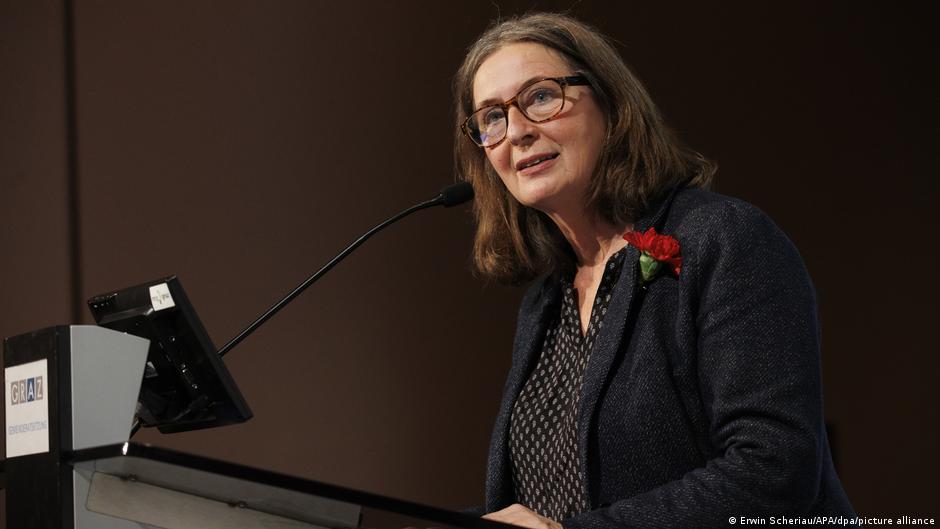
In a significant political development within the European Union, the Communist Party of Austria (KPÖ) has secured a decisive victory in the municipal elections held in Graz, Austria's second-largest city, on Sunday, June 28. Garnering 35.63 percent of the vote, the party is poised to claim 18 of the 48 city council seats. This outcome not only consolidates the KPÖ’s position locally but also resonates across European political and economic spheres, with potential implications for British investors and the London market.
Electoral Context and Political Dynamics
This marks the KPÖ’s second consecutive municipal triumph in Graz, following their surprising success in 2021 when they captured 28.84 percent of the vote. Analysts emphasize the city’s unique political identity encapsulated by the phrase "Graz votes differently," highlighting the Communist Party’s sustained local popularity despite their inability to surpass the national parliamentary threshold for over six decades.
Elke Kahr, a KPÖ member who was elected mayor in 2021 with backing from Social Democrats and the Greens, is credited for the party’s strategic focus on pragmatic housing policies and moderate rhetoric. Her tenure has been characterized by efforts to address urban housing challenges without engaging in overt populism or aggressive confrontations with political opponents, a nuanced approach that has clearly resonated with Graz residents.
"The Communists’ success in Graz underscores a local electorate prioritizing effective social policies over traditional political divides, a dynamic that contrasts with broader national trends."
While KPÖ’s party documents continue to champion traditional communist values such as social struggle and criticism of capitalism, Kahr herself adopts a measured stance, particularly evident in her criticism of the European Union’s sanctions on Russia. Although she condemned Russia’s full-scale invasion of Ukraine, Kahr labeled the EU sanctions as ineffective and burdensome on ordinary citizens, a position that adds complexity to EU-wide political and economic debates, including those closely followed by UK policymakers and investors.
Implications for British and European Interests
For the UK, which maintains robust trade and investment ties with Austria and the broader EU, the election results in Graz may signal evolving political currents that could affect regulatory and economic stability in key regional markets. The Communist Party’s success hinges on social welfare policies, particularly affordable housing, which, if emulated elsewhere, could reshape urban development priorities within the EU.
Moreover, the nuanced stance on EU sanctions reflects a broader European ambivalence that British businesses must monitor carefully, especially in sectors vulnerable to geopolitical tensions. The London financial markets may register cautious sentiment as political actors in influential EU cities like Graz challenge the effectiveness of current sanctions regimes.
On the same ballot, the Austrian People's Party (ÖVP), a conservative party, secured second place with 25.35 percent (13 seats), and the Greens obtained 14.84 percent (7 seats). Notably, the right-wing populist Freedom Party of Austria (FPÖ) came in fourth with 12.2 percent (6 seats), a result that contrasts with their national prominence where they led parliamentary elections earlier in 2024 but failed to form government after coalition negotiations.
For British observers, the relative weakening of right-wing populists in Graz compared with their national strength could indicate localized political fragmentation that might influence Austria’s future EU policy stance, particularly on economic regulation and cross-border cooperation.
Overall, Graz’s election outcome illustrates the diverse political landscape within the EU and highlights the need for the UK and European businesses to stay attuned to shifts in urban policy priorities and political rhetoric, especially as these influence sterling markets and investment flows.