Drone Strike on Russia’s Arctic Gas Region Raises Energy Risk for Europe
The reported attack on Yamal, a core Russian gas province, highlights new risks for European energy markets and sterling-sensitive UK inflation.
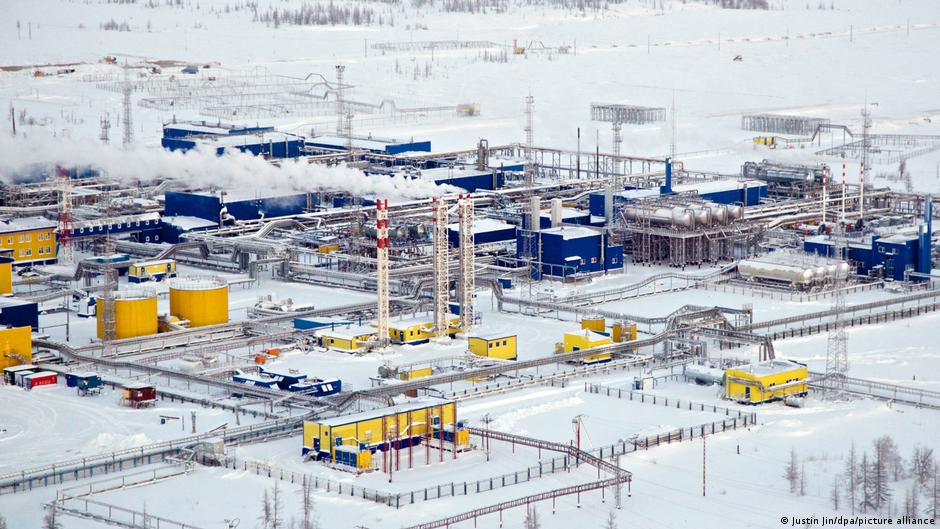
Ukrainian drones have attacked Russia’s Yamalo-Nenets Autonomous District for the first time, according to regional officials, in a development that draws Europe’s energy security concerns deeper into Russia’s Arctic gas heartland.
Dmitry Artyukhov, the governor of the region, said on Wednesday, 9 September, that drones targeted the district and that a fire broke out at an industrial facility in Novy Urengoy. Official data cited by the authorities said there were no deaths or injuries. Artyukhov said the attack had been repelled, but that falling drone debris caused a fire on the premises of an enterprise. The scale and nature of the damage are still being assessed, he said.
Artyom Zhoga, the presidential envoy to Russia’s Urals Federal District, said the target was a fuel and energy complex facility in Yamal. According to him, personnel at the enterprise were evacuated in advance.
Russian authorities did not specify which company or plant was hit. However, several media outlets and analytical projects that track strikes on Russian territory reported that the target may have been the condensate preparation plant in Novy Urengoy, part of Gazprom’s gas infrastructure. The facility is considered one of the region’s key sites for processing gas condensate.
Russian officials said there were no casualties, while the extent of damage to the industrial site remains under assessment.
Why Yamal matters to Europe
The location of the reported strike is significant well beyond Russia. The Yamalo-Nenets Autonomous District is Russia’s central gas-producing region and is estimated to account for about 80% of the country’s natural gas output. Novy Urengoy itself is closely associated with some of Russia’s largest gas fields and processing infrastructure.
The plant in Novy Urengoy processes gas condensate from the Urengoy, Yamburg and other fields in the region. Its design capacity is estimated at about 19.5 million tonnes of feedstock a year. Any disruption, even if limited, is likely to be watched closely by energy traders because it touches the upstream and processing network that underpins a large share of Russian gas production.
For the UK and European Union, the immediate commercial exposure to Russian pipeline gas is far lower than before Moscow’s full-scale invasion of Ukraine. Yet the region remains important for global gas psychology. Europe still competes in liquefied natural gas markets where sentiment, risk premiums and storage expectations can influence wholesale prices. A strike deep inside Russia’s Arctic energy base therefore has relevance for British importers, EU industrial users and policymakers tracking winter supply risks.
London’s energy and currency desks are likely to treat the incident as another reminder that the war can affect infrastructure far from the front line. The source report does not state that UK gas prices, sterling or London-listed energy shares moved in response. Still, the business implication is clear: events in Yamal can feed into expectations for European energy costs, and those expectations matter for inflation assumptions, Bank of England rate pricing and sterling-sensitive corporate margins.
A possible long-range escalation
Novy Urengoy lies roughly 2,800 kilometres in a straight line from the Russian-Ukrainian border. If reports that the drones were launched from Ukrainian territory are confirmed, the incident could represent the longest known Ukrainian strike on Russian territory since the start of the full-scale war.
That distance is central to the market significance of the attack. Energy infrastructure that had previously appeared far beyond the operational reach of Ukrainian strikes may now be perceived differently by investors and insurers. For European businesses, that matters because risk perception can be priced into contracts, logistics planning and hedging, even before physical supply is materially affected.
The attack also broadens the map of potential vulnerability inside Russia. Earlier strikes on refineries, depots and transport links had already forced analysts to assess the resilience of Russian fuel supply chains. A reported strike in Yamal shifts attention toward gas condensate processing and Arctic production infrastructure, sectors with particular relevance to Russia’s export capacity and fiscal strength.
For British companies, the effects would be indirect but not negligible. Higher European energy uncertainty can raise input costs for manufacturers, utilities and transport operators. It can also complicate forecasts for consumer inflation, which in turn shapes gilt yields, mortgage pricing and expectations for sterling. A stronger energy-risk premium would usually be a headwind for the pound if it revived concerns about UK inflation and growth at the same time.
For EU governments, the incident reinforces the strategic case for storage, diversified LNG supply, grid flexibility and reduced exposure to Russian-linked energy flows. Even where Russian gas is no longer the dominant source of supply, the country’s role in global energy balances means disruptions can still influence prices paid by European households and industry.
The immediate facts remain limited. Russian officials have confirmed a drone attack, a fire at an industrial facility in Novy Urengoy, the absence of reported casualties and an ongoing assessment of damage. They have not publicly identified the enterprise that was struck. Reports pointing to a Gazprom-linked condensate preparation plant have not been confirmed by the Russian authorities in the source account.
Even with those caveats, the first reported drone attack on the Yamalo-Nenets Autonomous District marks a notable development in the war’s economic geography. For London and Europe, the key issue is not only whether one facility was damaged, but whether the perceived perimeter of risk around Russian energy infrastructure has expanded into the Arctic gas system that has long sat at the centre of Moscow’s energy power.