EU rejects Ukraine’s request to accelerate part of €90bn loan package
Brussels concluded that bringing forward the funds would ease Kyiv’s immediate war-financing gap but risk pushing the problem into 2027.

The European Union has rejected Ukraine’s request for early access to part of a €90bn loan intended to help cover a military-financing shortfall this year, a decision that keeps pressure on Kyiv’s budget and on European capitals weighing the cost of sustained support against Russia’s aggression.
Kyiv had asked Brussels to bring forward a portion of the facility after unexpectedly acknowledging over the summer that rising military expenditure had created an additional €27bn funding gap. People familiar with the matter said the EU concluded that accelerating the disbursement now would not solve the underlying financing challenge and could instead shift the pressure into 2027.
Brussels’ assessment was that faster funding now could merely move the problem into 2027 rather than resolve it.
For the UK and European markets, the decision underlines the continuing fiscal and geopolitical weight of the war on the continent. Although Britain is outside the EU, Ukraine’s funding outlook remains closely watched in London because it affects European defence spending, sovereign borrowing expectations, risk appetite and sterling’s sensitivity to wider regional security concerns.
The immediate market impact was not detailed in the report, but the issue lands at a moment when investors in London are already alert to the interaction between public borrowing, defence commitments and currency sentiment. Sterling often reacts not only to domestic UK data but also to shifts in broader European risk, particularly when those shifts affect expectations for government spending, energy security or defence-related fiscal policy.
Brussels Looks Beyond EU Funding
EU officials have approached other Ukrainian partners, including Canada, Norway and Japan, with a proposal to help cover the remaining financing needs. The working assumption is that the EU loan could cover about two-thirds of Ukraine’s requirements, while non-EU countries would contribute the rest.
That approach matters for European governments because it spreads the burden beyond the bloc and may reduce the pressure on EU budgets at a time when member states are balancing Ukraine support with domestic spending demands. It also has relevance for Britain, whose financial markets are deeply exposed to European geopolitical risk even though UK fiscal decisions are made outside Brussels.
Bloomberg reported that €45bn from the 2027 loan would be made available “operationally” but not before the start of next year. At the same time, the EU and Ukraine plan to begin work on identifying additional budget and defence needs, signalling that the financing debate is far from settled.
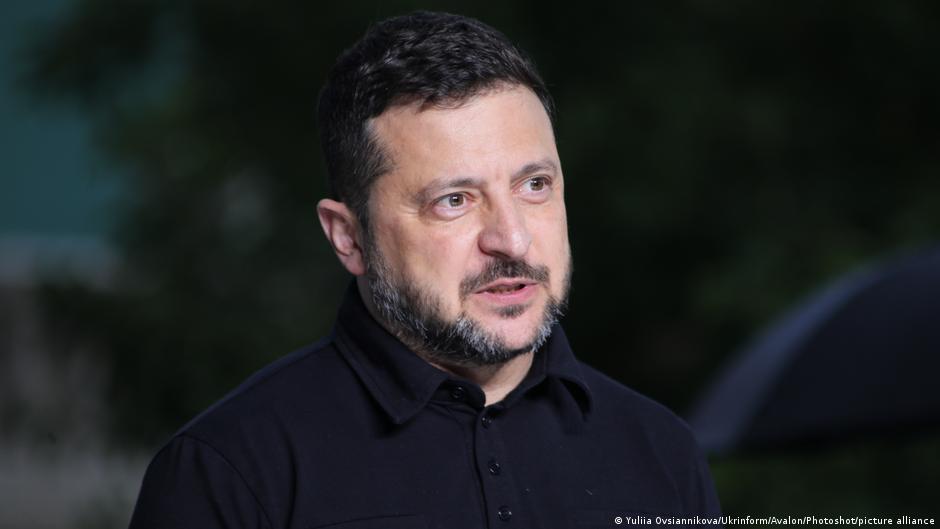
The decision also highlights the EU’s attempt to maintain leverage over reforms in Ukraine while sustaining wartime assistance. In September, European Commission President Ursula von der Leyen told Ukrainian President Volodymyr Zelensky on the sidelines of the UN General Assembly in New York that the EU still had €37bn in budget support available for 2026. She directly linked the release of those funds to Kyiv implementing reforms aimed at fighting corruption and the shadow economy, increasing tax revenues and aligning Ukrainian legislation more closely with EU standards.
For EU capitals, that conditionality is politically significant. Governments are under pressure to demonstrate that large-scale financial support is paired with governance reforms and budget discipline. For London, the same dynamic is relevant because any renewed pressure on Ukraine’s finances can feed into the wider European debate over defence financing, sanctions policy and long-term security guarantees.
IMF Talks Add to the Funding Picture
The International Monetary Fund is also working with Kyiv and its partners on the possible size of Ukraine’s budget deficit. IMF spokesperson Julie Kozak said the fund is discussing the matter with Ukraine and its allies, while also working with Kyiv to combine the second and third reviews of an $8.1bn financing programme, equivalent to €7.23bn.
The IMF expects to present those combined reviews to its executive board by December 2026. Kozak said further financing for Ukraine depends on obtaining sufficient and reliable assurances to cover the deficit.
At the end of September, the IMF estimated Ukraine’s future financing gap at $30bn to $35bn in 2027, $17bn in 2028 and $2bn in 2029. Those figures frame the EU’s reluctance to pull forward money from the €90bn loan: the concern in Brussels is not only the immediate shortfall, but the risk that front-loading support leaves a larger hole in later years.
The financing debate is likely to remain central to European policy discussions into 2027. Ukraine’s war needs are rising, EU governments are weighing fiscal limits, and non-EU partners are being asked to contribute to a broader package. For the City of London, the question is less whether Ukraine will remain backed by allies than how that backing is structured, funded and absorbed by European public finances.
Any durable arrangement will have implications beyond Kyiv. It will shape the outlook for European defence industries, government debt issuance and the political willingness of allies to sustain long-term aid. Sterling’s direct response may depend on UK-specific data and Bank of England expectations, but the pound remains exposed to the wider European risk backdrop that Ukraine’s financing talks continue to define.