German and Austrian raids highlight EU sanctions risks for car exporters
Prosecutors say two businessmen used third countries to send cars and trucks to Russia, underscoring compliance risks for European trade.
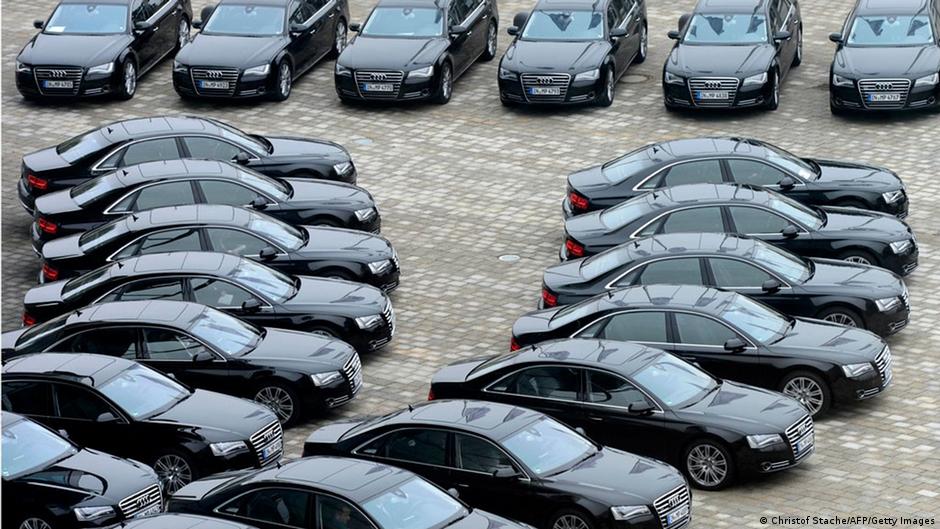
German and Austrian authorities have searched properties linked to two businessmen suspected of exporting vehicles to Russia through third countries in breach of European Union sanctions, in a case that will be watched closely by compliance teams across the UK and continental Europe.
Prosecutors in Kaiserslautern said on Tuesday, 29 September, that the suspects are accused of arranging the shipment of 53 passenger cars and six semi-trailer trucks to Russia between autumn 2022 and the end of 2024. Investigators allege the exports violated the EU sanctions regime imposed after Russia’s full-scale invasion of Ukraine.
According to the investigation, the suspected scheme used intermediary destinations to disguise the final destination of the vehicles. Prosecutors named Belarus, Kyrgyzstan and Georgia among the third countries allegedly used in the route.
The case comes as European authorities intensify scrutiny of sanctions circumvention networks involving high-value goods. For British businesses, banks, insurers and logistics providers, the investigation is another reminder that Russia-related trade exposure can arise indirectly, including through transactions routed via jurisdictions outside the EU.
Assets worth millions seized or frozen
The searches took place on 8 September at residential and commercial premises connected to the businessmen in Neustadt an der Weinstrasse, in the German state of Rhineland-Palatinate, and in Vienna. Law enforcement authorities from Germany, Austria and Belgium took part in the operation.
At the request of prosecutors, the district court in Kaiserslautern authorised the seizure of assets worth about €7 million, described as the alleged proceeds from the illegal exports.
During the searches in Germany, investigators seized two cars, a Porsche and a Mercedes-Benz. In Austria, authorities seized €85,000 in cash. A further €278,000 was frozen in bank accounts in Germany, Austria and Belgium.
Prosecutors also said three hunting rifles and ammunition were found at the premises of the businessman in Neustadt. A separate investigation has now been opened into a possible breach of weapons legislation.
Both suspects have so far exercised their right to remain silent, prosecutors said.
The investigation is continuing. The allegations have not yet been tested in court.
Why the case matters for London and European markets
The direct market impact of a single sanctions case is limited, but the wider pattern matters for London-listed companies and sterling-exposed businesses with supply chains touching Europe, the Caucasus, Central Asia or China. Sanctions enforcement can affect exporters, vehicle dealers, banks, payment processors, insurers and freight firms when authorities believe goods have been routed to Russia through intermediaries.
For the UK, which runs its own sanctions regime alongside the EU, such cases add pressure on businesses to demonstrate end-use checks and robust documentation. London market participants often assess Russia-related enforcement not only as a legal issue but also as a governance and counterparty risk. A company exposed to investigations, frozen accounts or asset seizures can face reputational damage and tighter financing conditions even before any criminal verdict.
The euro-denominated seizure figure is also relevant for UK readers because sanctions enforcement can intersect with currency and settlement risk. Firms trading across borders may have contracts priced in euros, pounds or dollars, while banks handling payments must assess whether funds, counterparties or goods could be linked to restricted Russian end users. The source case does not report a sterling move or a specific London market reaction, but it adds to the broader enforcement backdrop monitored by UK compliance officers and investors.
The allegations also underline how sanctions pressure has shifted from the initial act of banning exports to the more complex task of policing detours. Goods may no longer move directly from the EU to Russia, but prosecutors say they can still reach Russia via third countries. That creates a larger due diligence burden for legitimate businesses and a larger enforcement challenge for European governments.
A wider enforcement pattern
The raids in Germany and Austria follow other cases involving car exports to Russia. In March, a court in Wuerzburg sentenced a Bavarian car dealer to six years in prison for supplying 111 luxury vehicles to Russia in breach of sanctions. According to investigators in that case, the vehicles reached employees of Russia’s FSB security service, the Federal Protective Service, the oil company Rosneft and the Russian presidential administration.
In July 2025, an employee of a car dealership in Hesse received a five-year prison sentence for selling 71 luxury vehicles to Russia, also in circumvention of sanctions.
German prosecutors have treated such cases as part of a wider problem. In May 2025, it was reported that prosecutors in Germany were investigating more than 40 cases linked to supplies of expensive cars to Russia. Media reports described a campaign by German justice authorities against dishonest car dealers, while experts noted that only a small portion of shadow deliveries was being stopped.
The issue is not limited to Europe’s immediate neighbourhood. In February, Reuters reported that tens of thousands of cars, including German luxury vehicles, were being exported to Russia in circumvention of sanctions through China. Some of those cars were produced in China by foreign companies, while others were imported into China from abroad. New cars were registered as used vehicles, allowing sellers to avoid obtaining permission from manufacturers for resale to Russia.
For UK and European businesses, the lesson from the latest raids is practical rather than theoretical. Enforcement agencies are looking beyond the first buyer and focusing on routes, counterparties and the economic logic of transactions. Where high-value goods move toward markets frequently associated with Russian re-export risk, companies may be expected to ask more questions before proceeding.