German BSW lawmaker plans Belarus and Russia trips amid EU business unease
Sven Hornauf says a German delegation will seek to revive twin-city contacts, a move likely to be watched in London and Brussels.
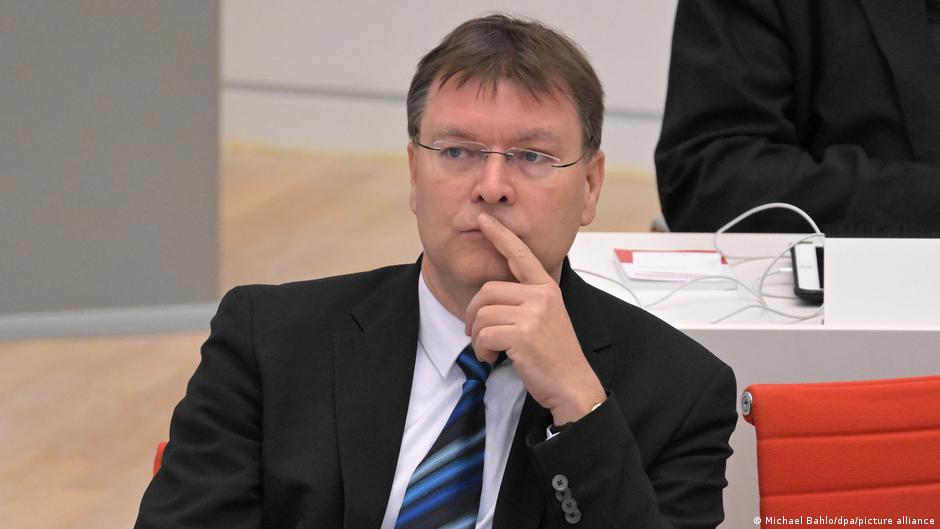
A German regional lawmaker from the left-populist BSW party has said he is assembling a delegation of politicians and civil society figures for visits to Belarus and Russia, aiming to restart contacts between twin towns that were suspended or scaled back after Moscow’s full-scale invasion of Ukraine.
Sven Hornauf, a member of the Brandenburg state parliament for the Alliance for Social Justice and Reasonable Economics, formerly known as the Sahra Wagenknecht Alliance, said he plans to travel by bus to Vitebsk in November with like-minded participants from several German parties. His comments were made in an interview with the regional newspaper Märkische Oderzeitung on Saturday, October 3. The plans were reported the following day by larger German media outlets, including dpa, Tagesspiegel and Die Welt.
For UK and European businesses, the initiative lands in a sensitive policy environment. Companies exposed to Germany, central Europe and eastern European logistics continue to weigh sanctions compliance, energy security, defence spending and political signals around any possible reopening of contacts with Russia and Belarus. London market participants are unlikely to treat a regional delegation as a stand-alone macro event, but the episode adds to the political noise surrounding Europe’s future commercial relationship with Moscow and Minsk.
Municipal diplomacy meets sanctions-era caution
Hornauf said he wants to renew cooperation between German towns and their counterparts in Belarus and Russia in order to “send a signal in favour of understanding between peoples.” He is also planning a visit to Russia in April 2027.
It is important, Hornauf said, to restore “normal regular contacts” directly at the level of people, so that the broader political climate “from whichever side” does not prevent them.
According to Hornauf, between 30 and 40 people are expected to take part in the Belarus trip, most of them not affiliated with any political party. He nevertheless named several BSW members among the participants, as well as representatives of the Greens and the far-right Alternative for Germany. Hornauf said the final composition of the delegation will be decided during preparatory meetings.
From November 6 to 11, the delegation from Hornauf’s home city of Frankfurt an der Oder is set to visit Vitebsk. Other participants in the trip intend to travel to Minsk and several other Belarusian twin towns. In each case, the stated reason for the visit is the desire to restore twin-city ties.
The business relevance for Britain and the EU is indirect but real. Germany remains Europe’s largest economy and a key trading partner for the UK. Any visible split in German politics over engagement with Russia or Belarus is monitored by investors because it touches issues that have shaped European markets since 2022: sanctions policy, defence procurement, energy costs and supply-chain planning. Sterling’s reaction to such political developments is usually filtered through broader risk appetite and expectations for European growth rather than through a single regional political trip.
Still, the optics matter. London-listed companies with European exposure, banks handling cross-border compliance, insurers and logistics groups all operate in a landscape where even informal contacts with sanctioned or politically isolated jurisdictions can raise governance questions. The City’s focus is less on municipal diplomacy itself than on whether such initiatives indicate a future softening of political consensus inside the EU.
Suspended links, quiet contacts
Many twin-town relationships between German, Belarusian and Russian municipalities were suspended after Russia’s full-scale invasion of Ukraine. However, according to a 2026 survey by the media group Redaktionsnetzwerk Deutschland of around 100 German cities and communities, only one had fully terminated its partnership with a Russian twin town.
RND also reported that around 40% of the municipalities surveyed had continued informal contacts with Russia after 2022, including invitations for representatives of Russian cities to visit Germany. In 42% of responding German municipalities, officials supported resuming partnerships with Russia in the event of a peace settlement in Ukraine.
Those findings underline the complexity facing European policymakers and businesses. The formal sanctions framework remains central to EU and UK policy, but local-level links have often proved more durable than headline politics might suggest. For British investors, that raises a familiar question: whether Europe’s approach to Russia will remain tightly coordinated if diplomatic conditions change, or whether municipal, regional and party-level initiatives begin to pull public debate in different directions.
Hornauf has previously drawn media attention for Russia-related activity. In spring 2026, he was one of the initiators of a visit by BSW members and supporters to the Russian embassy in Berlin. He has also faced criticism in the past for supporting several initiatives associated with the AfD.
In addition, Hornauf has criticised Germany’s strengthening of defence measures in response to Russia’s aggressive policy. In particular, he opposed the deployment of the US-Israeli Arrow 3 missile defence system at the Bundeswehr base in Holzdorf. The missile defence system was put on combat duty in Germany at the end of 2025.
That defence angle is especially important for European markets. Since the war in Ukraine began, Germany’s security posture has become a central variable for defence stocks, infrastructure planning and fiscal expectations across the continent. For the UK, where defence contractors and financial services groups track continental procurement closely, German political disputes over missile defence and Russia policy feed into a wider assessment of European security spending.
The planned Belarus trip therefore sits at the intersection of local diplomacy and continental risk. Hornauf presents the initiative as people-to-people engagement between twin towns. Critics are likely to view it through the lens of Russia’s war in Ukraine, Belarus’s political alignment with Moscow, and the risk of normalising contacts before a durable settlement is reached. For markets in London and across Europe, the immediate impact may be limited, but the political signal will be watched as part of a broader debate over how, and when, Europe might reopen channels to the east.