German CDU/CSU Support Falls to 2021 Levels Amid Rising Far-Right Influence
Polling shows Germany’s conservative bloc at a five-year low, with far-right AfD leading, raising concerns for UK and EU market stability.
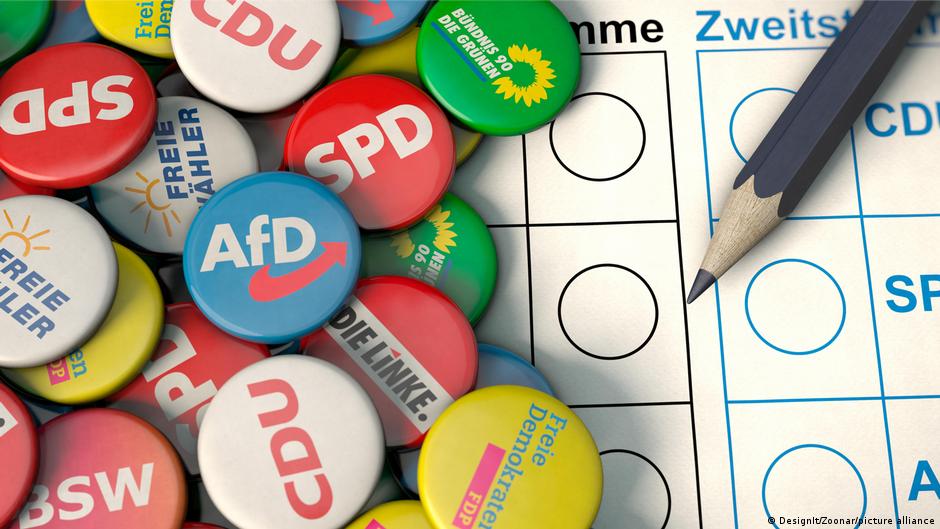
The support for Germany’s conservative bloc, the Christian Democratic Union (CDU) and Christian Social Union (CSU), has fallen to its lowest point in five years, registering just 20% in recent polls. Meanwhile, the far-right Alternative for Germany (AfD) party continues to lead with 28% support, according to the latest survey by the INSA institute.
Implications for UK and European Markets
This development comes ahead of crucial state elections in Germany and carries potential repercussions for both UK and EU economic interests. The CDU/CSU coalition, a cornerstone of the current German federal government, has traditionally been seen as a stabilising force in European politics. Its waning support and the surge of the far-right AfD may introduce greater political uncertainty in Europe’s largest economy, which could ripple through the eurozone and impact sterling and London financial markets.
As Germany faces elections in three federal states—Saxony-Anhalt, Mecklenburg-Vorpommern, and Berlin—in September, the outcome could reshape the political landscape. The AfD appears poised to make historic gains, particularly in Saxony-Anhalt, where it may form part of the state government for the first time.
"If the Bundestag elections were held this Sunday, the FDP would just clear the 5% threshold to enter parliament, while the left-wing ‘Sahra Wagenknecht alliance’ would fall short with 3%."
For UK businesses and investors, these shifts highlight the growing unpredictability of German politics. The CDU/CSU’s decline signals potential challenges for EU-UK cooperation, especially given Germany’s central role in EU policymaking on trade, regulatory standards, and financial markets. London, which remains Europe’s leading financial hub post-Brexit, closely monitors these developments as political volatility in Germany could influence euro-sterling exchange rates and cross-border investments.
Polling experts point to the increased volatility in voter preferences, noting that Germans are less bound by traditional party loyalties and more prone to making last-minute decisions. This trend makes pre-election forecasts less reliable, underscoring a broader pattern of political fragmentation across Europe.
Overall, the decline of the CDU/CSU and rise of far-right electoral strength present new challenges for both the European Union’s internal cohesion and its external economic relationships, particularly with the UK.