German Local Vote Deals Setback to AfD as Greens Hold Key Cities
Results in Lower Saxony point to resilience among mainstream parties in a region closely watched by UK and EU businesses.
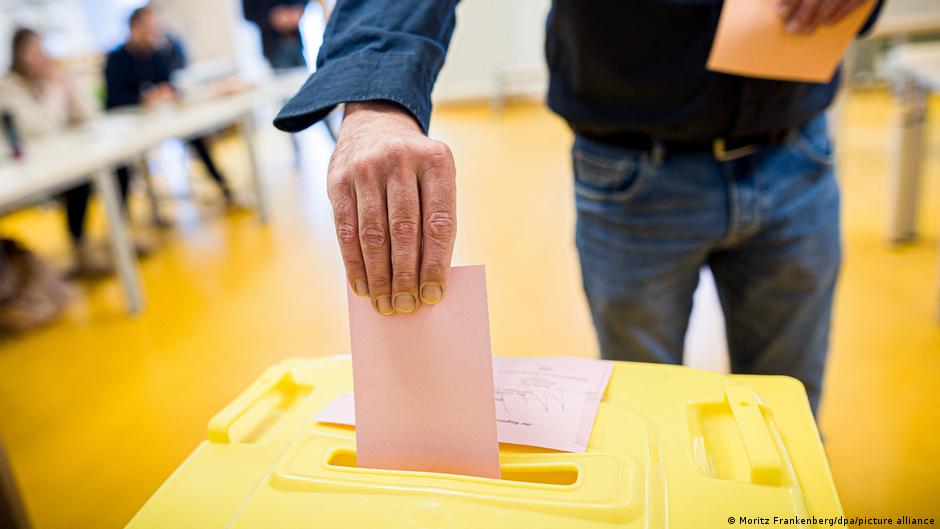
Germany’s far-right Alternative for Germany suffered defeats in the second round of municipal elections in Lower Saxony, a result that will be read in London and across Europe as a modest signal of political resilience in one of the continent’s core economies.
Voters in 123 municipalities went to the polls on Sunday, September 27, to choose mayors and other local leaders. AfD candidates had sought three executive posts, but lost in each contest. The outcome matters beyond local government because Germany remains central to European industrial policy, supply chains, energy costs and investor sentiment, all of which are closely watched by British exporters, fund managers and companies with operations on the continent.
In Salzgitter, a city of about 100,000 people with industrial significance, Christian Democratic Union incumbent Frank Klingebiel won a clear victory with 74.72% of the vote. Klingebiel, who has served as lord mayor since 2006, defeated AfD candidate Patricia Mair, who received 25.3%.
In Munster, independent candidate Anna Adamczak won with 80.5% of the vote, while AfD contender Christoph Weynand took 19.5%. In Bockenem, independent candidate Jens Luer secured 69.6%, defeating AfD candidate Felix Mull, who received 30.4%.
AfD candidates sought three leadership posts in Lower Saxony and lost all three in the second-round contests.
Mainstream parties retain urban ground
The most prominent result came in Hanover, the administrative capital and largest city of Lower Saxony, where Belit Onay of Alliance 90/The Greens retained the mayoralty. Onay, in office since 2019, defeated Social Democratic Party candidate Axel von der Ohe in the runoff.
The Green result in Hanover will be noted by European investors because large German cities often act as barometers for the country’s broader political balance. For UK market participants, the key issue is not a direct sterling move from a municipal ballot, but whether German politics continues to support predictable policy, investment planning and cooperation with European partners. The source figures do not indicate any immediate movement in sterling or a recorded reaction in London markets, but the result provides another data point for analysts assessing political risk in Europe’s largest economy.
In Braunschweig, the second-largest city in the state, Social Democrat Thorsten Kornblum kept the office of lord mayor. Kornblum has led the city since November 2021 and defeated Maximilian Pohler of the CDU in the second round.
In Osnabruck, the region’s fourth-largest city, CDU politician Katharina Potter also retained office. Potter, who has led the city since November 2021, defeated Volker Bajus of the Greens.
Lower Saxony’s third-largest city, Oldenburg, elected a new mayor. Green candidate Jascha Rohr defeated Ulf Prange of the SPD. Prange had run for the party in place of Jurgen Krogmann, who had served as lord mayor since November 2014.
In Gottingen, the fifth-largest city in Lower Saxony, Green candidate Onyeka Oshionwu won against CDU contender Ehsan Kangarani in the second round.
Why Lower Saxony matters for Europe
For British and European businesses, the Lower Saxony results are relevant because local German politics can shape planning conditions, transport priorities, housing policy, municipal procurement and the operating climate for employers. The state includes major urban centres and industrial communities, making its political direction part of the wider European business backdrop.
The main phase of the municipal elections took place on September 13. According to data available on September 14, the CDU received the largest share of votes, with 27.2% backing the party led nationally by German Chancellor Friedrich Merz. The SPD came second with 24.6%, while the AfD placed third with 15.9%. The Greens followed with 14.1%, and the Left Party received 6%.
Election commission data as of September 14 put turnout at 64.6%, which was 7.6 percentage points higher than in the 2021 state elections. Higher turnout will be watched by political analysts as a sign of increased voter engagement at a time when European governments face pressure over living costs, migration, infrastructure and the competitiveness of industry.
The AfD’s position in the state remains legally and politically contested. Four AfD candidates were refused admission to the elections because of doubts over their commitment to Germany’s constitutional order. The party’s state organisation is under observation by the domestic intelligence authorities as a right-wing extremist grouping. The AfD is challenging that decision in court.
For London, the immediate financial read-through is likely to be cautious rather than dramatic. No sterling impact or London market reaction was cited in the reported election results. Still, the defeats for AfD mayoral candidates, combined with Green victories in Hanover, Oldenburg and Gottingen, suggest that mainstream and pro-European forces continue to hold important municipal ground in Lower Saxony. That matters for companies assessing whether Germany’s political centre can maintain enough stability to support investment, regulatory continuity and cross-border trade with the UK and the wider European Union.