German Transport Minister Patrick Schnieder Resigns Amid Political Shake-Up Impacting EU and UK Markets
Germany’s Chancellor Friedrich Merz to nominate Steffen Bilger as new transport minister following Schnieder’s unexpected resignation.
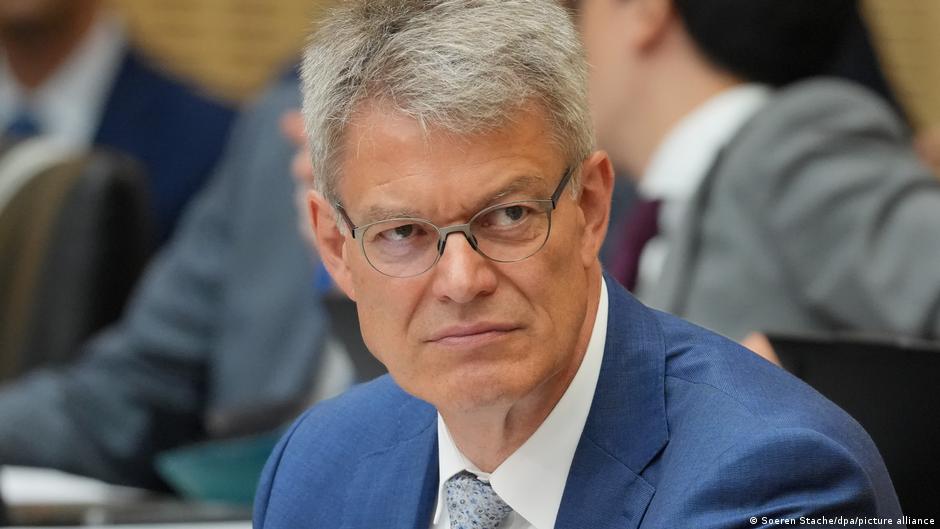
Germany is undergoing a significant political transition in its transport ministry, as Transport Minister Patrick Schnieder announced his resignation on July 26, 2024. This development has raised concerns in European business circles, including the UK, given Germany's central role in EU transport and trade infrastructure.
Political context and implications for EU-UK trade
Patrick Schnieder declared his intention to step down, citing recent events that rendered his position untenable and hindered effective governance. In his statement to the German press agency dpa, Schnieder emphasized the necessity to end what he described as a "disgraceful situation" obstructing essential business work at the Ministry of Transport.
"I will ask the Chancellor to propose to the President that I be relieved of my duties," Schnieder said, underscoring the urgency to restore stability in the ministry ahead of critical transport decisions.
Chancellor Friedrich Merz has promptly moved to nominate Steffen Bilger, parliamentary secretary of the CDU/CSU faction, as Schnieder’s successor. The government spokesperson, Stefan Kornelius, confirmed the nomination on the same day, signaling an expedited handover process. Bilger’s appointment comes amid a reshuffling within the Christian Democratic Union (CDU), following the resignation of prominent CDU leader Jens Spahn.
The transport portfolio in Germany holds strategic importance for the entire European Union and the United Kingdom, considering the interconnectedness of transport networks for trade, especially post-Brexit. The Deutsche Bahn, Germany’s national railway operator, faces urgent and far-reaching decisions, which require decisive leadership to avoid disruptions that could ripple through European supply chains and affect London’s financial markets.
Merz’s handling of Schnieder’s departure has drawn criticism within the CDU ranks. Sources indicate dissatisfaction with the Chancellor’s approach, which some describe as abrupt and lacking transparency. This political uncertainty has implications beyond Germany’s borders, notably for sterling and EU financial markets sensitive to stability in Europe’s economic powerhouse.
Further complicating the transition, Fritz Güntzler, initially considered as a potential candidate to replace Schnieder, unexpectedly declined the offer, heightening the urgency for a swift and effective appointment.
Market analysts in London are monitoring these developments closely. Germany's transport policies, especially concerning rail and freight logistics, play a critical role in EU-UK trade dynamics, with potential impacts on tariff negotiations, customs protocols, and freight costs. Any delays or instability could affect sterling and investor confidence in London’s trading environment.
In summary, Patrick Schnieder’s resignation and the ensuing ministerial changes underscore a period of political flux in Germany with direct consequences for European transportation infrastructure and the economic ties between the UK and EU. The appointment of Steffen Bilger is expected to bring continuity, but stakeholders remain watchful as Germany navigates this sensitive transition.